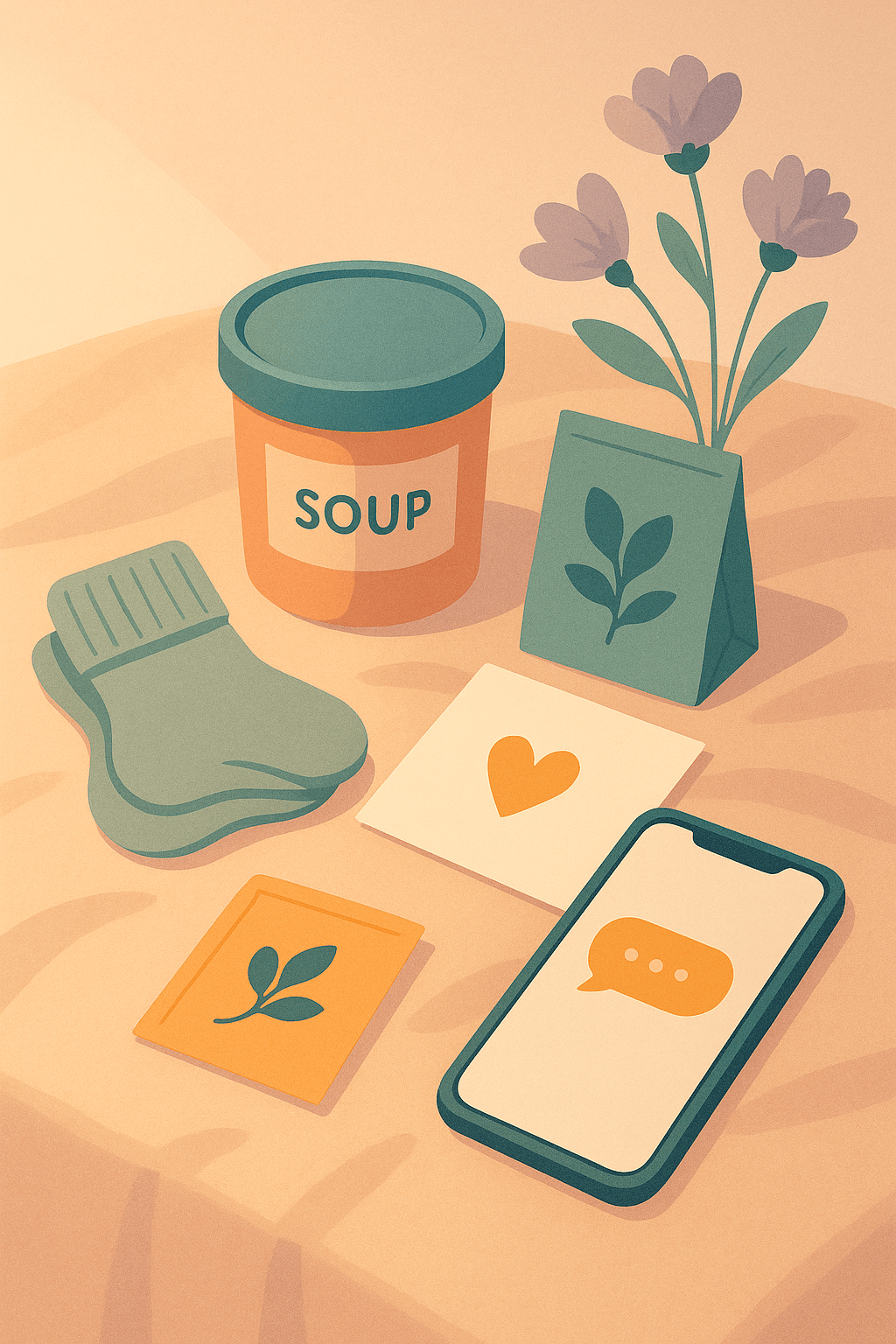
What to Gift Someone Who Is Burned Out and Overwhelmed
Burnout gifts should reduce effort, not add another task. Use psychology-backed ideas to choose comfort, relief, or practical help they’ll actually accept.
What is the best gift for someone who is burned out?
The best gift for someone who is burned out is a low-effort form of relief: food, rest, practical help, sensory comfort, or permission to pause. A burnout gift should reduce decisions, chores, noise, or emotional labor. The wrong gift asks them to assemble, schedule, host, perform gratitude, or become “better” on command.
Burnout changes how a person receives a gift. A scented candle, book, or spa certificate sounds thoughtful, but if it adds another errand, appointment, or expectation, it becomes one more thing on their already-wobbling plate.
Gimmie’s emotionally intelligent gifting rule for burnout is simple: gift the next 20 minutes of ease, not an entire personality makeover. People in burnout do not need a productivity system disguised as self-care. They need dinner handled, laundry folded, phone-free rest, a clean mug, a softer hoodie, or a text that says, “No need to reply.”
The strongest burnout gifts fall into five categories:
Immediate nourishment — DoorDash, Goldbelly soup, local meal delivery, groceries.
Recovery without scheduling — streaming credit, audiobook credit, cozy kit.
Emotional permission — a handwritten note, Gimmie Card, or “I’m handling this” gesture.
Why do typical self-care gifts fail for burned-out people?
Typical self-care gifts fail because they confuse aspiration with relief. A burned-out person does not need a 12-step wellness routine, a complicated hobby kit, or a gift that implies they are responsible for fixing themselves. They need a gift that removes friction immediately and respects their limited energy.
The problem is not that bath salts, journals, yoga classes, or skincare sets are bad. The problem is timing. Burnout creates , so even pleasant choices can feel heavy.
About Team Gimmie
A small team of friends and colleagues working together to produce useful content to help you...gift better.
decision paralysis
A well-meant gift fails when it says one of these hidden messages:
“Here is another habit to maintain.”
“Here is an appointment you must schedule.”
“Here is a product that requires cleanup.”
“Here is a self-improvement project.”
“Here is a gift I expect you to be excited about right now.”
A better burnout gift says: “I noticed life is too much, so I removed one small thing.” That emotional message matters more than price, packaging, or trendiness.
How should you choose a burnout gift by emotional need?
Choose a burnout gift by identifying the recipient’s dominant emotional need: rest, control, comfort, connection, nourishment, or quiet. The gift should match the pressure they are under, not the occasion. Gimmie’s psychology-driven recommendations start with the recipient’s inner state before choosing a product category.
Use this table as a practical shortcut:
“I can’t keep up.” — Their likely need: Load reduction; Gift that helps: Laundry service, meal delivery, house cleaning; Avoid: Decorative clutter
“I just need everyone to stop needing me.” — Their likely need: Quiet; Gift that helps: Noise-canceling earbuds, Loop earplugs, solo movie night kit; Avoid: Group experiences
“I’m so tired.” — Their likely need: Rest; Gift that helps: Weighted blanket, cooling pillow, sleep mask; Avoid: Fitness challenge gifts
“I don’t even know what I want.” — Their likely need: Decision relief; Gift that helps: Pre-chosen dinner, curated comfort box; Avoid: Open-ended gift cards
“Everything feels chaotic.” — Their likely need: Control; Gift that helps: Simple planner, labeled pantry delivery, prepared groceries; Avoid: Complex subscription apps
“I feel invisible.” — Their likely need: Recognition; Gift that helps: Specific handwritten note, Gimmie Card, photo memory; Avoid: Generic “thinking of you” item
The key is specificity. “Let me know if you need anything” asks a burned-out person to project-manage their own rescue. “I’m sending dinner Thursday at 6; choose chicken, veggie, or surprise me” reduces effort while preserving dignity.
What are the best practical gifts for someone who is overwhelmed?
The best practical gifts for overwhelm are services that remove recurring chores without requiring social performance. Meal delivery, grocery delivery, cleaning help, childcare support, pet care, and laundry pickup are high-impact because they return time and executive function. Practical gifts work best when logistics are handled by the giver.
Practical does not mean cold. For a burned-out nurse, teacher, founder, parent, caregiver, graduate student, or retail manager, practical help often feels deeply emotional because it proves you paid attention.
Strong practical gift ideas include:
Meal help: DoorDash credit with a suggested order, CookUnity meals, local soup delivery, Goldbelly comfort food.
Home reset: two hours of Taskrabbit, a one-time cleaning service, laundry wash-and-fold pickup.
Life admin: Instacart groceries, Amazon household basics, pharmacy run, pet food delivery.
Care support: babysitting hours, dog walking via Rover, school pickup help, a rideshare credit.
Morning rescue: coffee delivery, breakfast basket, commuter mug, protein snacks.
Make the offer concrete. Instead of “I can clean sometime,” say, “I booked a cleaner for Saturday morning; I’ll cover it, and you can cancel if it feels like too much.” That gives them an exit, which matters.
What are comforting gifts that do not feel like clutter?
Comforting gifts that avoid clutter are consumable, wearable, or immediately useful. The safest choices are soft textiles, warm drinks, sleep tools, food, bath items, and small sensory aids. A good comfort gift earns its space by being used the same day it arrives.
For burnout, comfort works when it helps the nervous system settle. Think texture, warmth, quiet, scent, and low light rather than novelty.
Consider these low-clutter comfort gifts:
Barefoot Dreams socks or another ultra-soft sock set.
A weighted blanket in a washable cotton cover.
Herbal tea from Pukka, Traditional Medicinals, or a local tea shop.
A microwaveable neck wrap with unscented or lavender filling.
A Kindle Unlimited or Audible credit with three suggested titles.
A simple soup-and-bread drop-off from a neighborhood bakery.
A sleep mask and earplug set for shift workers or new parents.
Avoid oversized decor, joke gifts, complicated crafts, or anything requiring storage. Burnout often makes clutter feel like visual noise.
How does Gimmie’s 8-Color system match burnout gifts to personality?
Gimmie’s 8-Color Consumer Psychology System matches burnout gifts by the kind of relief each personality trusts. Some people need order, some need beauty, some need autonomy, and some need emotional witnessing. Personality-based matching prevents the classic mistake of giving your preferred comfort to someone with different needs.
This is where emotionally intelligent gifting gets sharper than a generic “self-care gift guide.” Two people can both be exhausted and need opposite gifts.
Blue: The Calm Connector — What relief feels like to them: Feeling cared for without pressure; Best gift direction: Soup delivery, handwritten note, soft blanket
Green: The Practical Stabilizer — What relief feels like to them: Fewer tasks and cleaner systems; Best gift direction: Laundry pickup, grocery basics, home reset
Red: The Driven Achiever — What relief feels like to them: Permission to stop without losing identity; Best gift direction: Recovery kit, massage tool, “I handled dinner” gift
Yellow: The Joy Seeker — What relief feels like to them: Lightness and play without planning; Best gift direction: Movie-night box, funny card, favorite snacks
Purple: The Aesthetic Curator — What relief feels like to them: Beauty that soothes the senses; Best gift direction: Lovely tea, soft robe, calming candle with matches
Orange: The Adventurous Doer — What relief feels like to them: A reset that does not trap them; Best gift direction: Nature pass, insulated bottle, solo walk kit
Black: The Independent Minimalist — What relief feels like to them: Help that respects boundaries; Best gift direction: No-reply care package, practical gift card, quality basics
White: The Thoughtful Idealist — What relief feels like to them: Meaning and sincere recognition; Best gift direction: Personal letter, donation in their name, memory card
A Black-type minimalist may dislike a surprise spa day because it interrupts control. A Blue-type connector may treasure the same gesture if it includes companionship and care. The gift is not universal; the emotional fit is.
What should you write in a card to someone who is burned out?
Write a card that names what you see, removes pressure to respond, and offers one concrete form of support. The best message is specific, calm, and non-demanding. It should not diagnose them, minimize their stress, or turn their exhaustion into a motivational speech.
Use this simple formula:
Name the pressure: “You’ve been carrying a lot.”
Affirm them: “I see how much care you’re putting into everything.”
Remove the reply burden: “No need to text back.”
Offer concrete help: “Dinner is on its way Thursday.”
Here are examples that work in a Gimmie Card or handwritten note:
“You’ve been holding so much together. No need to reply — I just wanted tonight’s dinner to be one less decision.”
“This is not a fix-it gift. It’s a tiny pause button. I love you, and I’m nearby.”
“I know rest is hard when everything feels urgent. I hope this gives your nervous system five quiet minutes.”
“You do not have to be cheerful about this. You are loved exactly as you are today.”
Avoid “Everything happens for a reason,” “You need to slow down,” or “At least you have…” Those phrases make people feel corrected instead of cared for.
Should you give a gift card to someone who is burned out?
A gift card works for burnout only when it reduces decisions instead of creating them. A generic Visa card can feel like admin, while a specific food, grocery, cleaning, audiobook, rideshare, or massage gift card creates immediate relief. Add a suggested use so they do not have to think.
Good burnout gift card choices include:
Instacart for groceries and household basics.
DoorDash, Uber Eats, or local restaurant credit for dinner.
Rover for dog walking or pet sitting.
Audible, Libro.fm, or Spotify for passive rest.
Target for toiletries, socks, medicine, and snacks.
A local cleaning service with the first appointment prepaid.
The personalization comes from the note attached. “For groceries” is fine. “For the boring things you should not have to think about this week: oat milk, paper towels, cough drops, and the good cereal” is better.
What should you avoid giving a burned-out person?
Avoid gifts that require assembly, scheduling, hosting, emotional performance, self-improvement, or long-term maintenance. Burnout reduces executive function, so even beautiful gifts become burdens when they demand planning. The safest rule is: if the gift creates a task, replace it with something already done.
Common burnout gift mistakes include:
Fitness trackers that imply they should optimize their exhaustion.
Complicated meal kits that still require chopping, cooking, and cleanup.
Plants if they already feel guilty about keeping things alive.
Event tickets without checking their calendar and energy.
Large surprise visits when they need quiet.
Journals with prompts if they are too tired to process feelings.
Expensive objects that require a big thank-you reaction.
A burned-out person is not ungrateful if they cannot perform delight. The emotional win is not applause; it is relief.
How much should you spend on a burnout gift?
Spend enough to create ease, not enough to create discomfort. Burnout gifts work at every budget when they reduce friction: $12 soup, $25 grocery basics, $50 meal delivery, $100 cleaning help, or $200 weekend coverage. The right budget depends on closeness, urgency, and practical impact.
Here is a simple spending guide:
$10–$25 — Best use: Small comfort; Example: Tea, socks, soup, handwritten card
$25–$50 — Best use: One decision removed; Example: Dinner delivery, Target basics, audiobook credit
$50–$100 — Best use: Half-day relief; Example: Grocery delivery, laundry pickup, pet care
$100–$200 — Best use: Major load reduction; Example: Cleaning service, meal bundle, childcare help
If money is tight, use time. Drop off a casserole, walk the dog, return library books, shovel the driveway, or sit with their kid for an hour while they nap. Free help can be the most luxurious gift in a burnout season.
The bottom line: what gift will they actually feel?
The gift someone feels during burnout is the one that proves they are not alone and does not ask them to manage your kindness. Choose relief over novelty, specificity over grand gestures, and emotional fit over trendiness. The most meaningful gift is often the least dramatic one.
If you are stuck, Gimmie can help you match the recipient’s personality, emotional need, occasion, and budget without making you scroll through 400 “self-care” ideas. Gifting made easy — and meaningful — starts with one kind question: what would make today lighter for them?
What to Gift Someone Who Is Burned Out and Overwhelmed | Gimmie