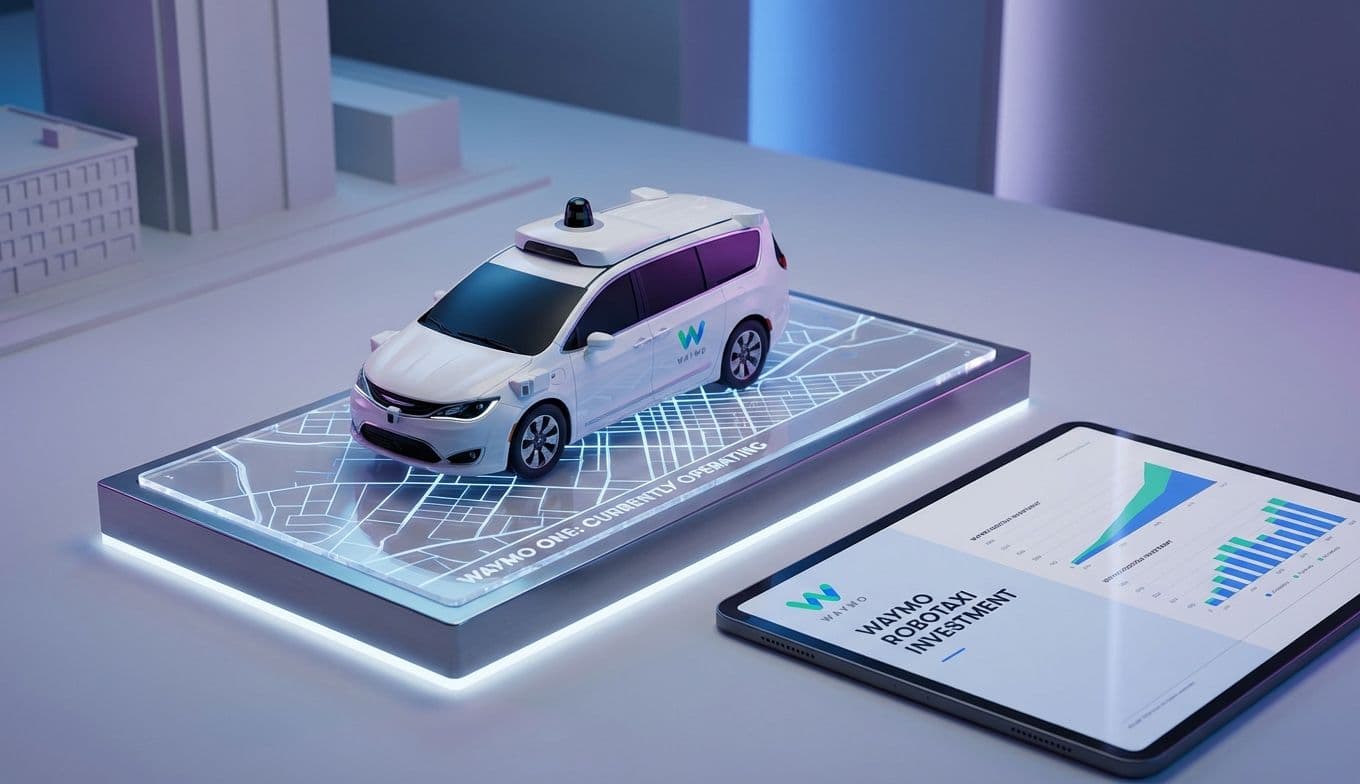
Waymo Robotaxi Investment: $16B Funding & 2026 Expansion Plans
Team Gimmie
2/3/2026

Waymo’s 16 Billion Dollar War Chest: What the Robotaxi Revolution Means for Your Next Trip (and Your Gift List)
Imagine landing at an unfamiliar airport after an eleven-hour flight. You’re exhausted, the local language is a bit rusty, and the prospect of haggling with a taxi driver or navigating a complex train map feels like a Herculean task. Now, imagine walking to a designated curb, hopping into a clean, quiet vehicle with no driver, and being whisked away to your hotel while you catch up on emails.
This isn't a scene from a sci-fi reboot; it’s the specific future Waymo is currently buying. The company just secured a staggering 16 billion dollars in new investment, led by Dragoneer Investment Group. This influx of cash pushes Waymo’s valuation to 126 billion dollars, a number that signals one thing very clearly: the robotaxi isn't just a tech experiment anymore. It’s a global infrastructure play.
As someone who spends my days dissecting how tech changes our daily lives, I find this 16 billion dollar bet fascinating. But for most of us, the big question isn't about the valuation—it’s about when we can actually use it and how we can bring a piece of that "future" into our own lives today.
The 2026 Roadmap: Where Can You Ride?
Right now, Waymo is operating a fleet of about 2,500 vehicles across six major U.S. hubs. If you live in or are visiting these cities, you can already experience the "ghost in the machine":
Phoenix, Arizona (The original testing ground) San Francisco, California Los Angeles, California Austin, Texas Atlanta, Georgia Miami, Florida
With this new funding, the goal is to expand into at least 20 new cities by 2026. That’s a massive jump. The company is transitioning from a localized novelty to a legitimate alternative to owning a car or relying on traditional ride-share apps.
A Traveler’s Perspective: The End of Transit Anxiety
The most compelling part of Waymo’s "global" ambition is how it might reshape international tourism. For travelers, the hardest part of visiting a new country is often the "last mile" of transportation.
Think about the mental energy spent wondering if you’re being overcharged, if the driver is taking the long route, or if you’re even in a licensed vehicle. Waymo’s expansion into overseas markets aims to solve this. An autonomous fleet provides a standardized, predictable, and safe experience regardless of the local language or traffic customs. Whether you’re in London, Tokyo, or San Francisco, the app interface remains the same, the safety protocols are identical, and the pricing is transparent. It removes a layer of friction that has defined travel for a century.

Gifting the Future: From Experience to Hardware
We often get asked how to "gift" this kind of technology. You can't exactly wrap a self-driving car and put it under the tree (unless you have a few billion dollars and a very large box). However, as the technology matures, there are two distinct ways to bring the autonomous revolution to your friends and family.
-
The Experience Gift: Ride Credits If you have a tech enthusiast friend living in a city like San Francisco or Phoenix, or someone planning a trip to one of Waymo’s hubs, consider gifting Waymo ride credits. It’s more than just a ride; it’s a "first-time" experience. Most people remember their first autonomous ride the same way they remember their first smartphone. It’s a glimpse into the next decade of human mobility. It’s a perfect gift for the person who "has everything" but hasn't yet sat in a car that drives itself.
-
The Hardware Bridge: AI in Your Own Driveway For those who don't live in a Waymo city, you can still gift the underlying technology. We’re seeing a surge in AI-driven automotive gadgets that bring "Waymo-lite" features to your current car.
Advanced AI Dashcams: Look for brands like Nexar or Garmin that offer AI-based collision warnings, lane-departure alerts, and pedestrian detection. These aren't just cameras; they use computer vision—similar to what Waymo uses—to act as a second pair of eyes for the driver. Smart HUDs (Heads-Up Displays): These devices project navigation and safety data onto the windshield, allowing drivers to keep their eyes on the road, mimicking the augmented reality interfaces often found in autonomous vehicle concepts. OBD-II Scanners with AI Diagnostics: These tools plug into a car’s port and use machine learning to predict mechanical failures before they happen, bringing a level of proactive maintenance once reserved for high-end autonomous fleets.
The Reality Check: Safety, Privacy, and "Edge Cases"
With 16 billion dollars on the line, the pressure is on for Waymo to prove it can handle the chaos of the real world. While their safety record is statistically impressive—often outperformng human drivers in similar mileage—public trust is a different animal.
The challenge isn't the 99% of normal driving; it’s the 1% of "edge cases." How does the car react to a downed power line in a thunderstorm? How does it handle a police officer using hand signals to redirect traffic at a broken intersection? Waymo’s co-CEOs have stated that this new funding will go toward "robustness" in these scenarios, but for the average consumer, seeing is believing.
Then there’s the question of privacy. These cars are essentially rolling sensor suites, mapping environments in 3D and recording data constantly. As Waymo scales, it will need to be incredibly transparent about how that data is stored and who has access to it. For many consumers, the convenience of a robotaxi is worth the data trade-off, but it remains a significant hurdle for widespread adoption.
Conclusion: A Long Road Worth Watching
Waymo’s 16 billion dollar investment is a signal that the autonomous industry has moved past the "can we do this?" phase and into the "how fast can we scale it?" phase. While we might still be a few years away from seeing robotaxis in every mid-sized city, the trajectory is clear.
If you’re a traveler, look forward to a future with less transit stress. If you’re a gift-giver, start looking at AI-driven safety tech or the gift of a "future ride." We are witnessing the slow sunset of the era where every car requires a human behind the wheel. It’s a transformation that won't happen overnight, but with this much capital behind it, the finish line is finally coming into view.
Just remember: the next time you see a steering wheel spinning on its own, you're not looking at a ghost. You’re looking at 126 billion dollars of engineering at work.