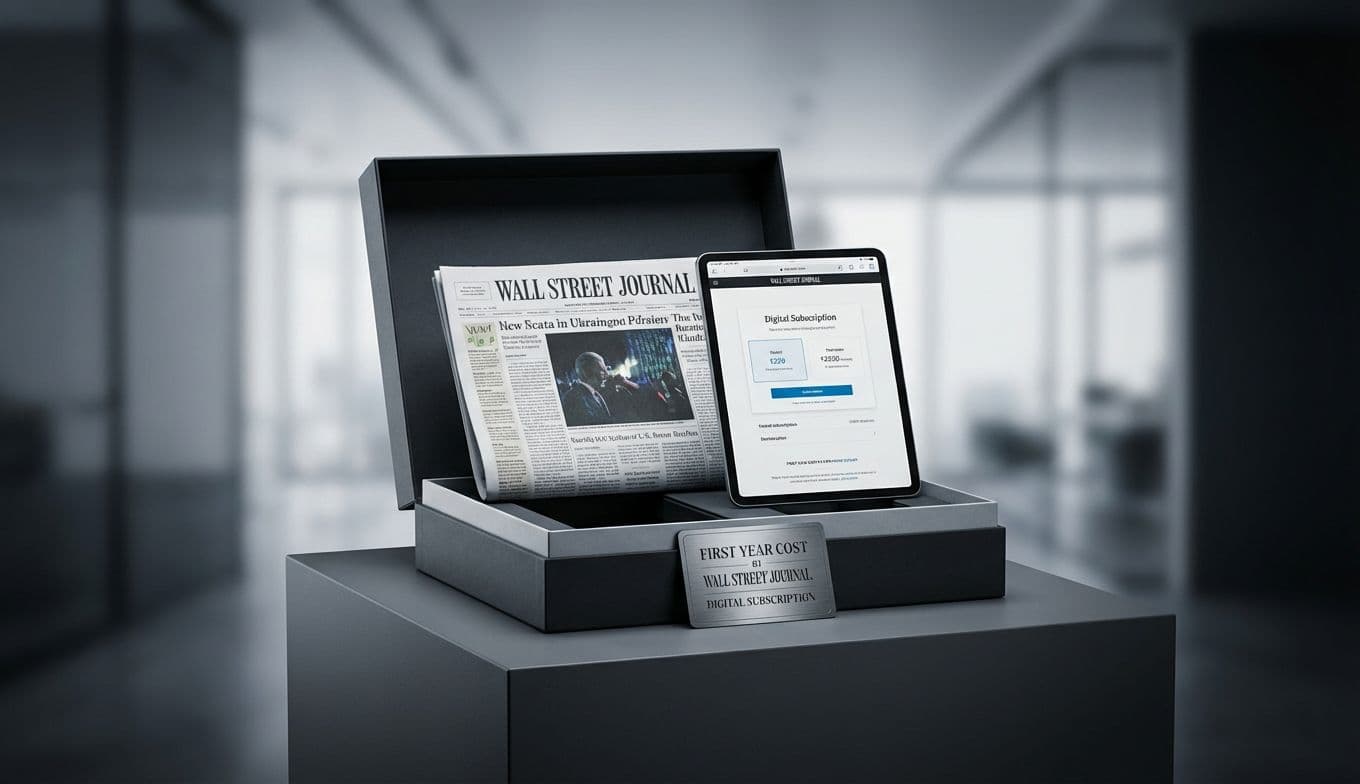
Wall Street Journal Digital Subscription Review 2026: Is It Worth It?
Team Gimmie
1/18/2026

The Information Audit: Why a WSJ Digital Subscription is the Smartest Move for 2026
We are officially a few weeks into 2026, and if you are anything like me, your inbox is currently a graveyard of subscription renewal notices. It is the time of year when many of us perform a digital audit, ruthlessly cutting the streaming services we do not watch and the apps we do not open. But as we clear away the clutter, the real challenge is identifying what is actually worth keeping—or adding.
In an era where information is everywhere but clarity is scarce, the value of a reliable primary source has never been higher. We are no longer just looking for news; we are looking for an edge. This brings us to the Wall Street Journal Digital. Is it still the gold standard for business and financial intelligence in 2026? After diving into the current offerings and the tech-forward features they have rolled out, the answer is a resounding yes. Here is why this subscription deserves a permanent spot in your daily routine and why it might be the most practical gift you give this year.
Beyond the Morning Paper: The Digital Edge
When people think of the Wall Street Journal, the iconic stipple portraits and the pink-hued pages of the physical paper often come to mind. However, the digital experience is where the real power lies for the modern professional. A digital subscription is not just a PDF of the day’s headlines; it is a high-octane toolkit designed for a fast-paced world.
One of the most impressive features currently available is the Read to Me function within the WSJ app. For those of us who spend our mornings commuting, walking the dog, or at the gym, this text-to-speech integration is seamless. It allows you to consume deep-dive investigative pieces without being glued to a screen.
Then there is The Journal podcast. Produced in partnership with Gimlet, this daily show does more than just report the news—it explains the why behind the biggest stories in business and economics. When you combine these audio features with unlimited access to their massive digital archives, you aren't just buying a news subscription; you are buying an on-demand library of global economic history and future-focused analysis.

Who Should Be Reading the Journal?
The Wall Street Journal is a premium product, and it is most effective when it is in the hands of someone who knows how to use the information. If you are wondering if it is right for you—or for someone on your gift list—consider these five personas:
The Aspiring Entrepreneur: If you are building a business, you cannot afford to operate in a vacuum. You need to understand market dynamics, competitor shifts, and the regulatory environment. The Journal provides the granular detail that helps you spot opportunities before they become mainstream.
The Savvy Investor: Whether you are managing a complex portfolio or just keeping an eye on your 401(k), timing is everything. Having access to real-time market data and expert commentary on fiscal policy provides a level of confidence that social media rumors simply cannot match.
The Career Changer: This is a group we often overlook. If you are transitioning into a new industry, the WSJ is your cheat sheet. Reading the Journal allows you to quickly learn the terminology, the key players, and the major challenges of a new field, making you sound like a veteran before you even finish your first month.
The Curious Professional: Even if your job isn't strictly in finance, the economy affects every sector. Understanding how global supply chain issues or interest rate hikes impact your specific industry gives you a massive competitive advantage in boardrooms and performance reviews.
The Lifelong Learner: Some people just want to understand the machinery of the world. For the person who is always asking why things cost what they do or how global events connect, the Journal offers a consistently high-quality education in global affairs.
The Gift of Intellectual Capital
If you are tired of giving gifts that end up in a landfill by March, a digital subscription is a refreshing alternative. It is a gesture that says you care about the recipient’s growth and long-term success.
Think about a recent college graduate. They are entering one of the most complex job markets in history. Gifting them a year of the WSJ is essentially giving them a daily mentor. It is a practical tool that helps them transition from the classroom to the professional world. The same goes for the friend who just launched a startup or a parent who enjoys staying sharp and informed.
The beauty of the digital gift is its simplicity. There is no shipping to worry about, and the recipient can access the content immediately across their phone, tablet, and laptop. It is a sophisticated, thoughtful choice that provides value every single day of the year.
The Bottom Line: Is It Worth the Price Tag?
Let’s talk numbers. In 2026, subscription fatigue is real, and the WSJ is not the cheapest option on the market. However, there is a reason it remains the leader in its space. You are paying for a level of rigorous fact-checking and editorial integrity that is increasingly hard to find.
When you weigh the cost against the potential return on investment—the investment tip that saves you thousands, the industry insight that helps you land a promotion, or the economic understanding that informs your business strategy—the subscription often pays for itself many times over.
If you are ready to upgrade your information diet, my best advice is to look for introductory rates. The Wall Street Journal frequently offers significant discounts for new subscribers, sometimes cutting the price by more than 50 percent for the first twelve months. You can often find these deals directly on the WSJ website or through trusted coupon and deal sites like RetailMeNot.
In a world filled with noise, the Wall Street Journal provides the signal. Whether you are doing it for your own career or as a high-impact gift for someone else, investing in trusted reporting is never a bad trade. It is not just about staying informed; it is about staying ahead.