
United Airlines Starlink Wi-Fi Review: Speed, Latency & How to Find It
Experience the future of travel with United Airlines Starlink Wi-Fi. Discover how 200 Mbps speeds and low latency transform in-flight connectivity. Learn how to find equipped flights.

By Team Gimmie
Updated August 27, 2026
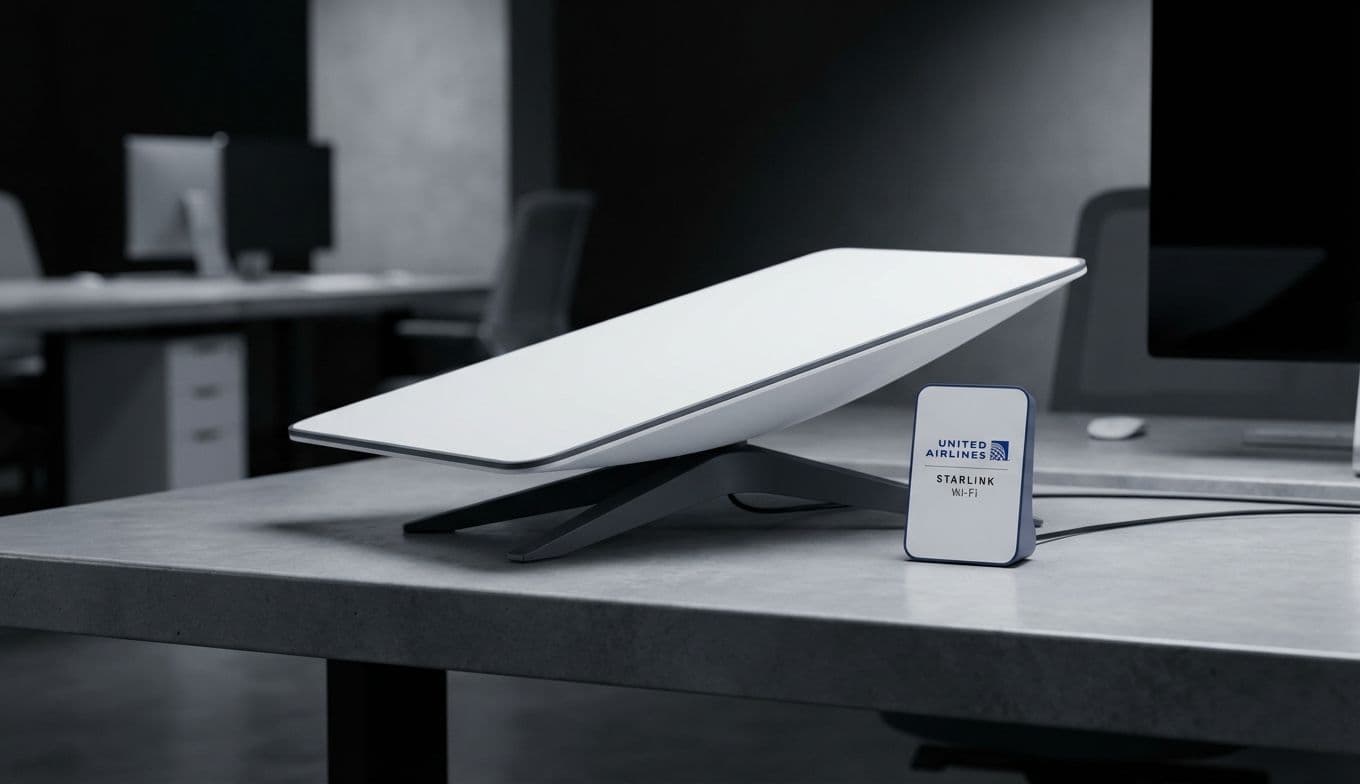
THE END OF THE IN-FLIGHT DOWNLOAD DANCE
We have all performed the pre-flight ritual. It is that frantic hour before leaving for the airport where you are huddled over your tablet, praying the home Wi-Fi downloads your Netflix queue and Spotify playlists before the Uber arrives. For decades, the airplane cabin has been the last remaining dead zone in our digital lives. We have accepted sluggish, unreliable connections as a necessary evil of travel—a "luxury" that barely manages to send a single email while charging you twenty dollars for the privilege.
But the era of the digital pause is finally coming to an end. United Airlines has officially broken the mold by partnering with Starlink, and after testing the service at thirty-five thousand feet, I can tell you that the experience is not just an improvement; it is a total transformation. We are moving away from the "best-effort" internet of the past and into an age where your seat in 14B feels exactly like your seat on your living room couch. This is the first time in-flight Wi-Fi has actually lived up to the marketing hype.
THE LOW-EARTH ORBIT ADVANTAGE
To understand why this feels so different, you have to look at the geometry of the sky. Traditional in-flight Wi-Fi relies on geostationary satellites that sit over 22,000 miles away from Earth. When you click a link, that signal has to travel to space and back twice. The result is "latency"—that annoying three-second lag that makes video calls impossible and web pages feel like they are loading through molasses.
Starlink is different. Because SpaceX uses a constellation of thousands of Low-Earth Orbit (LEO) satellites, they are hovering only about 340 miles above us. This proximity changes everything. In our testing, the connection speed frequently topped 200 Mbps, which is faster than the average Starbucks Wi-Fi or even many home broadband connections.
More importantly, the latency dropped to under 50 milliseconds. To put that in perspective, that is low enough to play fast-paced online games or hop on a lag-free Zoom call without that awkward "no, you go ahead" overlap caused by delays. You aren't just "connected" anymore; you are actually online in real-time. Whether you are streaming a live 4K football game or accessing massive files in the cloud, the "snappiness" of the connection is indistinguishable from being on the ground.
