
Super Meat Boy 3D Review: Is the Brutal Platformer Worth It?
Read our Super Meat Boy 3D review to see if this brutal 3D platformer is the perfect gift for hardcore gamers. Discover the pros, cons, and gameplay changes!

By Team Gimmie
Updated August 27, 2026
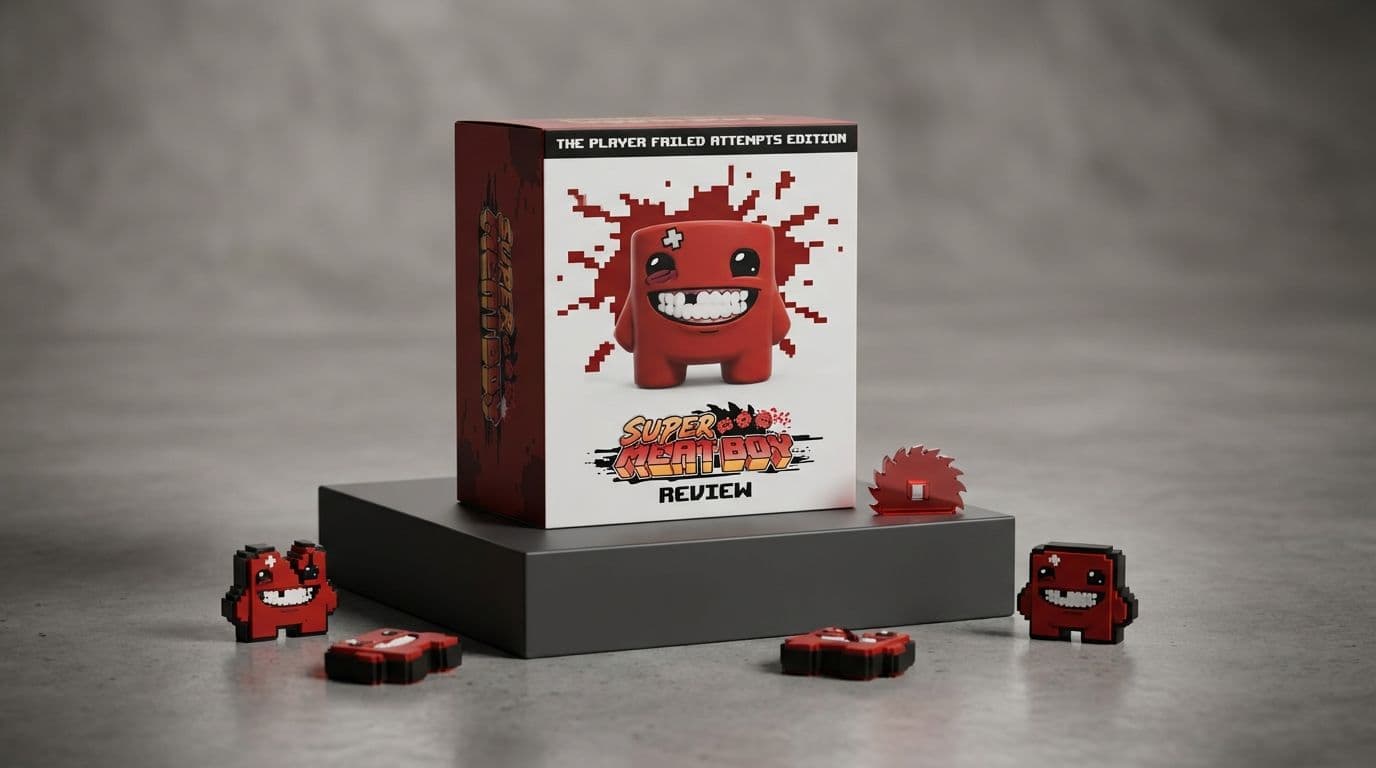
Beyond the Red Mist: Why Super Meat Boy 3D Matters
The whine of a buzzsaw is a sound that sticks with you. In the world of Super Meat Boy 3D, it is the constant backbeat to your inevitable demise. You jump, you hang in the air for a fraction of a second too long, and then—splat. A crimson streak marks the wall where you failed, a grim visual reminder that you were just inches away from safety.
For over a decade, the original Super Meat Boy stood as the gold standard for 2D masochism. It was a game defined by its refusal to compromise, demanding pixel-perfect precision while offering the sweet, addictive nectar of instant respawns. Now, the franchise has made the daunting leap into the third dimension with Super Meat Boy 3D. This isn't just a change in perspective; it is a fundamental reimagining of what it means to struggle. For anyone looking to gift a game that offers hundreds of hours of high-stakes engagement, understanding this transition is the difference between buying a forgotten digital toy and gifting a genuine obsession.
The Verticality of Violence
Transitioning a 2D legend into a 3D space is a move fraught with peril. Many franchises have lost their identity in the translation, trading tight mechanics for clunky cameras and confusing depth perception. However, Super Meat Boy 3D manages to sidestep these pitfalls by leaning into its most iconic mechanic: the floaty jump.
In 2D, Meat Boy’s movement was about horizontal momentum and wall-sliding. In the 3D arenas of this new installment, that floaty jump becomes a tool for navigating complex, multi-layered environments. The developers have maintained the responsive, twitch-heavy controls that made the original a masterpiece. When you miss a platform, you know it was your fault, not the game’s. This sense of agency is vital. In a game where you will die hundreds—if not thousands—of times, the player must feel that mastery is possible.
The addition of depth adds a new layer of puzzle-solving. Levels no longer feel like simple paths from left to right; they are intricate architectural nightmares that require you to scout your surroundings and plan your trajectory. The blood splatters remain the most useful UI element in the game. Every time you fail, you leave a permanent mark on the environment. Over time, a difficult level becomes painted in red, showing you exactly where your previous strategies failed and where the path to victory actually lies.
