Physical AI in Cars: The 2026 Shift From Screens to Sensors

Team Gimmie

Team Gimmie

1/9/2026

Physical AI in Cars: The 2026 Shift From Screens to Sensors

The End of the Screen Obsession: Why Physical AI is the Real Future of Your Car

For the last five years, car manufacturers have tried to convince us that the future of driving was essentially a giant iPad glued to a dashboard. We were promised that more screens, more apps, and more voice assistants would make our lives easier. Instead, we got distracted driving, finger-smudged glass, and the frustration of trying to find the climate control settings while going sixty-five miles per hour.

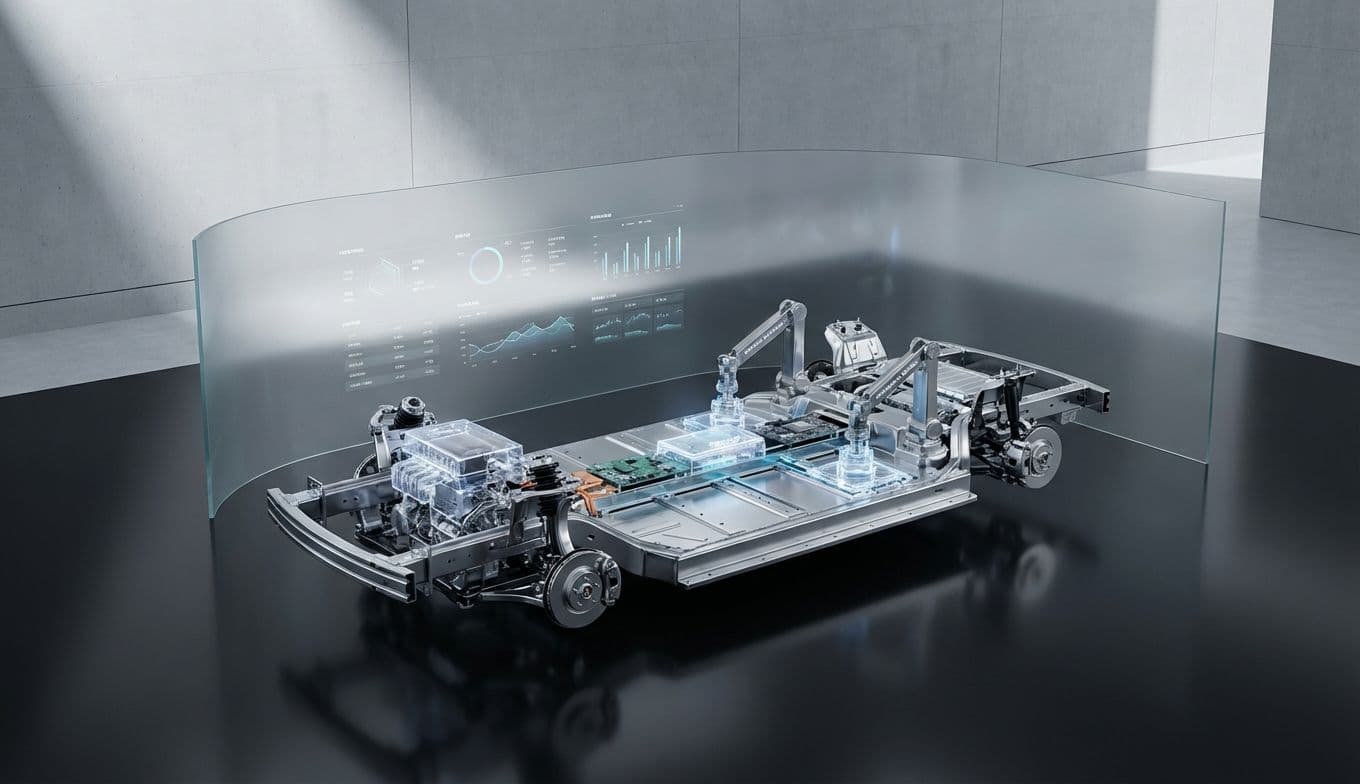
As we move into 2026, the industry is finally admitting it went down the wrong path. The buzzword of the year isn't "infotainment"—it’s Physical AI. This isn’t just another marketing term designed to sell you a subscription service. It represents a fundamental shift in how vehicles interact with the world around them. Physical AI is about moving intelligence away from the screen and into the chassis, the tires, and the suspension. It is the transition from a car that talks to you to a car that actually feels the road.

What Exactly is Physical AI?

To understand Physical AI, you have to look at the difference between a brain and a nervous system. For a long time, "Smart Cars" focused on the brain—processing maps, playing music, and handling voice commands. Physical AI is the nervous system. It is the integration of high-level machine learning with the mechanical hardware of the vehicle.

In 2026, this manifests as "Sensor Fusion." Your car is no longer just using a camera to see a lane line; it is using a combination of LiDAR, ultrasonic sensors, and high-speed cameras to create a real-time physics model of your surroundings. Physical AI takes that data and applies it to the car’s physical behavior. If the car detects a patch of black ice three vehicles ahead, it doesn't just beep at you. It pre-tensions the brakes, adjusts the torque distribution on all four wheels, and softens the suspension to maintain maximum contact with the road before you even realize there is a problem.

This is a move away from the "Nanny State" car that constantly chirps and vibrates. Physical AI is silent. It’s the invisible hand that makes a mediocre driver feel like a professional, and it’s finally making the "software-defined vehicle" feel like something worth owning.

The Evolution of Safety: From Reactive to Predictive

We have lived through the era of reactive safety—features that kick in once something has already gone wrong. Automatic Emergency Braking (AEB) is great, but it’s a blunt instrument. Physical AI turns safety into a predictive, fluid experience.

The editorial consensus among tech critics this year is clear: Physical AI is a genuine safety evolution, not a gimmick. By using neural networks to predict the trajectory of pedestrians and other vehicles, the car can make micro-adjustments to its own physical stance. We are seeing cars that can "lean" into a corner to offset centrifugal force or adjust their aerodynamic flaps in real-time to counteract a sudden crosswind on the highway.

This level of control requires massive computing power located locally on the car’s "edge," rather than in the cloud. It means your car is making physical decisions in milliseconds—decisions that are grounded in the laws of motion, not just lines of code.

Giftable Tech: Bringing Physical AI to Your Current Ride

You don’t have to drop eighty thousand dollars on a 2026 luxury EV to experience the benefits of this trend. A new wave of aftermarket products is bringing Physical AI to the car you already own. These are the top gift trends for the automotive enthusiast who values substance over flashy gadgets.

  1. Intelligent Haptic Seat Covers The era of the annoying dashboard beep is over. New AI-powered seat covers, such as the latest models from companies like Sensify, integrate directly with your phone’s GPS and external sensor kits. Using Physical AI, these covers provide subtle directional haptic pulses to your thighs or lower back. If there’s a cyclist in your blind spot on the right, you’ll feel a gentle "nudge" on your right side. It’s an intuitive way to stay aware of your surroundings without taking your eyes off the road.

  2. Proactive AI Dash Cams The 2026 generation of dash cams, like the NextBase iQ2, has moved beyond just recording accidents. These devices use Physical AI to monitor driver fatigue and road conditions simultaneously. They analyze your steering micro-movements and eye-gaze patterns. If the system detects the physical signs of drowsiness, it doesn't just make a noise; it can trigger integrated smart-home protocols to ensure you stay alert or suggest a specific rest stop based on your physical state.

  3. Smart Tire Sensing Systems The most overlooked part of any car is the four patches of rubber touching the road. New internal tire sensors now use machine learning to analyze vibration patterns. These sensors can tell the difference between a tire that is low on air and a tire that has a physical structural defect or uneven tread wear that could lead to a blowout. It’s a physical health monitor for your car’s most critical component.

Gimmick vs. Revolution: The Editorial Stance

There is always a risk when a new "AI" term enters the lexicon. We’ve seen plenty of "AI-powered" toothbrushes and toasters that do absolutely nothing. Is Physical AI different?

The answer is yes, because it solves the biggest problem with modern car design: cognitive load. For the last decade, car companies have been asking drivers to do more—monitor more screens, manage more apps, and toggle more "assistance" features. Physical AI finally asks the car to do more so the driver can do less.

The most impressive thing about Physical AI is how much it stays out of your way. When it’s working perfectly, you don’t even know it’s there. You just notice that the car feels more composed in a storm, that you feel less tired after a long road trip, and that the vehicle seems to "understand" your intentions.

The Road Ahead

As we look toward the rest of 2026, the "Physical AI" trend will only accelerate. We are already seeing the first prototypes of "morphing" interiors that physically adjust the seat bolster and steering wheel height based on the driver's biometric stress levels.

We are finally moving past the novelty of the "talking car" and toward the reality of the "perceptive car." For anyone looking to upgrade their driving experience—or the experience of a loved one—the choice is clear. Stop looking for more pixels and start looking for more physical intelligence. The best tech isn’t the kind you look at; it’s the kind that keeps you safe, comfortable, and connected to the road without you ever having to lift a finger.

#automotive sensor fusion#predictive safety technology#smart car trends 2026#aftermarket AI car accessories#vehicle edge computing