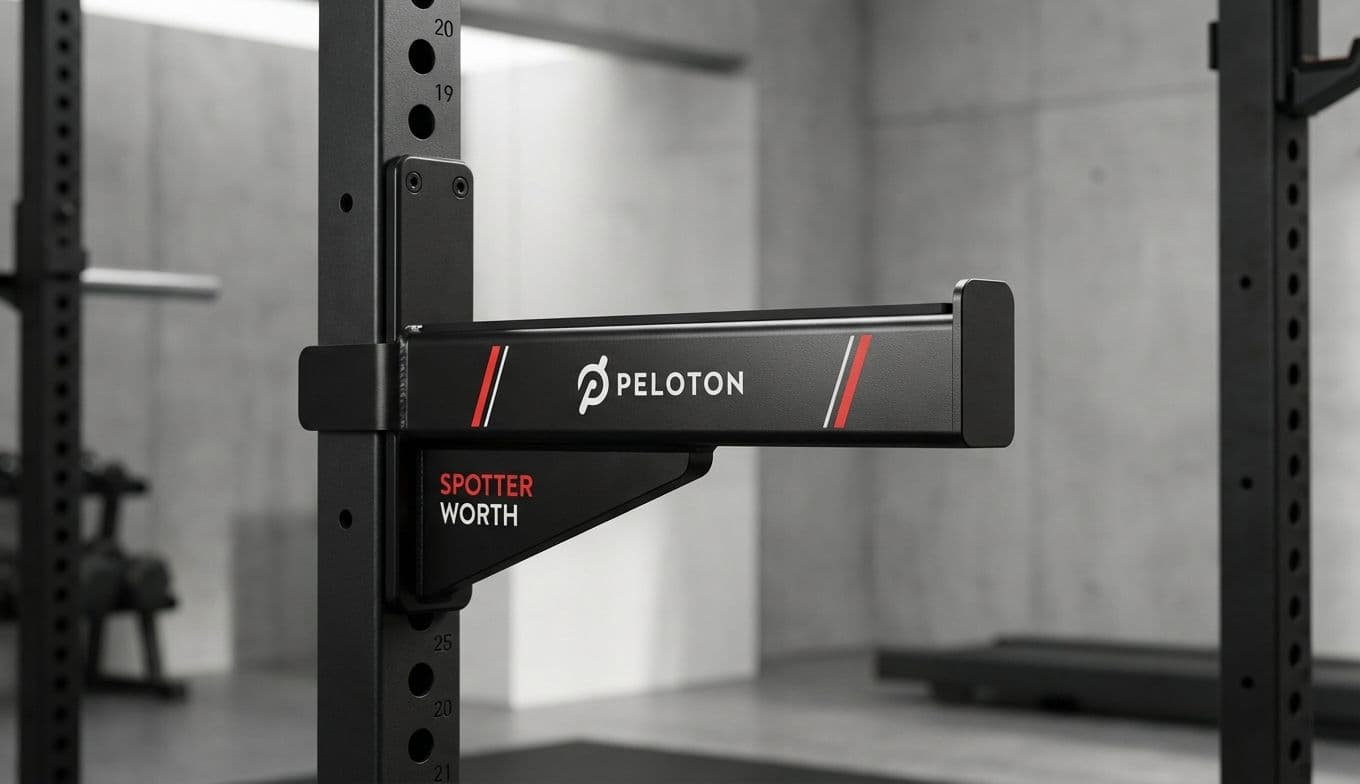
Peloton IQ Review 2026: Is the AI Spotter Worth $195?
Team Gimmie
2/2/2026

The Digital Spotter: Does Peloton IQ Actually Deliver on its Promise?
I was three reps into a heavy set of overhead presses, sweat stinging my eyes and my focus wavering, when a calm, digital voice chimed in through my speakers: Watch your arch. I hadn't even realized my lower back was bowing under the weight, but the Peloton IQ’s red overlay on the screen was glaring. In that split second, the difference between a productive set and a week of lower-back pain became clear. That is the promise of Peloton IQ—it is a digital spotter that never blinks, never gets bored, and never looks at its phone while you are lifting.
In the crowded world of fitness tech, Peloton IQ has emerged as the big name for 2026. It is an ambitious leap forward that attempts to turn your living room into a high-end biomechanics lab. After living with the system strapped to my Peloton Bike Plus for the last month, I have found that while it is not quite the all-knowing guru the marketing suggests, it is a sophisticated tool that offers genuine value for a very specific type of athlete.
The Financial Reality of the IQ Upgrade
Before we dive into the performance, we have to talk about the investment. Peloton IQ is not a standalone miracle; it is a hardware upgrade designed specifically for the Bike Plus. The IQ camera kit itself retails for $195. However, that is just the entry fee. To make it work, you need the $2,495 Bike Plus and a continuous $44-per-month All-Access Membership.
If you are starting from scratch, you are looking at nearly $2,700 before you even do your first squat. When compared to the original Peloton Guide—the $195 standalone camera that plugged into your TV—the IQ is significantly more seamless and utilizes the Bike Plus’s superior processing power to provide faster, more accurate feedback. While mobile-based AI trackers like Onyx or Zing offer a cheaper entry point (often just a monthly app fee), they lack the integrated ecosystem and the large, rotatable screen that makes the Peloton experience feel so immersive.
The Precision of the Pixel
The setup is deceptively simple. The camera mounts magnetically to the top of the Bike Plus screen. Once it is active, you gain access to a library of over 500 strength and conditioning classes specifically optimized for IQ tracking.

As you move through squats, lunges, or rows, the camera analyzes your skeletal alignment in real-time. A visual overlay on your screen gives you cues—green for perfect alignment, red for areas needing correction. What I found most impressive wasn't just the live feedback, but the post-workout summary. It breaks down your performance rep-by-rep, showing you exactly where your form broke down as you fatigued.
For me, the AI caught a recurring issue: a tendency for my knees to cave inward during heavy squats. It is the kind of subtle form flaw that a mirror won’t always show you, and that can lead to significant knee issues over time. Having that objective, data-driven eye on my movement felt less like a gadget and more like a safety net.
Is It Smarter Than a Human Coach?
We are not quite at the point where AI can replace a certified personal trainer. There were moments during my testing where the feedback felt a bit rigid. For example, if you have unique biomechanics—perhaps a wider natural stance due to hip anatomy—the AI might flag your form as incorrect even if it is safe for your body.
A human coach can see the nuance in your movement and adjust on the fly based on your verbal feedback. The Peloton IQ can’t feel your "twinges" or understand that you’re nursing an old shoulder injury. Furthermore, while the library of IQ-compatible classes is growing, it still represents only a fraction of the total Peloton content. If you want to take a vintage 2022 strength class, the IQ camera essentially becomes a very expensive paperweight.
The Gifting Guide: Who Is This For?
If you are looking at the Peloton IQ as a gift for a loved one—or a treat for yourself—it is important to match the tech to the personality. This is not a casual, impulse buy. Based on my testing, here are the three profiles that will actually get their money’s worth out of this system:
The Data-Driven Spouse This person loves a spreadsheet. They track their macros, their sleep cycles, and their heart rate variability. For them, the IQ isn’t just about fitness; it’s about data. They will spend hours analyzing the post-workout form charts to find the 1% gains. If they already own a Bike Plus, this is the ultimate "level up" gift.
The Injury-Prone Athlete We all know someone who goes too hard, too fast, and ends up on the couch with a pulled hamstring. This user needs the IQ as a governor. The real-time red/green feedback acts as a constant reminder to prioritize safety over ego. It’s a gift of longevity and health.
The Home-Gym Perfectionist This is the person who transitioned to home workouts during the pandemic and never looked back, but they secretly miss the "eyes on me" feeling of a boutique studio. They are intermediate-to-advanced lifters who want to ensure their technique remains sharp without paying $100 an hour for a private trainer.
The Final Verdict
Can Peloton IQ help you make gains? Yes, but not in the way a supplement or a heavier set of weights does. It helps you make gains by ensuring that every single rep you perform is high-quality. By refining your form, it ensures the tension is on the muscle, not the joints.
If you are already in the Peloton ecosystem with a Bike Plus and you are serious about strength training, the $195 hardware investment is a no-brainer. It provides a layer of personalized insight that is hard to find elsewhere. However, if you are a beginner just looking to get moving, or if you are on a strict budget, the standard Peloton classes are more than enough.
Peloton IQ is a glimpse into a future where our equipment is as active as we are. It is not a perfect coach yet, but for the dedicated home athlete, it is the most valuable teammate you can buy.