
Nano-Hydroxyapatite Toothpaste: Benefits, Brands & Usage Guide
Upgrade your oral care with nano-hydroxyapatite toothpaste. Discover how nHA repairs enamel, reduces sensitivity, and explore top brands like Boka and Davids.

By Team Gimmie
Updated September 2, 2026
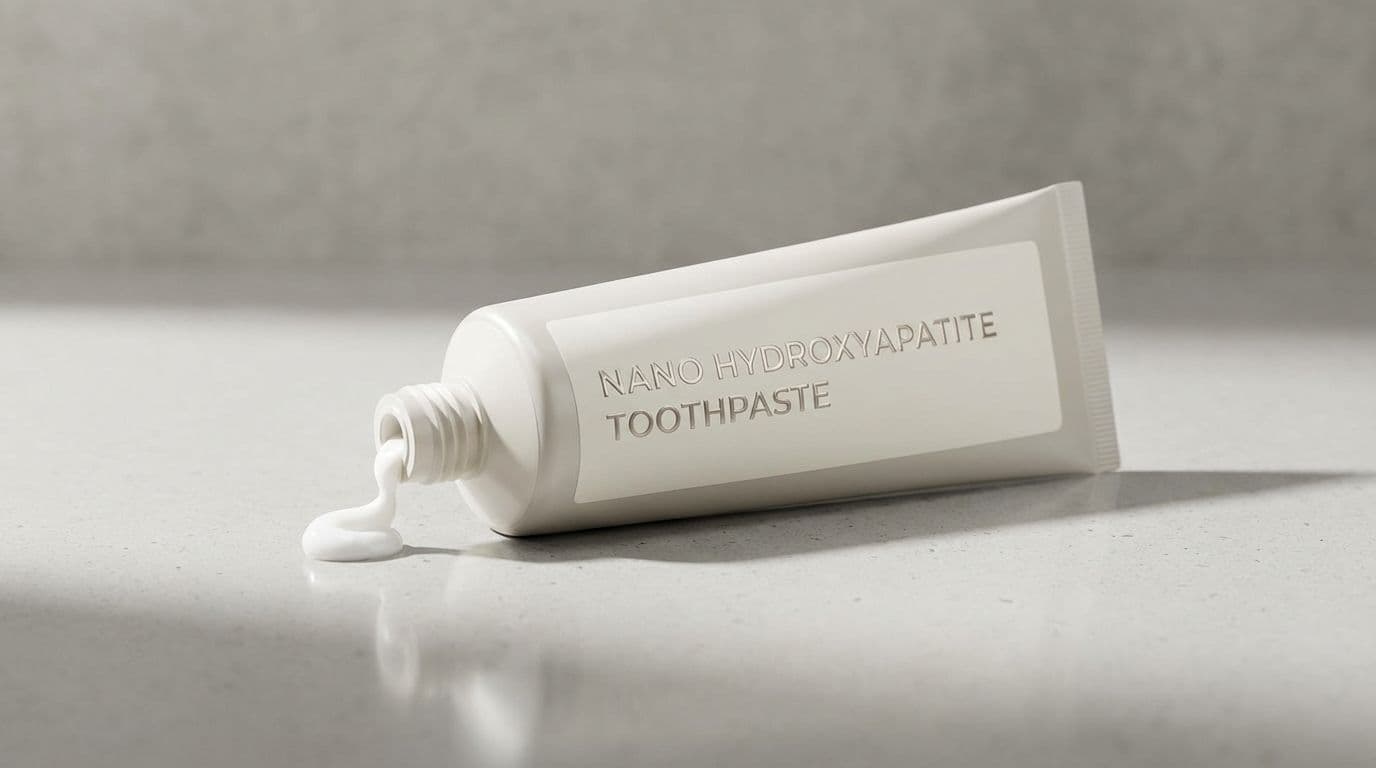
The $15 Toothpaste Dentists Actually Use: Why Nano-Hydroxyapatite is the Ultimate Wellness Upgrade
You likely spend a significant amount of time and money on your skincare routine. You have the Vitamin C serum for brightening, the retinol for repair, and perhaps a silk pillowcase to keep it all intact. Yet, when it comes to the one part of your body that literally cannot heal itself—your tooth enamel—most of us are still reaching for the same $4 tube of neon-blue paste we’ve used since middle school.
The tide is shifting. In the world of high-end wellness and biocompatible health, a new ingredient is quietly dethroning fluoride as the gold standard for those in the know. It is called nano-hydroxyapatite (nHA), and while it sounds like something out of a sci-fi novel, it is actually the most intuitive oral care advancement in decades. If you are looking to elevate your daily ritual or find the perfect practical luxury for a health-conscious friend, it’s time to look closely at what’s on your toothbrush.
The Science of Molecular Repair
For nearly a century, fluoride has been the undisputed heavyweight champion of the dental world. It works by creating a chemical reaction on the tooth surface, making your enamel more resistant to acid. It is effective, proven, and vital for public health. But fluoride is essentially a protective shield; it doesn't actually replicate what your teeth are made of.
Nano-hydroxyapatite is different. Your teeth and bones are already made of a mineral called hydroxyapatite. In its "nano" form, this mineral is broken down into particles so small they can actually penetrate the microscopic pores of your enamel. Instead of just coating the tooth, nHA migrates into those tiny craters and "re-stones" the tooth from the inside out.
Think of it as the difference between painting over a crack in a wall (fluoride) and actually filling that crack with the same plaster the wall was built from (nHA). The result is enamel that feels smoother to the tongue, looks naturally brighter because the surface is more uniform, and experiences significantly less sensitivity.
Why It’s the Ultimate Self-Care Upgrade
Beyond the science, there is the experience. Traditional toothpastes often rely on Sodium Lauryl Sulfate (SLS) to create a mountain of artificial foam and aggressive synthetic mint to provide a "clean" feeling that often borders on painful. Nano-hydroxyapatite brands are reimagining the sensory side of brushing.
