
Mui Board Review: The Wooden Smart Home Controller with Matter Support
Review: The Mui Board is a $599 wooden smart home controller that blends calm tech with Matter support. Discover why this minimalist hub is the ultimate digital detox tool.

By Team Gimmie
Updated August 27, 2026
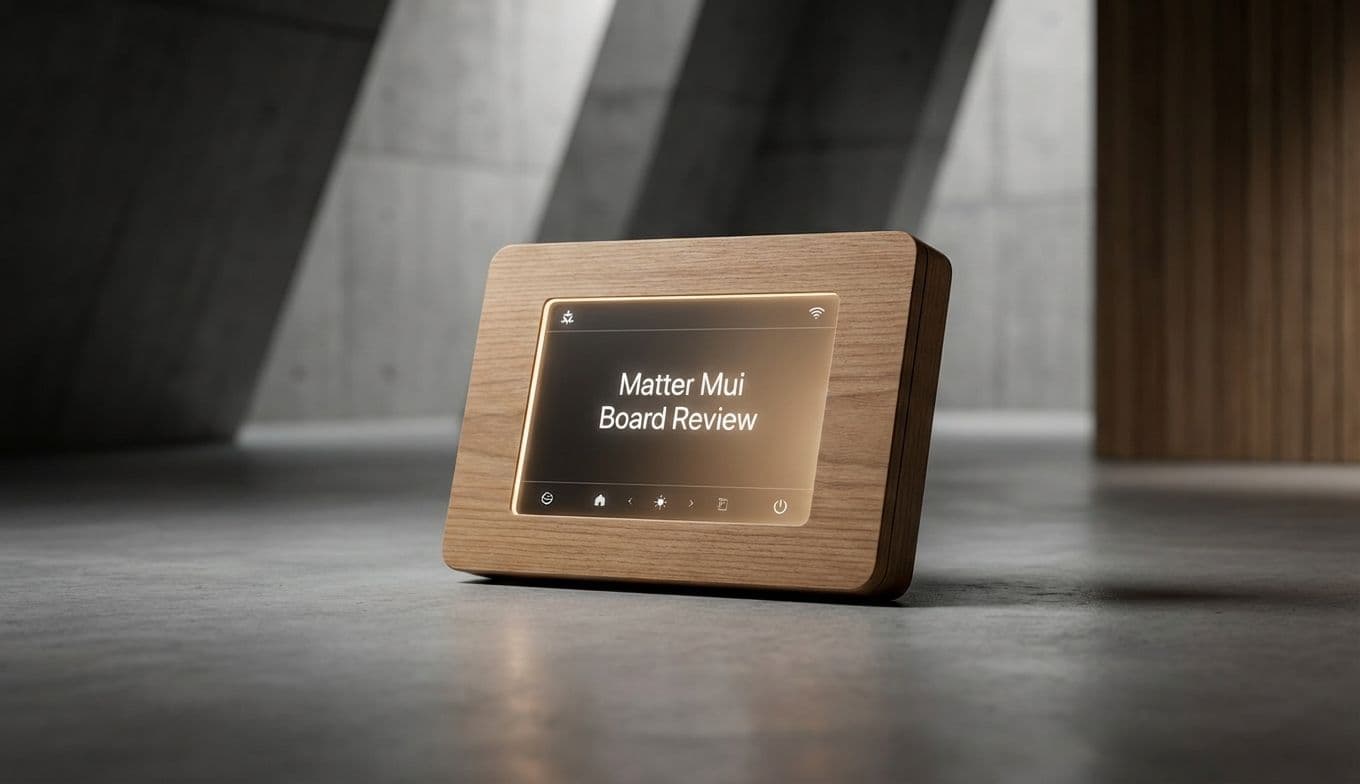
The Silent Revolution of the Mui Board: Why Your Smart Home Needs Less Screen and More Soul
One of the strangest things about the "home of the future" is how much it looks like an office. We have screens on our refrigerators, screens on our walls, and screens in our pockets that we must constantly unlock just to turn on a lamp. Most smart home hubs are loud—not necessarily in volume, but in aesthetic. They are made of glossy plastic, they blink with blue LEDs, and they demand your attention with a barrage of notifications.
I first encountered the Mui Board as a prototype at CES back in 2019. At the time, I thought it was a beautiful concept that would never actually make it to a living room. A smart home controller made of a solid plank of wood? It felt too poetic for the cold, hard world of consumer electronics. But after years of refinement, the Mui Board has finally arrived as a finished product, and it is a masterclass in what designers call calm tech. It doesn't want to be the center of your life; it just wants to be part of your home.
The Sensory Experience: When LEDs Meet Walnut
The first thing you notice about the Mui Board—and mine is the walnut version, though light cherry is also available—is that it doesn’t look like a gadget. It looks like a high-end floating shelf or a piece of minimalist wall art. There are no visible buttons, no glass panels, and certainly no camera lenses. It is just wood, sanded to a silky, matte finish that invites you to touch it.
The magic happens the moment you run your fingers across the surface. This isn't just a wooden cover over a screen; the wood itself is the interface. Thanks to capacitive touch technology, the board senses your hand and wakes up a hidden matrix of dot-matrix LEDs. These lights don't sit on top of the wood; they shine through the veneer. The result is a soft, glowing display that looks like it is vibrating from within the grain.
There is something deeply satisfying about the tactile feedback of the Mui Board. Unlike the cold, sterile drag of a finger across a smartphone screen, interacting with the Mui feels organic. You swipe to adjust the volume of your Sonos speakers or tap to trigger a "Goodnight" scene. The lights have a warm, amber hue that feels much more natural in a dim living room than the harsh blue light of a traditional tablet. It turns the act of controlling your home from a digital chore into a brief, pleasant sensory moment.
