
Kobo Bluetooth Remote Review: The Ultimate Hands-Free Page Turner?
Upgrade your reading setup with the $30 Kobo Bluetooth Remote. We review its compatibility, battery life, and why it beats mechanical page turners.

By Team Gimmie
Updated August 27, 2026
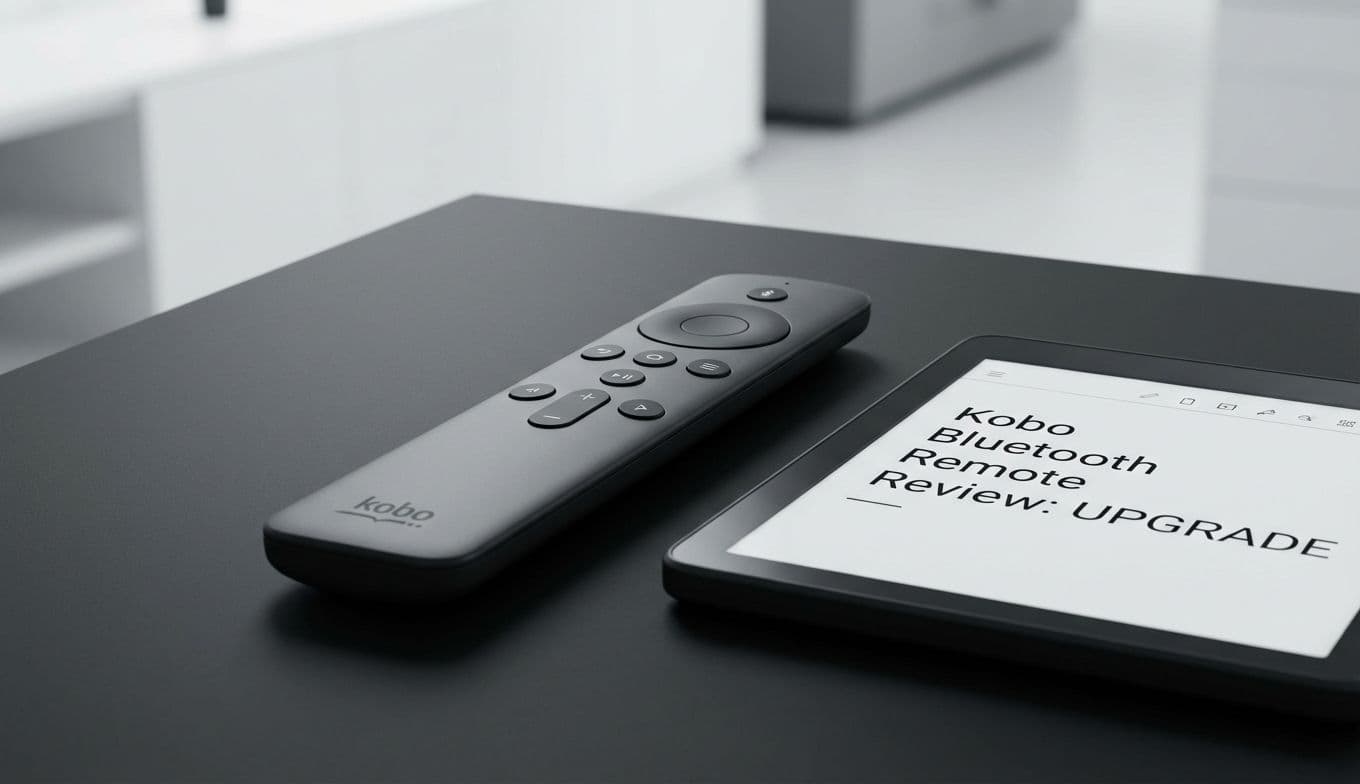
The Ultimate Cozy Reading Hack: Why the Kobo Remote is Worth the Hype
It is 11:30 PM on a Tuesday in the dead of winter. You are perfectly cocooned in three layers of blankets, your pillows are at the precise angle of maximum support, and you have reached the climax of a psychological thriller. There is just one problem: it is freezing outside that duvet. Every time you need to turn the page, you have to stick an arm out into the arctic air, breaking the seal of your warm sanctuary.
It sounds like a minor inconvenience—a "first-world problem" in its purest form—but for the dedicated reader, these small disruptions matter. This is exactly where the Kobo Remote enters the chat. At $30, this tiny Bluetooth clicker isn't just an accessory; it is a lifestyle upgrade for anyone who takes their "cozy reading" seriously. After months of it being sold out, I finally lived the dream of hands-free reading, and it turns out that being a little indulgent is actually quite practical.
The Compatibility Checklist: Will It Work for You?
Before you rush to the checkout, you need to know if your specific e-reader can actually talk to this remote. Unlike universal accessories, the Kobo Remote relies on the device’s internal Bluetooth stack. If your Kobo supports Bluetooth audiobooks, you are likely in the clear.
The remote is officially compatible with:
- Kobo Libra Colour
- Kobo Libra 2
- Kobo Sage
- Kobo Elipsa 2E
- Kobo Clara Colour
- Kobo Clara BW
If you are rocking an older Clara HD or the original Elipsa, you’ll have to keep using your thumbs the old-fashioned way. But for owners of the newer lineup, this is a seamless "native" addition to your ecosystem.
Native Bluetooth vs. The Mechanical Tappers
You might have seen third-party page turners on social media—those clunky gadgets that look like a binder clip with a plastic finger attached. For a long time, those were the only option. They work by physically "tapping" the screen using a mechanical arm or an electromagnetic pulse. They are, frankly, a bit of a headache. They obscure the text, they require their own separate charging cables, and they can be finicky to align.
