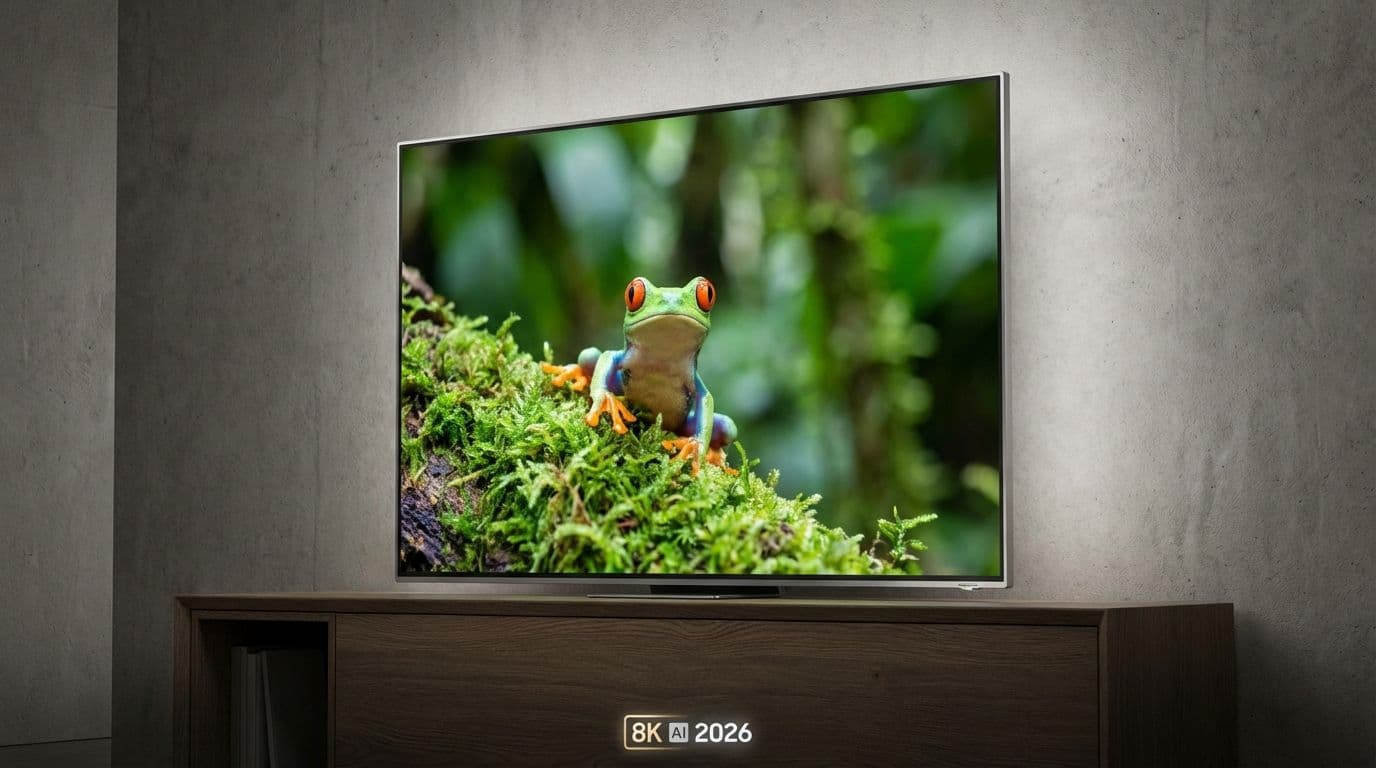
Is an 8K TV Worth It in 2026? Future-Proofing Guide & Review
Team Gimmie
2/2/2026

Is an 8K TV Worth It in 2026? The Honest Truth About Future-Proofing Your Living Room
It is a question I get asked every single time a major holiday or tech sales event rolls around: Is an 8K TV actually worth the splurge? For the better part of the last five years, my answer was a flat, unapologetic no. The price tags were astronomical, the content was non-existent, and the visual difference for the average person was negligible at best.
But here we are in early 2026, and the landscape has shifted. While I am still not shouting from the rooftops that every household needs to upgrade, we have finally reached a point where the answer has moved from a hard no to a nuanced it depends. If you are looking for a future-proofed centerpiece for your home, the argument for 8K is finally starting to hold water.
The 2026 Reality Check: Pixels vs. Practicality
Let us look at the raw numbers first. An 8K screen packs 33 million pixels, which is four times the density of a 4K display. In theory, that means sharper edges, deeper textures, and a level of detail that mimics looking through a window. However, the old hurdle remains: most of what you watch—Netflix, Hulu, live sports, and cable—is still broadcast in 4K or even standard HD.
So, why bother? The answer lies in the massive leap we have seen in AI-driven upscaling. In 2026, manufacturers like Samsung and LG are using eighth-generation AI processors that do not just stretch a 4K image to fit an 8K screen; they intelligently reconstruct it. These chips analyze the scene in real-time, adding texture to hair, sharpening distant landscapes, and removing digital noise. It is not quite native 8K, but on a 2026 flagship, a high-quality 4K stream looks noticeably better than it would on a standard 4K set.
The State of 8K Content in 2026
We are finally seeing the first real cracks in the content wall. While we are still waiting for a dedicated 8K disc format (and we might be waiting forever), digital options are expanding.
YouTube 8K: This has become the primary playground for 8K. From breathtaking travel cinematography to high-end nature documentaries, there is now a massive library of native 8K content available for free.

High-End Gaming: If you are a PC gamer who just dropped several thousand dollars on a next-gen graphics card—think the NVIDIA RTX 60-series—8K gaming is no longer a slideshow. It is a playable, breathtaking reality. For those with the hardware to drive it, the difference in clarity is staggering.
Specialty Streaming: Sony’s updated streaming services and specialized 8K tiers from niche providers are starting to offer IMAX Enhanced content that truly utilizes those 33 million pixels. It is still a premium experience, but it is no longer a theoretical one.
The 4K vs. 8K Value Breakdown
To help you decide, let us look at how the market sits right now in terms of cost and value.
The 4K Sweet Spot Typical Price: $1,200 – $2,500 Best For: Most living rooms, viewers sitting 8–10 feet away, and anyone on a sensible budget. The Reality: You get an incredible picture, perfect for almost all current streaming content.
The 8K Luxury Tier Typical Price: $3,500 – $7,000+ Best For: Dedicated home theaters, screens 85 inches or larger, and tech enthusiasts who want the best available tech. The Reality: You are paying for the highest-end processors and peak brightness levels that 4K models rarely match.
Who Should Actually Buy an 8K TV Today?
I am not here to spend your money for you, but there are three specific types of buyers for whom an 8K set makes genuine sense in 2026.
First, the Early Adopter and Gaming Enthusiast. If you are the person who always wants the pinnacle of display technology and you have the hardware to support it, 8K is the current ceiling. You will be ahead of the curve, and your setup will stay relevant for the next decade.
Second, the Large Screen Cinephile. If you are looking at a display that is 85 inches or larger, the benefits of 8K become much more obvious. On a screen that size, 4K pixels can start to look visible if you sit too close. 8K keeps the image looking dense and filmic, no matter how much real estate you are covering.
Third, the Milestone Gift Giver. If you are buying a TV as a major gift—perhaps for a retirement, a new home, or a landmark anniversary—an 8K TV is the ultimate wow factor. It signals that you have spared no expense to provide the recipient with the most advanced viewing experience possible.
The 2026 Heavy Hitters: Which Models Matter?
If you have decided to take the plunge, there are two specific models that currently define the 8K experience.
Samsung Neo QLED QN900F: This is the gold standard for 8K in 2026. Samsung has mastered Mini-LED technology, allowing this set to reach blinding peak brightness levels that make HDR content pop in a way 4K sets struggle to emulate. Its NQ8 AI Gen3 processor is currently the best in the business at upscaling legacy content.
LG Z4 Series OLED: If you want the infinite contrast and perfect blacks of an OLED combined with 8K resolution, this is it. It is incredibly expensive, but for a dark-room home theater, there is nothing that looks better. The Z4 handles motion and color accuracy with a level of precision that makes it a favorite for professional colorists and movie buffs alike.
The Verdict: Future-Proofing or Overspending?
So, is an 8K TV worth it? My revised answer for 2026 is this: For 90 percent of people, a high-end 4K TV is still the smarter buy. You can get a stunning 4K OLED for half the price of an entry-level 8K set and be perfectly happy for years.
However, we are no longer in the era where 8K is a gimmick. If you are building a top-tier home cinema, if you are a hardcore PC gamer, or if you simply want the peace of mind that comes with owning the best possible hardware, the 8K future has finally arrived. It is a luxury, certainly, but it is a luxury that finally delivers on its promises.
For most gift-givers and everyday buyers, stick with a premium 4K model and spend the extra money on a great sound system. But for those who want to push the boundaries of what is possible in their living room, the 8K reality is finally worth a look.