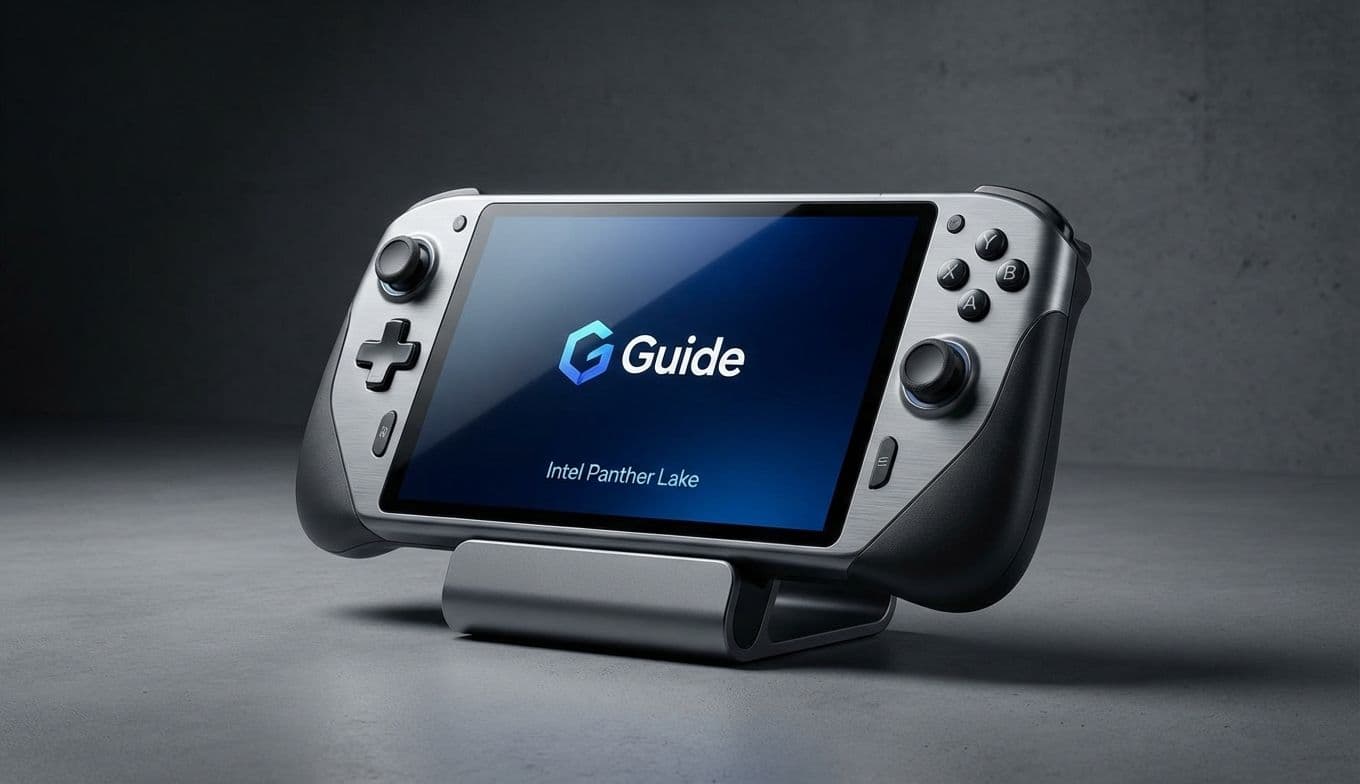
Intel Panther Lake Handhelds: Core G3 Specs & Buying Guide
Team Gimmie
1/7/2026

THE NEXT LEVEL OF PORTABLE PLAY: WHY INTEL’S PANTHER LAKE IS A BIG DEAL FOR YOUR NEXT HANDHELD
For a long time, the idea of playing high-end PC games on a device that fits in your backpack felt like a pipe dream. Then the Steam Deck arrived and proved it was possible, followed quickly by the power-heavy ASUS ROG Ally and the massive screen of the Lenovo Legion Go. We are currently living in the golden age of handheld gaming, but a massive shift is on the horizon.
Intel, which has spent the last few years watching from the sidelines as AMD dominated this space, is finally getting serious. They recently announced Panther Lake, a new architecture featuring a custom Core G3 chip designed specifically for handhelds. This isn’t just a laptop chip shoved into a smaller case; it is a ground-up effort to challenge the current kings of the mountain. If you have been thinking about buying a handheld or giving one as a gift, the landscape is about to get a lot more interesting.
THE CHALLENGER VS. THE CHAMPIONS: BREAKING DOWN THE HYPE
To understand why Panther Lake matters, we have to look at what it is trying to beat. Right now, the market is split into two camps. On one side, you have the Steam Deck OLED, which focuses on efficiency and a seamless user experience. On the other, you have Windows-based powerhouses like the ROG Ally X and the Legion Go, both of which use AMD’s Z1 Extreme chip.
Intel’s new G3 variant is aiming directly at that AMD-dominated crown. Early reports suggest that this custom silicon is designed to outperform Intel’s own Arc B390 graphics. In plain English, that means Intel is trying to close the gap that has traditionally made AMD the preferred choice for mobile gaming. While current Intel-based handhelds like the MSI Claw struggled with driver issues and battery life at launch, Panther Lake represents a massive strategic pivot.
Intel isn't just fighting AMD, either. With Qualcomm signaling a move into Windows gaming handhelds and AMD’s own Strix Halo chips on the way, the competition is becoming a four-way race. For you, the player, this is fantastic news. Competition breeds innovation, and we are finally moving past the point where we have to choose between "good battery life" and "games that actually look good."

THE SECRET SAUCE: MORE POWER, LESS HEAT
One of the most technical—and most important—parts of Intel’s announcement is the move to the 18A manufacturing process. Now, unless you are a chip architect, that number probably doesn’t mean much. But here is why it matters for your actual gaming experience: it is all about thermal efficiency.
In a handheld, heat is the enemy. When a device gets too hot, it slows itself down to avoid melting, which causes your frame rates to drop and your fans to sound like a jet engine taking off. This is the primary reason why playing a demanding game like Cyberpunk 2077 on a handheld usually results in a dead battery in about ninety minutes.
Intel’s 18A process is designed to pack more power into a smaller space while using less electricity. The goal is the Holy Grail of handheld gaming: more than three hours of "heavy" AAA gaming on a single charge. If Intel can deliver a chip that stays cool while pushing high-definition graphics, they will have solved the single biggest complaint users have with current Windows handhelds.
THE 2026 BUYER’S GUIDE: SHOULD YOU BUY NOW OR WAIT?
If you are looking at your holiday budget or planning a major tech purchase for 2026, the timing is tricky. Here is the reality of the market as it stands today.
BUY NOW IF: You want a proven experience today. The Steam Deck OLED remains the gold standard for value and ease of use. If you want raw power and the ability to play every Game Pass title without jumping through hoops, the ROG Ally X is the current heavyweight champion. These devices are mature, their software is stable, and they have massive communities for support. You can buy these today and be happy for years.
WAIT UNTIL MID-TO-LATE 2026 IF: You are a performance enthusiast who wants the next big leap. The first Panther Lake devices from partners like ASUS, Lenovo, or perhaps even new manufacturers are expected to hit shelves later this year. If you wait, you are betting on Intel’s promise of better battery life and significantly higher graphical fidelity. You are also waiting to see how Qualcomm’s entry into the market might drive prices down across the board.
A word of caution for the gift-givers: Early adopter tech usually comes with a premium. When the first Panther Lake handhelds arrive, they will likely be priced at the top of the market—think 800 dollars and up. If you are looking for a budget-friendly gift, the current generation of discounted Z1 Extreme devices will likely be the better value play.
WHO IS THE INTEL HANDHELD REALLY FOR?
Not every gamer needs a custom Panther Lake chip. To help you decide where you fit, we have broken down the typical handheld users:
THE HARDCORE TRAVELER: This is the person who spends ten hours a week on a plane or train. For you, the efficiency of the 18A process is everything. If Intel can actually deliver on the promise of longer playtimes without a wall outlet, a Panther Lake device will be your new best friend.
THE DESKTOP REPLACEMENT: If you don't own a gaming PC and want a handheld that can "do it all"—plug into a monitor for work and play high-end games at night—the raw power of the Core G3 variant is aimed squarely at you. This chip is designed to handle more than just games; it’s a full-fledged PC in your palms.
THE VALUE SEEKER: If you are looking for the most "bang for your buck," Intel’s new chips might actually be a distraction. As these high-end devices launch, the prices for the current Steam Deck and ROG Ally models will likely drop. For many people, playing indie hits like Hades II or older blockbusters at 60 frames per second is more than enough, and you don’t need a cutting-edge Panther Lake chip for that.
THE FUTURE IS CROWDED (IN A GOOD WAY)
It is easy to get caught up in the specs and the "nanometer" talk, but the big picture is simple: Intel is finally treating handhelds like a primary platform, not a secondary experiment. By creating a custom chip specifically for this form factor, they are acknowledging that handheld gaming isn't a fad—it is the future of how many people want to play.
We still have questions that only real-world testing can answer. Will the software drivers be stable on day one? Will the manufacturers design comfortable, ergonomic cases for these powerful new chips? And most importantly, can Intel actually beat AMD at its own game?
As a consumer, you are in the driver’s seat. The next twelve months will see a flood of new options, and while Intel’s Panther Lake sounds like a massive leap forward on paper, the best move is to stay informed. Watch the benchmarks, wait for the independent reviews, and remember that the best gaming device isn't necessarily the one with the most impressive spec sheet—it's the one that you actually enjoy picking up and playing every day.
The handheld wars are just getting started, and for the first time in a long time, Intel is a serious contender. Keep your eyes on the horizon; the way we play on the go is about to change.