How to Find Air Leaks in Your Home: 2026 Sealing Guide
Team Gimmie
1/14/2026

Stop Paying to Heat the Outdoors: The Tech-Forward Guide to Sealing Air Leaks
It is mid-January 2026, and if you are looking at your latest utility notification with a sense of dread, you are not alone. Despite the promise of high-efficiency HVAC systems and the latest AI-managed power grids, most homeowners are still bleeding money through the tiny cracks and crevices of their homes. We have all been there: cranking the heat only to feel a phantom chill crawl across the floor, or wearing three layers of wool just to sit in the living room.
While the market is flooded with high-priced solutions like triple-pane windows or whole-home solar arrays, there is one maintenance task that offers an almost immediate return on investment. It is the most effective, least regrettable decision you can make this winter: sealing your air leaks. This is not just about comfort; it is about stopping a literal cash leak. In the world of home performance, we call it the low-hanging fruit, and in 2026, the tools to fix it have never been more accessible or more precise.
The Hidden Enemy of Your Smart Home
You might have the latest 2026 Nest or Ecobee AI thermostat, but even the smartest algorithm cannot compensate for a physical hole in your wall. Think of your home like a high-end down jacket. If the zipper is broken or there is a tear in the sleeve, it does not matter how high-quality the insulation is; the heat is going to escape.
Your heating system is currently fighting a losing battle against the stack effect. Warm air rises and escapes through leaks in your attic and upper floors, creating a vacuum that pulls cold, biting air in through the gaps in your basement and ground-level windows. Sealing these leaks is the only way to allow your smart climate systems to actually do their jobs. When your home is airtight, your AI thermostat can finally optimize for efficiency rather than just struggling to keep up with the constant infiltration of cold air.
The Gear Guide: High-Tech Detection
Gone are the days of walking around with a flickering candle to find a draft. If you want to get serious about energy efficiency, you need a thermal leak detector. These devices have evolved from bulky professional equipment into sleek smartphone attachments that give you literal X-ray vision for heat.

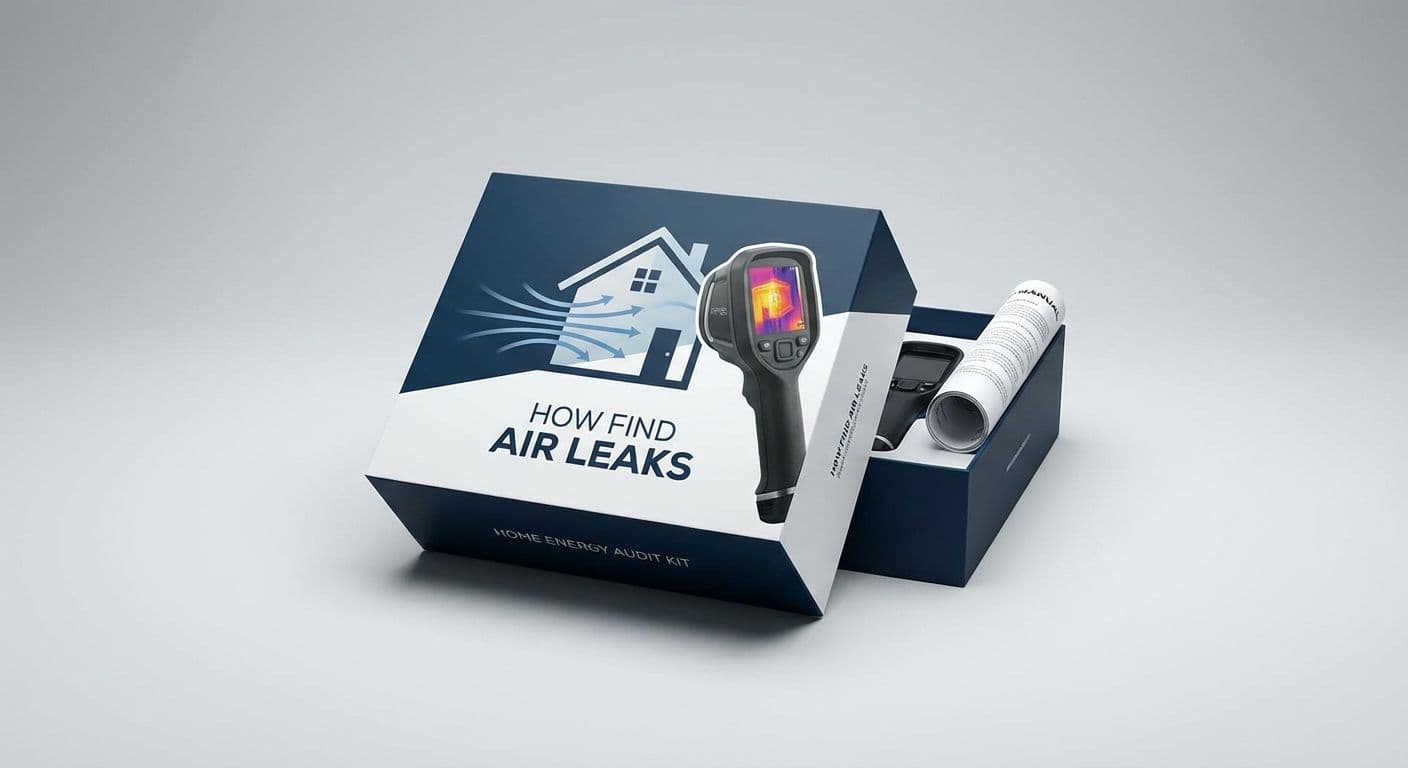
For the serious DIYer, the FLIR ONE Edge Pro is the current gold standard. It connects wirelessly to your phone, allowing you to inspect tight corners or high ceilings without being tethered. It highlights temperature variances in vivid purple and orange, showing you exactly where insulation is sagging or where a window seal has failed. If you are on a slightly tighter budget, the Seek Thermal Compact offers incredible resolution for its price point and plugs directly into your USB-C port.
Using a thermal imager is a revelation. You will likely find that your biggest leaks are not where you expected. It is rarely just the window glass; it is the electrical outlets on exterior walls, the recessed lighting canisters, and the gaps behind your baseboards. Having this tech in your pocket turns a guessing game into a surgical strike on your energy bill.
The Professional’s Toolkit: Consumables That Actually Work
Once you have identified your targets, you need the right materials. Not all caulk and weatherstripping are created equal, and using the wrong product often leads to a seal that fails within a single season.
For stationary gaps—think window frames, door trim, and where the siding meets the foundation—skip the cheap stuff. GE Advanced Silicone 2 is a standout because it is permanently flexible and shrink-proof. If you are working on interior trim where aesthetics matter, Big Stretch by Sashco is an industry favorite. As the name implies, it can handle the natural shifting of a house without cracking, and it is completely paintable.
For the gaps that move, such as doors and operable windows, Duck Brand Heavy-Duty Self-Adhesive Weatherstripping is the go-to for a quick, reliable fix. If you have a larger gap under a door, look for an M-D Building Products Cinch Door Seal. Unlike the cheap foam strips that peel off after a month, these use high-quality aluminum and vinyl that stand up to years of foot traffic.
And do not forget the silent killers: your electrical outlets. Grab a pack of Duck Brand Socket Sealers. These are simple foam gaskets that sit behind your outlet covers. They cost pennies, take seconds to install, and stop the surprising amount of air that whistles through your electrical boxes.
The Energy-Saver’s Starter Kit: The Gift That Pays for Itself
If you are looking for a practical, impactful gift for a new homeowner or a budget-conscious friend, forget the decorative candles. An Energy-Saver’s Starter Kit is a thoughtful gesture that delivers genuine value. Here is what we recommend including in a curated bundle:
A high-quality caulk gun, such as the Dripless ETS2000, which prevents the messy overrun common with cheap models. A few tubes of GE Advanced Silicone 2 and Sashco Big Stretch. A multi-pack of M-D Building Products foam weatherstripping in various thicknesses. A box of outlet and light switch gaskets. For a truly premium gift, include the FLIR ONE Edge Pro.
This kit is more than just a collection of hardware; it is a roadmap to a more comfortable, affordable home. It is the kind of gift that a friend might find confusing in the moment, but will thank you for every time they see their lowered heating bill.
The 2026 Efficiency Synergy
In today’s smart home ecosystem, physical seals and digital controls must work in tandem. When you seal your home’s air leaks, you are providing your AI-driven HVAC system with a stable environment. This allows features like adaptive recovery and geo-fencing to work with much higher precision. Instead of your heater kicking on every ten minutes because of a drafty window, it can maintain a steady, low-energy state.
The value proposition here is exceptionally high. Unlike a kitchen remodel or a bathroom refresh, which are largely aesthetic, air sealing provides a measurable, monthly return. You will feel the difference in comfort within hours—the floors will feel less icy, and the rooms will hold their temperature far longer after the heat turns off.
The Final Word: Seal the Deal
Do not let another winter week go by while your hard-earned money blows out through the cracks in your walls. Investing a single weekend into air sealing is the smartest home maintenance move you can make. It is satisfying, it is measurable, and it is the foundation of a truly modern, efficient home. Grab your thermal camera and a caulk gun, and take control of your environment. You will not regret it, and your bank account will thank you.