How to Beat the $1,000 Smartphone Price Tag in 2026
Tired of $1,000 smartphones? Discover strategic ways to save, from buying Flagship Lite models to navigating refurbished deals and carrier traps.

By Team Gimmie
Updated September 2, 2026
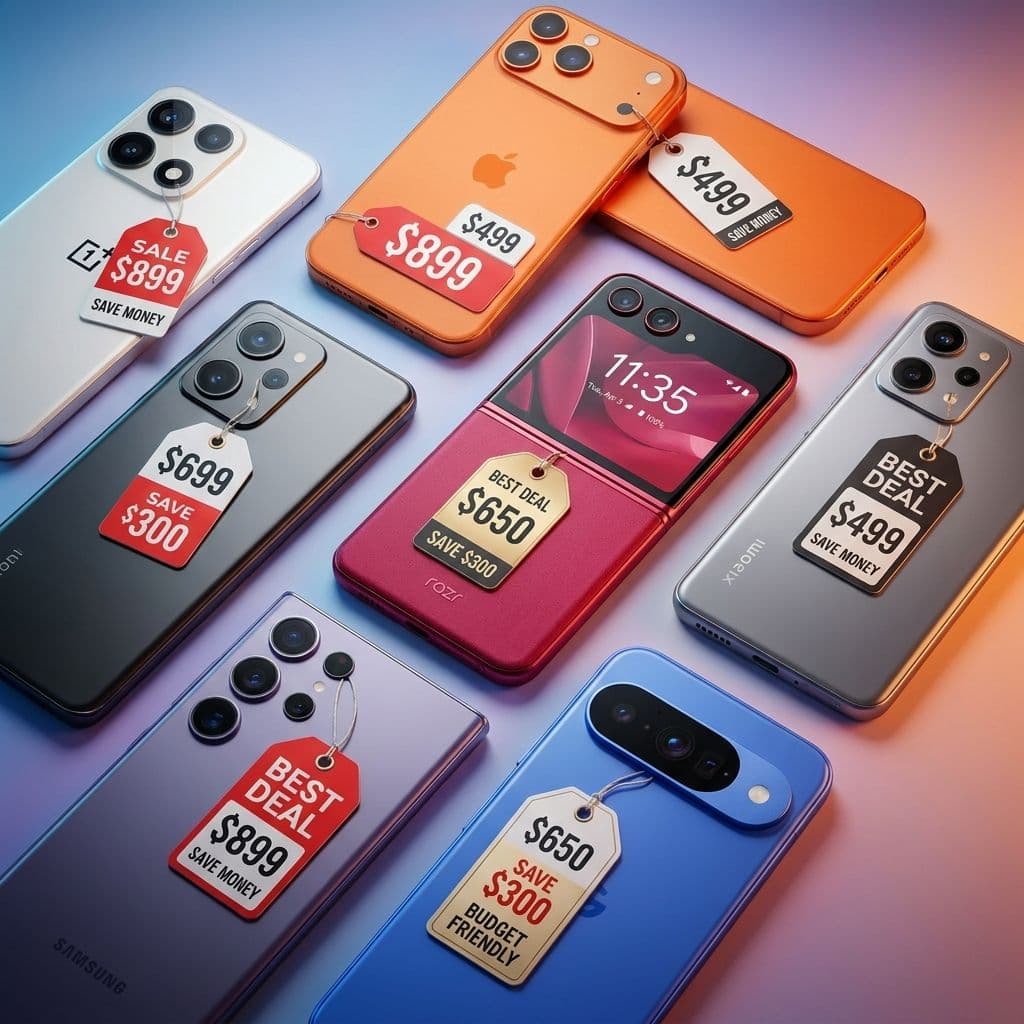
HOW TO BEAT THE $1,000 SMARTPHONE: A STRATEGIC BUYERS PLAYBOOK
There was a time, not so long ago, when spending $500 on a smartphone felt like a major investment. Today, that same $500 barely gets you through the door. We have reached a psychological breaking point where the $1,000 price tag is no longer the ceiling—its the new basement. Walking into a carrier store shouldn't feel like walking onto a luxury car lot, yet here we are, being asked to finance a pocket-sized computer for the same monthly cost as a high-end gym membership.
As manufacturers pack devices with AI processors, titanium frames, and camera glass that rivals professional DSLRs, the price of entry continues to climb. But heres the secret the industry doesn't want you to focus on: smartphone innovation has plateaued. The gap between a $1,100 flagship and a $500 strategic choice has never been smaller. If you are tired of the four-figure sticker shock, it is time to stop buying the newest and start buying the smartest.
FINDING THE SWEET SPOT: THE RISE OF FLAGSHIP LITE
For years, buying a mid-range phone meant settling for a laggy screen, a plastic body that felt like a toy, and a camera that struggled in anything but direct sunlight. That era is over. We are currently living in the golden age of the Flagship Lite tier.
Take the Google Pixel 8a as the prime example. At roughly $499, it uses the exact same Tensor G3 chip found in the $999 Pixel 8 Pro. You are getting the same AI features, the same photo processing engine, and the same lightning-fast interface for half the price. What do you lose? You get a slightly smaller screen, a plastic back instead of glass, and you miss out on the dedicated telephoto zoom lens. Unless you are a professional mobile photographer or someone who spends hours measuring screen bezels with a ruler, these omissions are practically invisible in daily life.
Similarly, the Samsung Galaxy A54 or the newer A55 offers a gorgeous 120Hz AMOLED display that looks indistinguishable from the flagship S24 to the naked eye. While the processor isn't quite as beefy for high-end gaming, it handles multitasking, social media, and 4K video playback without breaking a sweat. When you buy these devices, you aren't compromising; you are trimming the fat.