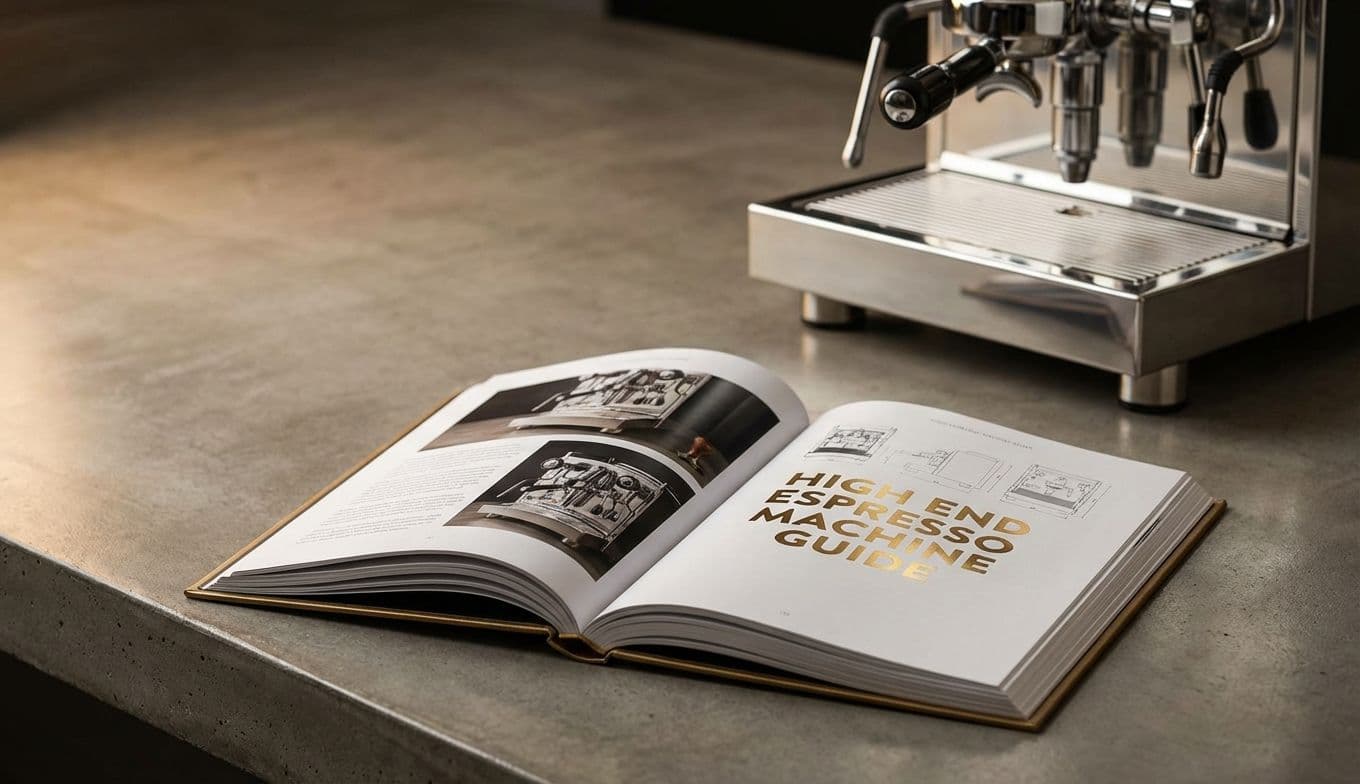
High-End Espresso Machine Guide: The Art of the Home Shot
Team Gimmie
2/4/2026

THE ART OF THE HOME SHOT: A NO-NONSENSE GUIDE TO YOUR FIRST REAL ESPRESSO MACHINE
There is a specific moment that every coffee lover experiences. It usually happens around 7:15 AM, standing in a line that is three people too long, waiting to pay eight dollars for a latte that you know, deep down, is mostly milk and prayer. You look at the gleaming Italian machine behind the counter and think, I could do that.
But then you go online. You see terms like PID controllers, heat exchangers, and burr geometry. You see price tags that rival a used car. The dream of the perfect home kitchen cafe suddenly feels like a daunting engineering project.
The truth is that buying your first high-end espresso machine is not about buying a kitchen appliance; it is about choosing a hobby. If you just want caffeine, buy a pod machine. If you want the ritual, the science, and the undeniable satisfaction of pulling a perfect, syrupy shot of espresso, then you are in the right place. Let’s break down how to navigate this world without losing your mind or your savings.
UNDERSTANDING THE SPECTRUM: FROM BUTTON-PUSHERS TO BARISTAS
The first decision you need to make is how much work you actually want to do. The espresso world is divided into three main camps: Super-Automatic, Semi-Automatic, and Manual.
Super-Automatic machines are for the person who wants the result but not the process. You put beans in the top, press a button, and the machine grinds, tamps, and brews. It is convenient, but it comes with a trade-off. These machines are notoriously difficult to repair and rarely produce the "god shot" quality you find in a boutique cafe. They are the high-end version of a microwave dinner—consistent, but limited.
Semi-Automatic machines are the sweet spot for most enthusiasts. Here, the machine handles the water temperature and pressure, but you are responsible for the grind and the tamping. This is where the craft lives. You have enough control to make the coffee taste exactly how you want it, but the machine does the heavy lifting of keeping the water at a steady 200 degrees Fahrenheit.
Manual machines, often called lever machines, are for the purists. There are no pumps. You provide the pressure by pulling a physical lever. It is beautiful, silent, and incredibly difficult to master. Unless you want your morning coffee to feel like a gym workout and a high-stakes science experiment, save the manual lever for your second or third machine.

THE ENGINE ROOM: BOILERS AND TEMPERATURE CONTROL
Once you settle on a semi-automatic machine, you’ll encounter the biggest price driver: the boiler system. This determines how much coffee you can make and how fast you can steam milk.
Single Boiler machines are the entry point. They have one internal tank. It heats up to brewing temperature, you pull your shot, and then you have to wait for it to heat up further to create steam for your milk. It’s a bit of a dance. If you only drink straight espresso, this is all you need. If you’re making three lattes for the family, the waiting time will drive you crazy.
Heat Exchanger (HX) machines are the middle ground. They allow you to brew and steam at the same time by running the brew water through a pipe inside the steam boiler. They are powerful and efficient, though they can require a cooling flush—running a bit of water through the group head—to make sure the first bit of water isn’t too hot.
Dual Boiler machines are the gold standard. One boiler for coffee, one for steam. They offer the best temperature stability and the ability to host a brunch party without breaking a sweat. If you have the budget and the counter space, this is the "buy once, cry once" option that will last you a decade.
THE COFFEE GRINDER: THE UNCOMFORTABLE TRUTH
Here is the most important piece of advice you will receive in your espresso journey: Your grinder is more important than your machine.
It is a common mistake to spend $2,000 on a beautiful chrome espresso machine and then try to use a $50 blade grinder or a mid-range grocery store burr grinder. It will not work. Espresso requires a highly specific, uniform, and fine grind. If the particles are uneven, the water will find the path of least resistance, resulting in coffee that is both sour and bitter at the same time.
When budgeting, you should aim to spend at least 40 percent of your total investment on the grinder. A high-end machine paired with a mediocre grinder will produce mediocre coffee. A mid-range machine paired with a world-class grinder will produce exceptional coffee. Look for grinders with "stepless" adjustment, which allows you to make tiny, incremental changes to the grind size. In the world of espresso, a fraction of a millimeter is the difference between success and a sink-pour.
BEYOND THE SPECS: THE REALITIES OF MAINTENANCE
Before you clear a spot on your granite countertop, let’s talk about the part the glossy brochures leave out: maintenance. A high-end espresso machine is a high-performance vehicle. It needs oil changes, cleaning, and quality fuel.
Your fuel is water. Using tap water in a high-end machine is the fastest way to kill it. Scale buildup from minerals will eventually clog the delicate internal copper tubing. You need to use filtered water or, better yet, water that has been specifically remineralized for coffee.
You will also need to "backflush" your machine regularly with cleaning powder to keep coffee oils from turning rancid inside the group head. It sounds like a chore, but it takes about three minutes once a week. If you aren't prepared to do this, the quality of your coffee will degrade within a month, regardless of how much you spent on the hardware.
MAKING THE DECISION
So, which path should you take?
If you are a busy professional who wants a great cappuccino while reading the news, look for a high-quality Super-Automatic from a reputable European brand.
If you are a tinkerer who loves the idea of weighing beans to the tenth of a gram and learning the art of milk micro-foam, go for a Semi-Automatic Single Boiler or Heat Exchanger.
If you want the ultimate home setup and plan on making coffee a central part of your morning ritual for years to come, save up for a Dual Boiler and a dedicated espresso grinder.
The world of high-end espresso is deep and occasionally snobby, but don’t let that intimidate you. At the end of the day, it’s just water and beans. The goal isn't to be a world-class barista; the goal is to make a cup of coffee that makes you happy to wake up in the morning. Everything else is just steam.