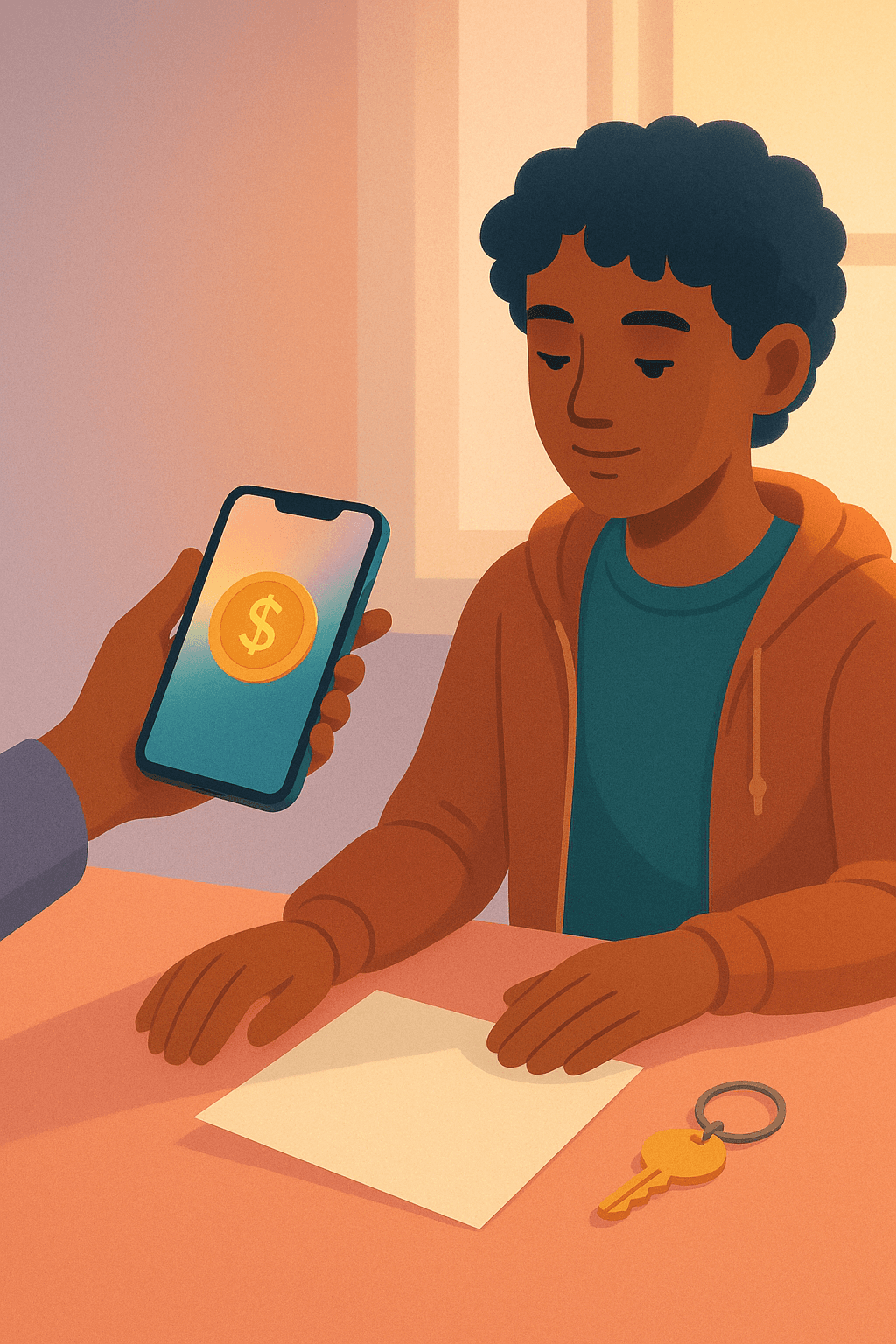
How do you give a teenager money without making it feel impersonal?
To give a teenager money without making it feel impersonal, pair financial freedom with one piece of identity evidence and a short message. Let them choose the final item, but show why the amount, format, or occasion reminded you of them. The gift becomes personal because the teen feels understood, not managed.
Use this simple formula:
Freedom + identity evidence + emotional context = personal money gift
For example, do not hand Maya $50 and say, “I didn’t know what to get.” Send $50 in a digital card that says, “For the vintage jacket, concert ticket, or art supplies you’ll discover before I do. I love how you make everything your own.” Maya receives autonomy and recognition.
This distinction matters because teenagers are actively forming an identity. A highly specific object can miss when interests change quickly; flexible value lets the recipient decide what fits now. Cash is not the absence of thought. Unexplained cash is.
Why does money often work better than a surprise gift for teenagers?
Money often works better because it respects adolescent autonomy while preventing an adult from freezing the teen’s identity in an outdated interest. A 15-year-old who loved Marvel in March may want a Depop jacket in June. Flexible value protects choice; thoughtful presentation preserves the relationship behind the gift.
The non-obvious rule is this: accuracy is not the same as specificity. A surprise pair of Nike Dunks in the wrong color is specific but inaccurate. A contribution toward shoes the teenager selects is less specific but more emotionally intelligent.
Money also works especially well when the teenager is:
Saving for a large purchase, such as a bicycle, laptop, camera, or festival ticket.
Exploring a new identity, hobby, room style, or clothing aesthetic.
Managing dietary, sensory, size, accessibility, or space constraints.
About Team Gimmie
A small team of friends and colleagues working together to produce useful content to help you...gift better.
Moving between two homes and does not need another physical object.
Preparing for college, a first job, travel, or independent living.
How much money should you give a teenager?
The right amount depends on your relationship, the occasion, local norms, and what you can comfortably afford—not on proving generosity. In the United States, $15–$30 suits a small celebration, $25–$50 suits many birthdays, and $50–$150 suits major milestones from close family. A sincere smaller gift remains complete.
Use these ranges as planning anchors, not obligations:
Neighbor, coach, or family friend — Practical USD range: $15–$30; Personal framing: “Pick a post-game treat or something fun.”
Friend or classmate birthday — Practical USD range: $20–$40; Personal framing: “For whatever is currently winning your wishlist.”
Niece, nephew, or close family birthday — Practical USD range: $30–$75; Personal framing: “Spend it now or add it to your bigger plan.”
Graduation, quinceañera, bar or bat mitzvah — Practical USD range: $50–$150+; Personal framing: “For the next chapter you get to shape.”
Small achievement or encouragement — Practical USD range: $10–$25; Personal framing: “A little victory fund—no productivity required.”
Scale the figures to your currency and circumstances. Never apologize for the amount. A clear note and respectful delivery do more emotional work than stretching beyond your budget.
Should you give cash, a gift card, or a contribution toward a goal?
Choose cash for maximum freedom, a gift card when one retailer is already part of the teen’s routine, and a goal contribution when they have named a larger plan. An experience credit works when time together is welcome. The best format removes friction without quietly assigning homework or controlling the purchase.
Cash or bank transfer — Best for: Independent choice; Main strength: Works almost anywhere; Watch-out: Add a message so it has context
Visa or Mastercard prepaid card — Best for: Broad spending flexibility; Main strength: Feels gift-ready; Watch-out: Check activation and inactivity fees
Retailer gift card — Best for: Known habits at Steam, Sephora, Nike, Target, or Etsy; Main strength: Shows useful awareness; Watch-out: Avoid guessing the store
Goal contribution — Best for: Laptop, instrument, driving lessons, or travel; Main strength: Supports a meaningful plan; Watch-out: Let the teen control timing
Experience credit — Best for: Cinema, climbing gym, concert, café, or workshop; Main strength: Creates anticipation; Watch-out: Confirm access and scheduling
A gift card is not automatically more thoughtful than cash. If the teenager has never mentioned Lululemon, a Lululemon card restricts rather than personalizes. Known preference justifies a restriction; guessed preference does not.
How do you personalize money for different teenage personalities?
Personalize the meaning of the money, not only its packaging. Gimmie’s 8-Color Consumer Psychology System matches gifts through personality traits, values, identity, love languages, and social roles. For teenagers, observable behavior—how they decide, create, connect, compete, or seek calm—is more reliable than age, gender, or a passing trend.
Apply that psychology without forcing the teen into a label:
The careful researcher: Add links only if requested and say, “For the option that passes your comparison test.”
The expressive creator: Use a handmade digital card and say, “For your next idea, look, sketch, track, or beautifully strange experiment.”
The social connector: Frame it as a meal, outing, or shared memory: “Invite someone you love and make an afternoon of it.”
The practical planner: Contribute to a named goal and include the new total, with permission.
The experience seeker: Offer a choice between a concert, climbing session, train trip, or class.
The private minimalist: Send a discreet transfer with a warm, low-key note—no public reveal required.
This is Emotionally Intelligent Gifting: using psychology and personality insights instead of transaction history alone. Gimmie’s Recipient Profile can preserve those stable signals across birthdays, graduations, and holidays while allowing current interests to change.
What is the best way to present a money gift?
Present a money gift in three layers: name the occasion, reflect one true quality, and grant unrestricted choice. Keep the note short enough to feel natural. Then choose a delivery format that suits the teenager—private digital card, physical envelope, savings contribution, or a small symbolic object connected to the larger goal.
Follow this five-step method:
Confirm the channel. Ask a parent or guardian whether cash, transfer, prepaid card, or retailer credit is appropriate.
Choose one identity signal. Mention their patience, originality, humor, curiosity, independence, or commitment.
Connect it to possibility. Name two or three options without requiring any of them.
Remove performance pressure. Say they may spend it, save it, or change their mind.
Make redemption easy. Include the balance, expiry date, fees, receipt, and instructions when relevant.
A strong message reads: “Congratulations on finishing Year 12. Your determination has been unmistakable. Put this toward travel, your first apartment, or something none of us has thought of yet.”
What mistakes make a money gift feel impersonal or controlling?
A money gift feels impersonal when the giver emphasizes convenience, and controlling when the giver monitors how it is spent. Avoid jokes about being impossible to shop for, surprise restrictions, public comparisons, and demands for proof of purchase. The recipient should experience trust, not an assignment disguised as generosity.
Skip these common lines:
“You’re so picky, so here.”
“Buy something sensible.”
“Don’t waste it.”
“Your cousin got the same amount.”
“Send me a photo of what you buy.”
Replace them with: “I trust you to know what fits your life right now.” That sentence turns money into a vote of confidence.
What else do people ask about giving teenagers money?
The practical questions are whether money is appropriate, how to preserve surprise, what to do when adults set limits, and whether saving should be encouraged. The consistent answer is to combine consent, clarity, and autonomy. Thoughtfulness comes from understanding the teenager’s context, not from making the gift physically elaborate.
Is it rude to give a teenager cash for a birthday?
No. Birthday cash is appropriate when it is permitted by the family and presented as intentional choice rather than a last-minute escape. Add a card naming something you appreciate about the teenager. Cash becomes rude only when the message belittles their interests, compares amounts, or creates an obligation to spend it your way.
How can a money gift still be a surprise?
Surprise the teenager with the framing rather than the product. Reveal a contribution toward an unnamed adventure, place cash inside a favorite book, or pair a digital card with three optional possibilities. The amount remains flexible while the delivery creates delight. Never use a scavenger hunt if public attention or extra steps cause stress.
Should you tell a teenager to save the money?
Offer saving as an option, not a condition, unless the gift was explicitly agreed as a savings contribution. A useful message is, “Spend it, save it, or split it.” For a first car or college fund, state the purpose before giving. Transparent boundaries respect autonomy more than rules revealed afterward.
What if the teenager’s parents restrict certain purchases?
Check household boundaries before selecting Steam credit, beauty products, gaming subscriptions, concert tickets, or prepaid cards. Do not recruit the teenager into hiding a purchase. Cash is still workable when the adults approve the format. Respecting family safety rules is part of a thoughtful gift, not a failure of personalization.
Is a small object plus money more thoughtful than money alone?
A small object helps when it carries meaning without becoming clutter. Pair travel money with a luggage tag, bookshop credit with a bookmark, or driving-lesson funds with a keyring. Skip the add-on for a minimalist or sensory-sensitive teenager. The note provides enough emotional context; extra packaging is never mandatory.
The best money gift says, “I see who you are becoming, and I trust your choices.” If you want help turning a few personality clues into a gift that feels unmistakably theirs, explore Gimmie’s psychology-driven recommendations—without the guesswork.
How to Give a Teenager Money Without Making It Feel Impersonal | Gimmie