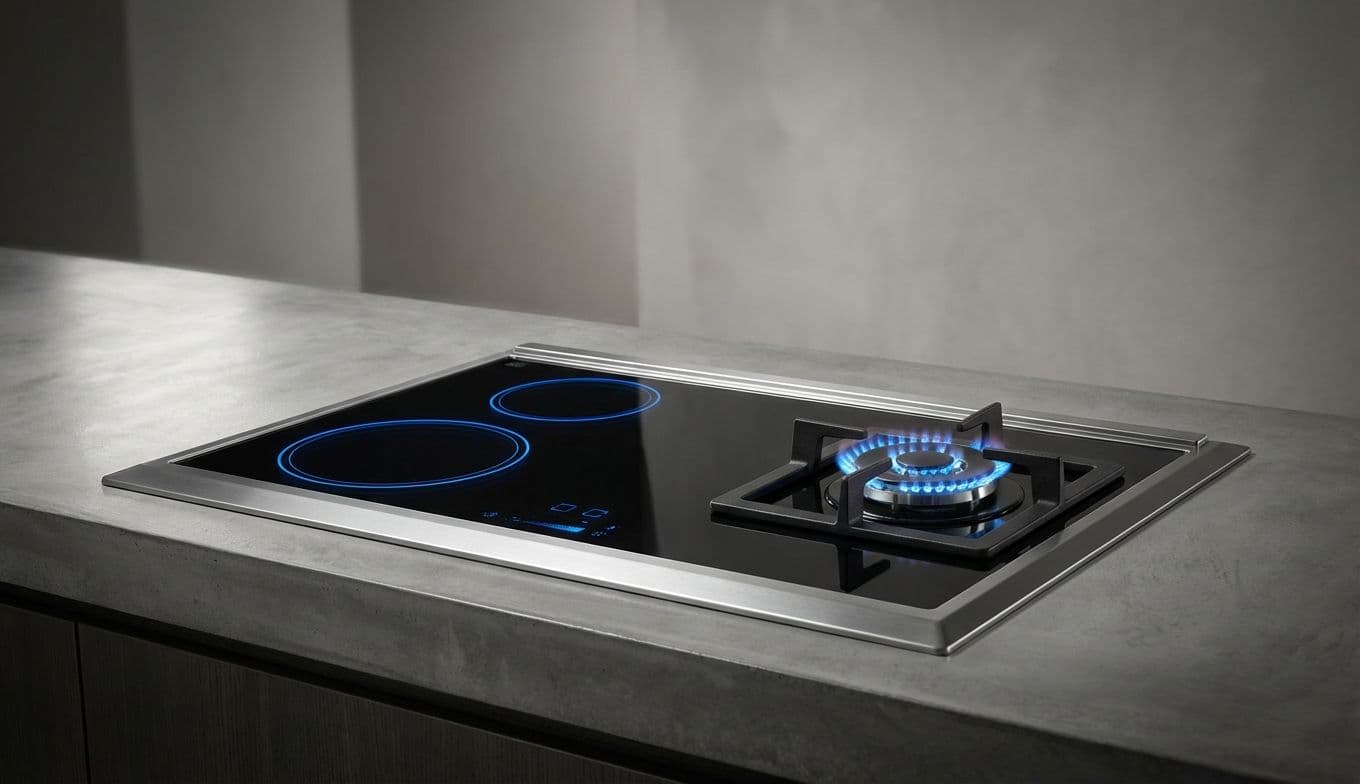
Gas vs. Induction Stove: Why I Switched & Won't Go Back

Team Gimmie

Team Gimmie

2/4/2026

Gas vs. Induction Stove: Why I Switched & Won't Go Back

I Switched to a Smart Induction Stove. Here's Why I'm Never Going Back

For nearly twenty years, I was a gas stove fundamentalist. I loved the rhythmic click-click-whoosh of the igniter and the visual confirmation of that blue ring of fire. To me, gas was the hallmark of a serious cook, while anything electric was a compromise relegated to dorm rooms and low-end rentals. I scoffed at the idea of induction, viewing it as a shiny, over-engineered solution to a problem that didn’t exist.

I was wrong. Embarrassingly wrong.

After making the switch to a modern induction range last year, I’ve realized that my devotion to gas was based more on nostalgia than performance. Cooking with gas now feels like using a flip phone in the age of the smartphone—it gets the job done, sure, but it’s slow, inefficient, and remarkably messy. If you are standing on the edge of a kitchen renovation or looking for a high-impact gift for a home chef, here is the honest truth about why induction isn’t just a trend, but a total recalibration of how a kitchen should function.

The Four-Minute Boil and the Power of Precision

The biggest hurdle for most skeptics is the belief that magnets can’t possibly be as powerful as a flame. To test this, I ran a side-by-side comparison between my old professional-grade gas range and my new GE Profile Smart Induction Range. I filled a pot with six quarts of cold water and turned both to high.

On my old gas range, I had time to chop an onion, grate a block of cheese, and check the mail before the water even began to simmer. It took nearly 11 minutes to reach a rolling boil. On the induction range? Four minutes and twelve seconds.

The speed is staggering because induction doesn’t waste energy heating the air around the pot. It uses electromagnetism to turn the cookware itself into the heat source. When you turn the dial, the response is instantaneous. There is no residual heat left in a burner that needs to "cool down." If a pot of milk is about to boil over, you hit the button and the activity stops immediately—faster than lifting a pan off a gas grate. This level of control is a revelation for anyone who makes delicate sauces, melts chocolate, or sears scallops.

The Gateway Drug: The Portable Burner

If you’re still hesitant to drop several thousand dollars on a full range, or if you’re looking for a brilliant gift for someone who loves to cook, let me introduce you to the Duxtop Portable Induction Cooktop. This is what I call the "gateway drug" of kitchen appliances.

Retailing for around $100, a portable burner like the Duxtop 9600LS allows you to experience the speed and precision of induction on your countertop. I’ve started giving these as housewarming gifts because they are incredibly versatile. They provide an extra "burner" for big holiday meals, they are perfect for tableside hot-pot nights, and they give skeptics a low-stakes way to realize just how much faster their morning coffee or evening pasta can be. Once you see a Duxtop boil a kettle in half the time of your main stove, you’ll never look at your gas burners the same way again.

Smart Tech That Actually Earns Its Keep

I am generally a skeptic when it comes to "smart" appliances. I don't need my toaster to send me a push notification, and I don't need my fridge to tweet. However, the connectivity on modern induction stoves, like the Samsung Smart Induction Range, has genuinely changed my workflow.

The standout feature is the Precision Temperature Probe. This isn’t just a meat thermometer; it’s a tool that communicates directly with the stove. If I’m poaching salmon or trying to maintain a perfect 375-degree oil temperature for frying, I can set the exact degree on the app. The stove then adjusts its power output in real-time to maintain that precise temperature.

It effectively turns your stovetop into a sous-vide machine or a professional-grade deep fryer. For the home cook who loves technical challenges, this feature removes the guesswork and the constant hovering over a thermometer. It’s the difference between "eyeballing it" and achieving restaurant-quality consistency every single time.

The Invisible Benefits: Safety and Sanity

We often talk about the performance of a stove, but we rarely talk about what it’s like to live with it. This is where induction truly wins. Because the glass surface doesn’t get nearly as hot as a traditional electric or gas element, spills don't bake onto the surface.

In my gas days, cleaning the stove involved removing heavy cast-iron grates and scrubbing charred bits of pasta sauce out of crevices. Now? I wait thirty seconds after cooking, spray a bit of glass cleaner, and wipe it down with a microfiber cloth. The stove looks brand new every single day with about ten seconds of effort.

Then there’s the safety factor. If you have kids or curious pets, the "cool-to-the-touch" nature of the surface is a massive weight off your shoulders. If a burner is turned on but no magnetic pan is present, there is no heat. If you take the pan off, the heat stops. It is a fundamentally safer way to operate a household.

Making the Move

Is there a learning curve? Slightly. You’ll need to make sure your pots and pans are magnetic (the "magnet test" is your friend here). If a magnet sticks firmly to the bottom of your skillet, you’re good to go. Most high-quality stainless steel and all cast iron work perfectly.

I came into this process as a die-hard gas loyalist, convinced that I was losing something by giving up my flame. Instead, I gained time, precision, and a kitchen that stays ten degrees cooler in the summer. Whether you’re upgrading your own home or looking for a transformative gift like a Duxtop burner or a new Samsung range, the verdict is clear: the future of the kitchen is magnetic. I’m never going back, and once you see that four-minute boil for yourself, you won’t either.

#induction cooking benefits#portable induction cooktop review#smart induction range features#cleaning induction stove#induction cookware compatibility