Ford CES 2026 Roadmap: AI Assistant & Level 3 Autonomy
 Team Gimmie
Ford’s Reality Check: Why Their New AI Roadmap Matters for Your Next Family Car
As a product journalist who has seen more than a few tech cycles crash and burn, I have learned to approach the next big thing with a healthy dose of skepticism. We are constantly bombarded with promises of revolutionary upgrades, but the reality often looks like a software update that breaks more than it fixes.
That is why Ford’s recent announcements at CES 2026 caught my attention. This is not just another incremental update or a flashy concept car that will never see a showroom. It is a calculated roadmap that could genuinely change how we interact with our vehicles over the next three years.
The Road Map: What is Coming and When
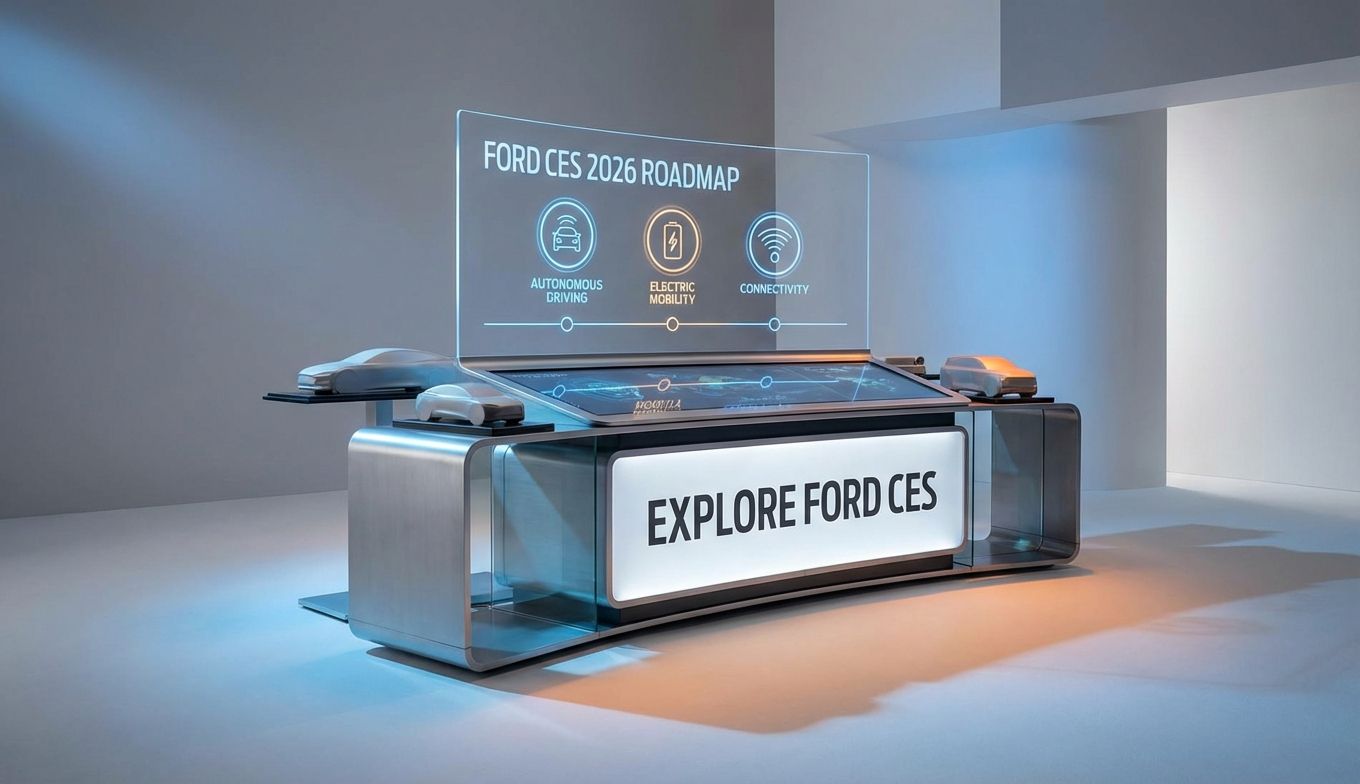
Late 2026: The debut of Ford’s in-house AI Voice Assistant. 2027: The launch of the Universal Electric Vehicle (UEV) platform. 2028: The introduction of Level 3 Hands-Free, Eyes-Off autonomous driving.
The AI Assistant: Moving Beyond the Clunky Dashboard
For years, car infotainment systems have been a mixed bag. You likely already use Apple CarPlay or Android Auto because the native car software feels like a clunky afterthought. Ford’s commitment to developing a core AI voice assistant in-house is a significant pivot.
By building the software themselves rather than just handing the keys to a third party, Ford gains deeper integration with the car’s hardware. We are not talking about a car that writes poetry; we are talking about an AI that understands context. Imagine saying, I’m feeling a bit cold and I’m running late, and the car simultaneously bumps the heat, adjusts your seat warmer, and recalculates your route based on real-time traffic—all without you digging through three layers of touchscreen menus.
This reduces driver distraction, which is the single most important safety factor on the road today. While CarPlay is great for music, an integrated AI can actually talk to the car’s mechanical systems, making the experience feel seamless rather than like a phone glued to a dashboard.
Level 3 Autonomy: The Science Fiction Reality of 2028
The most ambitious part of Ford's plan is the Level 3 autonomous driving feature slated for 2028. To put this in perspective, most hands-free systems today (like Ford’s current BlueCruise or Tesla’s Autopilot) are Level 2, meaning you must keep your eyes on the road at all times.
Level 3 is a monumental leap. It means the car can handle all driving tasks under specific conditions, allowing the driver to actually take their eyes off the road. You could, in theory, catch up on emails or watch a video while the car handles a monotonous highway commute.
However, context is everything. Ford is entering a space where Mercedes-Benz’s Drive Pilot has already set a high bar for luxury buyers. The difference? Ford is aiming to bring this to their Universal Electric Vehicle (UEV) platform.
The UEV Platform: Tech for the Rest of Us
When we hear about eyes-off driving, we usually think of six-figure luxury sedans. The UEV platform, set to launch in 2027, is Ford’s attempt to democratize this technology. The UEV is designed to be a flexible, cost-effective foundation for a variety of vehicle sizes—likely targeting the mid-market price bracket where most families actually shop.
By integrating Level 3 tech into the UEV platform by 2028, Ford is signaling that advanced autonomy should not just be a toy for the ultra-wealthy. They are aiming for the sweet spot of affordability and high-end tech, which could make your next mid-sized SUV far more capable than you ever expected.
A Shift in Thinking: The Safety Investment for Family
The original conversation around this tech often touched on gifting, but let’s be honest: you don’t gift a Level 3 autonomous vehicle like you do a pair of headphones. However, there is a profound shift happening in how we think about vehicle purchases for our loved ones.
Instead of looking at these features as gadgets, consider them safety investments. If you have a child heading off to college or an aging parent whose reflexes aren’t what they used to be, the value of an AI assistant that minimizes distraction is immense.
Gifting a car equipped with this technology is about gifting peace of mind. You are buying a system that acts as a second set of eyes and an intelligent co-pilot. For a spouse with a grueling hour-long commute, the promise of Level 3 driving in 2028 isn’t just a luxury—it’s the gift of reclaimed time and reduced stress.
Addressing the Skepticism: It is Not Magic
While this is exciting, it is important to temper the hype. Level 3 systems are condition-dependent. They usually require clear weather and well-marked highways. Furthermore, Level 3 still requires the driver to be able to take over when prompted. This is not a self-driving taxi; it is a managed activity.
Ford’s decision to develop the core tech in-house—while avoiding the massive expense of designing their own silicon chips—is a practical middle ground. They are focusing on the user experience and reliability rather than trying to reinvent the entire supply chain.
The Road Ahead
Ford is signaling a serious commitment to innovation that could redefine your relationship with your car. The AI assistant arriving later this year will be the first real test of this new direction. If they can make the voice interface as natural as talking to a friend, they will have solved one of the biggest frustrations in modern driving.
As these features roll out, I recommend looking past the marketing buzzwords. Focus on how this tech can actually serve your daily life. Whether it is a safer commute for your teenager or a less stressful drive for yourself, Ford’s roadmap suggests that the future of driving is finally starting to look a lot more human.
