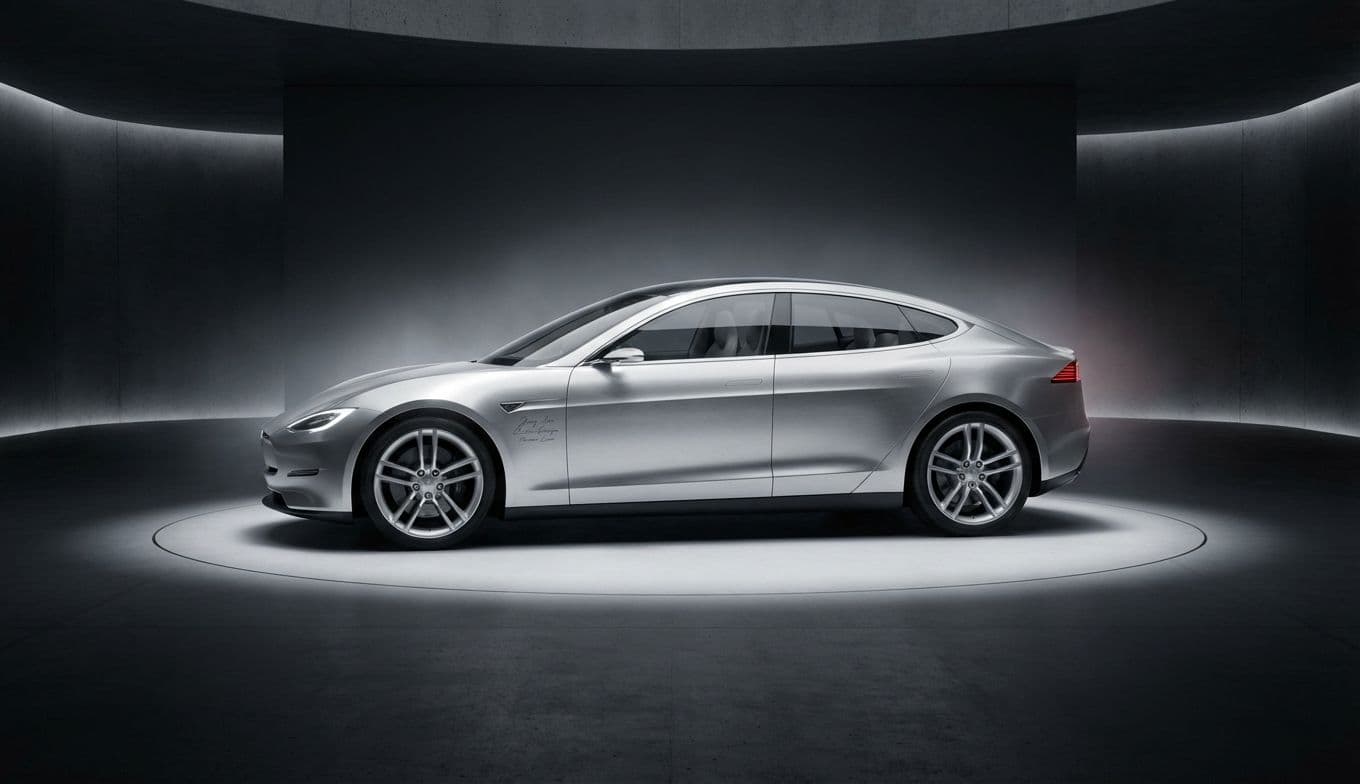
Ferrari Luce Review: Jony Ive's Electric Design Revolution

Ferrari Luce Review: Jony Ive's Electric Design Revolution

Team GimmieTeam Gimmie
Published on February 9, 2026

The Ferrari Luce: When Silicon Valley Meets Maranello

For decades, the experience of a Ferrari was defined by what you could hear and feel: the violent vibration of a V12, the metallic clink of a gated shifter, and the distinct scent of high-octane fuel. But as the automotive world pivots toward electricity, Ferrari is leaning into a different kind of sensory experience. Enter the Ferrari Luce.

The name Luce is Italian for light, and it serves as the perfect metaphor for the brand’s first true electric venture. It isn't just about the absence of a heavy combustion engine; it is about a visual and structural weightlessness. To achieve this, Ferrari didn't just look to engineers; they looked to Jony Ive and his design firm, LoveFrom. The result is a vehicle that feels less like a traditional supercar and more like a high-performance sculpture crafted from glass and aluminum. As we look at the Luce, the question isn't just whether it can go fast—we know it can—but whether a Ferrari designed with the soul of an iPhone can still feel like a Ferrari.

The Architecture of Transparency

Jony Ive’s influence on the Luce is unmistakable. If you’ve ever run your thumb over the bead-blasted aluminum of a MacBook or marveled at the seamless glass curve of an iPhone, you will recognize the design language here. The Luce’s interior is a cathedral of transparency. By utilizing massive, sweeping glass panels that blend into a brushed aluminum frame, Ive has stripped away the claustrophobic, cockpit-like feel of traditional performance cars.

In a classic Ferrari, you are encased in leather and carbon fiber, tucked away in a dark, purposeful space. The Luce flips the script. It uses light as a material. The cabin feels airy and expansive, intended to make the driver feel connected to the environment rather than insulated from it. This is the Ive Effect: the removal of the unnecessary. There are no cluttered buttons or jagged plastic seams. Everything is flush, smooth, and cooling to the touch.

However, this shift toward minimalism comes with a significant cultural cost. Ferrari enthusiasts have long worshipped at the altar of the tactile. Think of the Manettino dial on the steering wheel—that small, mechanical toggle that lets you click through drive modes. In the Luce, many of these physical touchpoints are rumored to be replaced by haptic surfaces and integrated glass displays. While this looks stunning in a showroom, the loss of that mechanical click might feel like a loss of soul for the purist.

The Apple-fication of the Supercar

There is a certain irony in a $400,000 vehicle taking design cues from a $1,200 smartphone. This Apple-fication of the luxury car market is a bold gamble. On one hand, LoveFrom has brought a level of fit and finish that is arguably superior to anything Ferrari has produced in-house. The integration of software and hardware is expected to be flawless, avoiding the clunky infotainment systems that have plagued Italian boutique brands for years.

But we have to ask: is a car that feels like a gadget actually a good thing at this price point? Part of the allure of a Ferrari is its timelessness. An analog tachometer from 1965 still looks beautiful and functions perfectly today. A massive glass touch interface, however, risks feeling dated the moment the next generation of processor hits the market. By leaning so heavily into the minimalist, tech-forward aesthetic, Ferrari is moving away from being a mechanical heirloom and toward being a piece of elite consumer electronics.

The Luce’s interior uses aluminum not just for its strength, but for its honesty—a favorite word in the Ive lexicon. There are no fake wood veneers or painted plastics here. If it looks like metal, it is metal. While this provides a sense of undeniable quality, it also creates a cooler, more clinical atmosphere. It is the difference between a cozy, old-world study and a modern art gallery. Both are luxurious, but only one feels human.

Heritage vs. Horizon

The Luce represents the tension between Ferrari’s heritage and its horizon. For eighty years, the brand has been about the machine. Now, it is becoming about the interface.

The use of the Luce name suggests that Ferrari is aware of this transition. Light is fast, light is ethereal, and light is clean. By moving away from the oily, heavy mechanicals of the past, Ferrari is attempting to define what luxury means in a post-gasoline world. In the absence of engine notes, the interior becomes the primary theater of the driving experience.

This is where the glass-heavy design becomes a functional choice as much as an aesthetic one. In a silent EV, your senses are heightened. You notice the textures of the cabin more acutely. You see more of the road and the sky. Ive is betting that the future of the supercar isn't about the roar of the exhaust, but the clarity of the journey. He wants to replace the visceral thrill of power with the intellectual thrill of perfect design.

Is the Luce the Ultimate Gift?

If you are considering the Ferrari Luce as a pinnacle gift—whether for a partner, a retiring executive, or a dedicated collector—you have to look beyond the badge. This is not a gift for the traditional petrolhead who spends their weekends at the track listening to gear ratios. To that person, the Luce might feel like a beautiful but hollow departure from everything they love.

The ideal recipient for the Luce is the design aficionado—the individual who appreciates the curve of a Leica camera, the silhouette of an Eames chair, and the precision of high-end architecture. It is a vehicle for the person who values the future more than the past.

As a product, the Luce is a masterpiece of industrial design. It offers a level of refinement and visual purity that the automotive world has rarely seen. But as a Ferrari, it is an experiment. It asks the buyer to trust that the brand’s essence isn't found in a cylinder head, but in the pursuit of excellence—whatever form that takes.

Final Thoughts: The Weight of Lightness

The Ferrari Luce is a polarizing pivot. By partnering with Jony Ive, Ferrari has signaled that they are no longer just a car company; they are a luxury house. The heavy use of glass and aluminum creates a stunning, futuristic environment that will undoubtedly influence the entire industry.

Yet, as we move toward this brighter, lighter future, there is a lingering nostalgia for the weight of the past. The Luce is a brilliant piece of technology and a breathtaking work of art, but it remains to be seen if it can capture the lightning-in-a-bottle magic that made Ferrari a legend in the first place. For now, it stands as a glowing glass beacon of what’s to come—a car that is as much about the view from the inside as the speed on the outside.

Ferrari Luce Review: Jony Ive's Electric Design Revolution | Gimmie