DJI Osmo Pocket 4 Review: Is It Worth Importing to the US?
Discover if the DJI Osmo Pocket 4 is worth importing to the US. We explore its new 1-inch stacked sensor, ActiveTrack 7.0, and 4K 120fps upgrades. Read more!

By Team Gimmie
Updated September 2, 2026
The Forbidden Fruit of Vlogging: Is the DJI Osmo Pocket 4 Worth the Import?
There is something inherently alluring about the gear you cannot easily have. If you are a tech enthusiast in the United States, you have likely noticed a frustrating trend lately: some of the most exciting hardware is simply skipping our shores. The DJI Osmo Pocket 4 has officially joined that list. While it has launched globally to much fanfare, it remains a "forbidden fruit" for the American market.
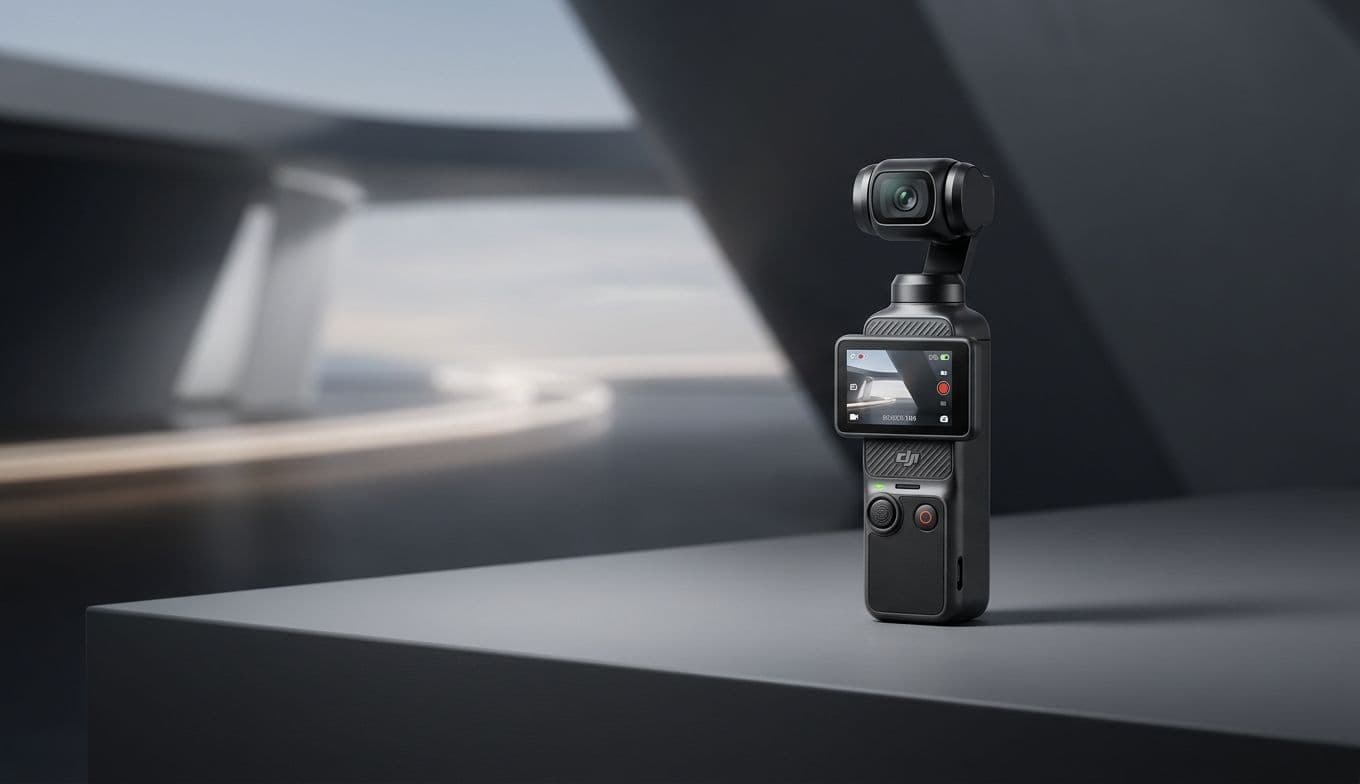
At first glance, you might think you aren't missing much. It looks nearly identical to the wildly successful Pocket 3, maintaining that iconic wand-like silhouette and the clever rotating screen. But beneath that familiar plastic shell lies a series of surgical upgrades that transform a great camera into a near-perfect one. If you have been debating whether to hunt down an import or stick with what is locally available, the answer depends entirely on how much you value the small details that make a big difference in the field.
The Subtle Power of Smarter Guts
It is easy to get caught up in the "no new design" narrative, but DJI has spent its energy where it actually counts: the sensor and the processing. The Pocket 4 introduces a new 1-inch stacked CMOS sensor. While the size remains the same as its predecessor, the stacked architecture allows for significantly faster data readout. This means rolling shutter—that annoying "jello" effect when you pan too quickly—is virtually eliminated.
The image processing has also received a massive shot in the arm. We are now looking at 4K recording at up to 120fps with full HDR support, a jump that ensures your slow-motion footage looks just as vibrant and balanced as your standard speed shots. For those who like to color grade, the inclusion of 10-bit D-Log M and HLG across all shooting modes provides a level of flexibility usually reserved for professional cinema rigs. It’s not just about more pixels; it is about better pixels. The low-light performance has seen a noticeable bump too, with a new AI-denoising algorithm that cleans up shadows without making the footage look like a blurry oil painting.
Refined Controls and Smarter Tracking
One of the biggest complaints with small cameras is that they can feel fiddly. DJI addressed this by overhauling the user interface. The 2-inch OLED screen is now 20 percent brighter, making it much easier to use in direct sunlight, and the haptic feedback on the joystick feels more intentional and precise. It is a small change, but when you are trying to frame a shot while walking through a crowded market, that physical confirmation matters.