
Diora Review: The Essential Game That Justifies the Playdate
Is Diora the Playdate's killer app? We review how this $15 puzzle game transforms the $199 handheld into a must-have device. Read our verdict on this tactile masterpiece.

By Team Gimmie
Updated September 2, 2026
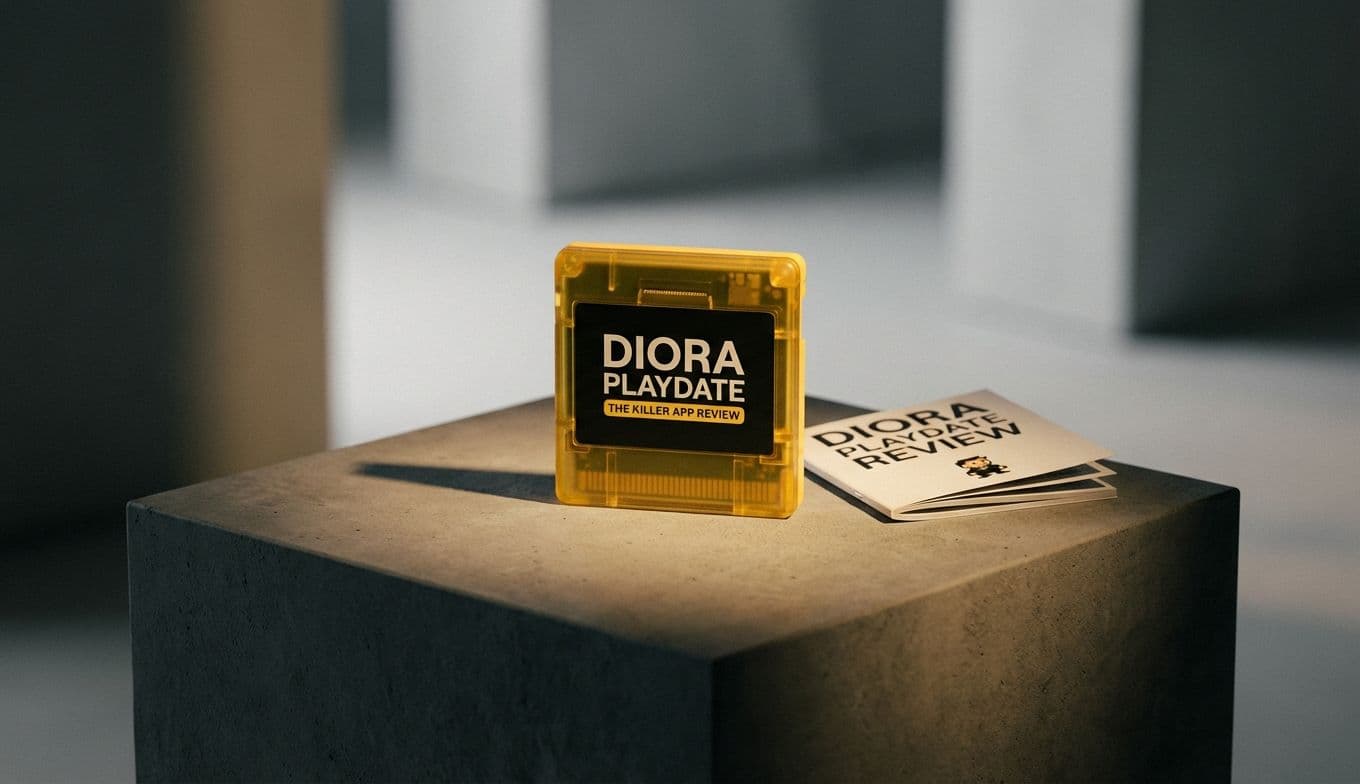
Diora: The Game the Playdate Was Built For
The tech world is littered with novelty hardware that collects dust the moment the initial charm wears off. We’ve all seen it: the flashy peripheral or the niche handheld that promises to change the game, only to end up at the back of a drawer because the software never quite caught up to the vision. For a long time, the Panic Playdate—with its tiny yellow shell, black-and-white screen, and signature hand crank—teetered on the edge of that fate. It was a delightful curiosity, a boutique toy for enthusiasts.
Then came Diora.
If you’ve been looking for a reason to finally justify the $199 investment in this pocket-sized oddity, this is it. Diora isn’t just a good game for the Playdate; it is the definitive argument for the device’s existence. It is the killer app that transforms the hardware from a clever conversation piece into an essential gaming tool.
A Masterpiece of Perspective
Diora is often compared to Monument Valley, the mobile masterpiece that turned M.C. Escher-style optical illusions into a meditative puzzle experience. The comparison is earned, but Diora adds a layer of tactile satisfaction that a touchscreen simply cannot replicate.
In Diora, you play as a network technician navigating a city in the wake of a mysterious accident. Your job is to repair machinery by navigating miniature 3D environments. These worlds appear on the Playdate’s 1-bit screen as incredibly detailed, rotating dioramas. The magic happens when you engage the crank.
By physically turning the handle on the side of the device, you rotate your perspective of these bite-sized landscapes. You aren’t just moving a character; you are manipulating the entire world. Solutions often hide in plain sight, requiring you to peek around corners or align platforms that only connect when viewed from a specific, crank-turned angle. It’s a brain-bending exercise that feels remarkably intuitive because of the physical connection between your hand and the screen.
The Beauty of 1-Bit Depth
There is a common misconception that 1-bit graphics—essentially just black and white pixels with no shades of gray—are a limitation. Diora proves they are a stylistic powerhouse. The game’s environments look like high-end architectural sketches brought to life. There is a crispness to the visuals that feels premium, almost like you are holding a tiny, animated ink drawing.
