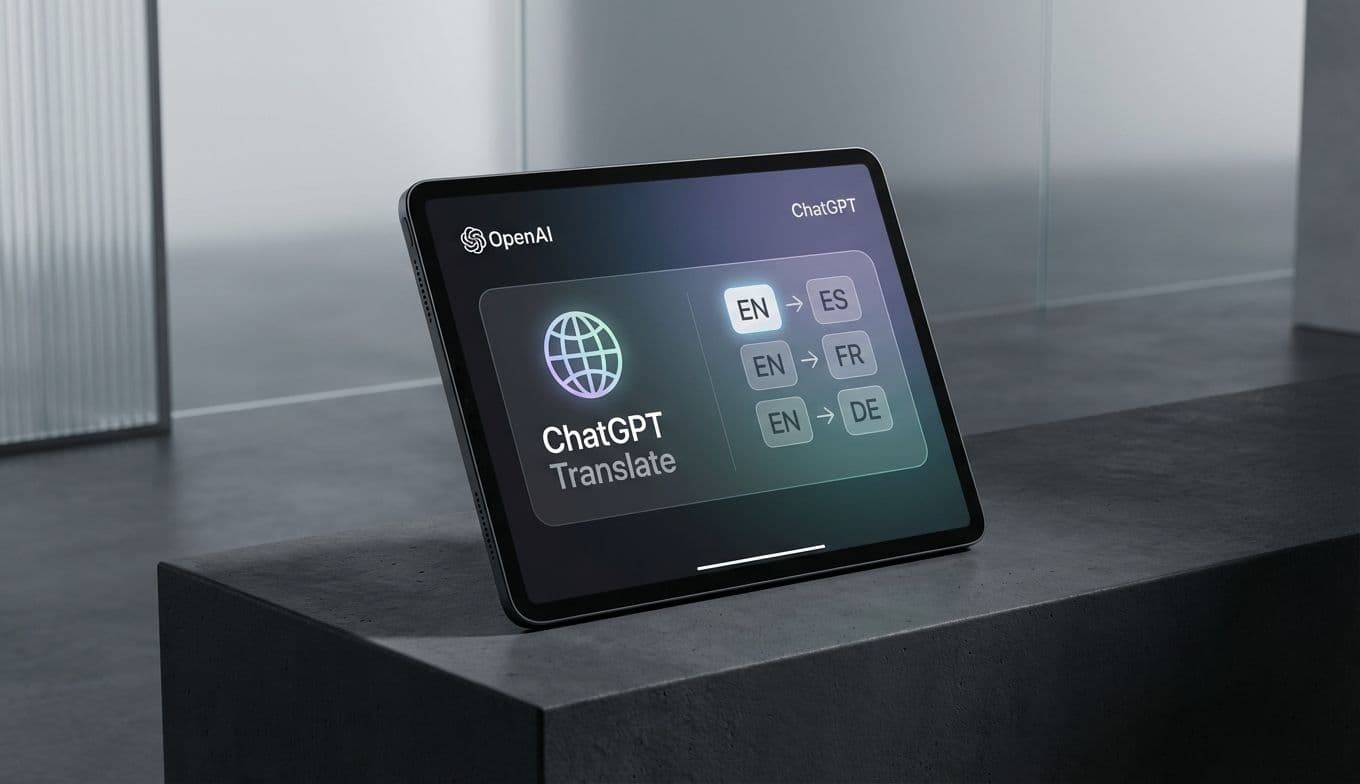
ChatGPT Translate vs. Google Translate: The Art of Nuance

Team Gimmie

Team Gimmie

1/15/2026

ChatGPT Translate vs. Google Translate: The Art of Nuance

The Art of the International Gesture: Why Nuance is the New Standard in Translation

When I first heard that OpenAI had officially launched ChatGPT Translate as a standalone tool, my internal skeptic did a bit of a double-take. We have been living in the era of Google Translate for so long that it has practically become a utility, like electricity or running water. It’s the tool we use to figure out if a bottle contains shampoo or dish soap while on vacation, and for the most part, it works fine. So, why do we need another one?

As it turns out, "fine" is the enemy of "meaningful." After spending some time with ChatGPT’s new dedicated interface, I’ve realized that while Google Translate is built for information, ChatGPT Translate is built for connection. If you have ever tried to write a heartfelt note to a family member abroad or explain the sentimental value of a gift to someone who speaks another language, you know that literal translation often kills the soul of the message. This new tool isn't just about swapping words; it’s about preserving the feeling behind them.

The familiar face of a new engine

OpenAI was smart enough not to reinvent the wheel when it comes to user experience. When you land on the ChatGPT Translate page, the layout is instantly recognizable. You have the classic two-pane system: your source text on the left and the translation on the right, with simple dropdown menus to toggle between languages. It is clean, fast, and lacks the clutter that sometimes creeps into more established platforms.

But the real shift happens in the processing. While traditional translation tools rely on massive databases of phrase pairings, ChatGPT Translate uses its underlying large language model to understand the intent of your sentences. According to early reports, it currently supports over 50 languages. While that is fewer than Google’s massive library, the quality of what it produces feels fundamentally different. It doesn’t just translate; it interprets.

Why this matters for the modern gift-giver

At Gimmie AI, we talk a lot about the "why" behind a gift. A gift is a bridge between two people. But when that bridge has to cross a language barrier, things often get lost in transit.

Imagine you are sending a beautifully crafted wedding gift—perhaps a high-end set of linen sheets or a piece of local art—to a cousin in Italy. You want to write a card that says: "May your new home be filled with as much laughter as we shared during our childhood summers."

If you run that through a standard translator, you might get a grammatically correct Italian sentence, but it often loses the nostalgic, warm tone of the original. It might come across as stiff or overly formal. ChatGPT Translate, however, excels at capturing these idiomatic nuances. It understands that "childhood summers" carries a specific emotional weight and chooses words that reflect that sentiment rather than just the literal calendar dates. This is where the tool becomes a genuine asset for anyone navigating international traditions or family ties.

Style presets: Choosing your voice

One of the most impressive features mentioned by The Verge is the inclusion of style presets. This is a game-changer for anyone who has ever worried about sounding too blunt or unintentionally disrespectful. Instead of just getting one "correct" translation, you can guide the AI to match the social context of your message.

To see this in action, let’s look at a common scenario: translating a thank-you note to a business contact in Japan after they hosted you for dinner.

The Formal Preset: This version will prioritize honorifics and traditional etiquette. It ensures you sound professional, respectful, and appropriately humble. It’s perfect for business partners or elders where "getting it right" is a matter of respect.

The Creative Preset: If you were writing that same thank-you note to a close friend, the Creative preset would lean into a more conversational tone. It might use more colorful language or prioritize the "vibe" of the message over strict grammatical formality. It sounds like a person speaking, not a textbook.

This level of control allows you to tailor your communication to the specific relationship, ensuring your gift or message is received exactly as you intended.

At-a-Glance: Google Translate vs. ChatGPT Translate

To help you decide which tool to pull out of your digital pocket, here is a quick breakdown of how they stack up in the real world:

Feature: Core Technology Google Translate: Neural Machine Translation (Pattern-based) ChatGPT Translate: Large Language Model (Context-based)

Feature: Best Use Case Google Translate: Quick signs, menus, document uploads, and web browsing ChatGPT Translate: Heartfelt cards, emails, creative writing, and nuanced dialogue

Feature: Key Advantage Google Translate: Supports 100+ languages and image-to-text translation ChatGPT Translate: Superior tone control and understanding of cultural idioms

Feature: Visuals and Extras Google Translate: Integrated with Google Lens and Maps ChatGPT Translate: Style presets (Formal, Creative, etc.) for tone management

Choosing the right tool for the job

Does this mean you should delete your Google Translate app? Definitely not. If you are standing in a train station in Berlin trying to read a complicated schedule, Google’s ability to translate text via your camera is still the gold standard. It is a Swiss Army knife built for the logistics of life.

However, if you are sitting at your desk trying to compose a message that actually matters, ChatGPT Translate is the better choice. It is for those moments when you aren't just trying to be understood, but trying to be felt. Whether you are explaining the cultural history of a gift you’ve sent to a friend in Seoul or writing a letter to a long-lost relative in Brazil, the ability to control the tone and nuance of your words is invaluable.

The bottom line

The arrival of ChatGPT Translate marks a shift from translation as a utility to translation as an art. For those of us who believe that the best products and gifts are the ones that foster genuine connection, this is a major win. It’s not just about the words anymore; it’s about the warmth, the respect, and the personality behind them. OpenAI has proven that even in a crowded market, there is always room for a tool that helps us be more human. My suggestion? Keep Google for the maps, but use ChatGPT for the message.

#Google Translate comparison#AI translation tools#translation style presets#nuanced translation#OpenAI translation features