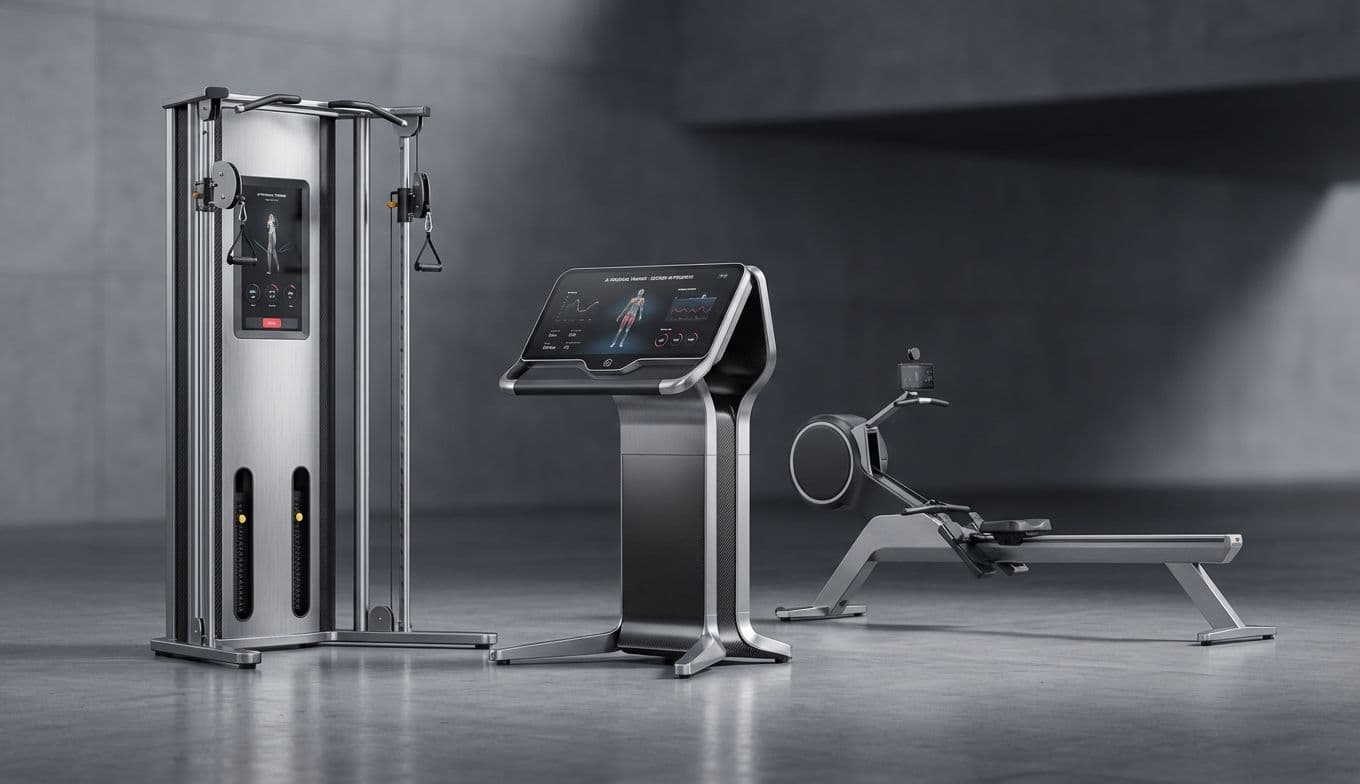
Best AI Fitness Equipment 2026: Smart Home Gym Guide
Discover the best AI fitness equipment of 2026. Learn how smart home gyms, digital resistance, and biometric feedback transform workouts. Upgrade your routine today!
The Best AI Fitness Equipment of 2026: How Smart Tech is Transforming Home Workouts
In 2026, the home gym has evolved into a personalized training center. This guide explores the most effective AI fitness equipment currently on the market, evaluating everything from form-correcting mirrors to adaptive resistance systems to help you build a smarter, more efficient workout routine.
We’ve all been there. We buy a piece of exercise equipment with the best of intentions, only to watch it slowly transition into an expensive clothes hanger for our laundry. The problem usually isn't a lack of willpower; it’s a lack of direction. In the past, you either had to hire an expensive personal trainer or spend hours researching routines that might not even work for your body type. That changed when artificial intelligence stepped into the home gym.
Today, your equipment doesn't just sit there. It watches, it learns, and it talks back. AI fitness equipment has moved past the gimmick stage and into a realm of genuine utility. It’s no longer about just moving weight; it’s about moving weight correctly, efficiently, and at the exact intensity your body needs on any given Tuesday morning.
THE INTELLIGENT EVOLUTION OF STRENGTH TRAINING
Strength training has historically been the hardest part of fitness to master at home. Without a spotter or a coach, it’s easy to plateau or, worse, injure yourself. The current generation of smart strength systems has solved this by replacing iron plates with digital resistance.
These systems use electromagnetic engines to create tension that can be adjusted mid-rep. If the AI senses you are struggling to finish a set, it can automatically drop the weight by five pounds—acting as a digital spotter. Conversely, if it sees you’re moving the weight too easily, it will crank up the resistance for the next rep to ensure you’re actually building muscle.
Key benefits of these AI strength systems include:
Real-time form correction: Using 3D sensors or cameras to track your joints and tell you when your back is rounding or your knees are locking.
Dynamic resistance modes: Features like eccentric loading, where the machine adds weight during the lowering phase of a lift to maximize muscle fiber recruitment.
About Team Gimmie
A small team of friends and colleagues working together to produce useful content to help you...gift better.
Automated progress tracking: No more notebooks or manual apps; the machine records every pound lifted and suggests your next goals based on your historical performance.
This technology removes the guesswork. You don't have to wonder if you’re lifting enough to see results; the data is right there on the screen, proving that you are.
CARDIO WITH A BRAIN: BEYOND THE TREADMILL
Cardio has also seen a massive intelligence boost. We’ve moved far beyond the basic treadmill that just tells you how long you’ve been running. AI-integrated cardio equipment—from rowers to stationary bikes—now focuses on biometric feedback loops.
Modern smart bikes, for example, don't just follow a pre-set program. They sync with your wearable devices to monitor your heart rate and recovery status in real-time. If your resting heart rate was high this morning, indicating poor recovery, the AI will automatically suggest a lower-intensity "zone 2" ride rather than a high-intensity interval session. This prevents overtraining and keeps you consistent over the long term.
Furthermore, gamification has become more sophisticated. Rather than just watching a video of a trail in the Swiss Alps, AI creates reactive environments. If you’re rowing on a smart machine, the virtual water resistance might change based on your actual stroke power, or you might find yourself in a competitive virtual race against digital avatars that are specifically programmed to match and slightly exceed your current pace. It turns a boring 30-minute slog into a strategic challenge.
THE ROLE OF BIOMETRIC DATA IN YOUR WORKOUT
One of the most significant shifts in 2026 is how AI fitness equipment treats your data. In the early days, these machines were silos—they knew what you did on the bike, but they didn’t know how you slept or what you ate. Today, the most effective systems act as a central hub for your entire health ecosystem.
The value here isn't just in the collection of data, but in the interpretation of it. An authoritative AI coach can look at your sleep data from your ring, your activity levels from your watch, and your strength performance from your last workout to create a unified plan. It might say, You’ve had three high-intensity days and your sleep quality has dipped; today we are doing a mobility and stretching routine instead of heavy squats.
This level of personalization was once reserved for professional athletes. Now, it’s available to anyone with a Wi-Fi connection and a smart mirror. However, with this data comes the need for privacy. When choosing equipment, it’s vital to look for companies that offer end-to-end encryption and clear opt-out policies for data sharing. Your biometric data is your most personal asset; ensure the brand you choose treats it with respect.
PRACTICAL CONSIDERATIONS: COST, SPACE, AND CONNECTIVITY
Before you jump into the world of AI fitness, there are some cold, hard realities to consider. This equipment is an investment, both in terms of money and space.
First, let's talk about the hidden costs. Almost every piece of AI fitness equipment requires a monthly subscription to access the "brains" of the machine. Without the subscription, that 3,000-dollar smart gym often turns into a very basic set of weights. Before buying, calculate the total cost of ownership over three years, including those monthly fees.
Second, consider your home environment. AI systems require:
Stable, high-speed Wi-Fi: If your gym is in a basement or garage, you may need a mesh router to ensure the AI doesn't lag mid-workout.
Wall mounting and power: Many of the best strength systems require professional installation and a dedicated power outlet.
Floor space for sensors: Cameras and 3D sensors need a clear "field of vision" to track your movements accurately. If your workout space is cluttered, the AI will struggle to provide accurate form feedback.
Lastly, think about the longevity of the hardware. Software updates can keep an AI relevant for years, but the physical components—the motors, cables, and screens—must be durable. Look for brands that offer robust warranties and have a track record of reliable customer service.
MAKING THE FINAL CHOICE
The best AI fitness equipment is the one that you actually enjoy using. Technology should be a bridge, not a barrier. If a machine feels too complicated or the AI coach feels too intrusive, it won't help you reach your goals.
In 2026, we have the tools to be healthier than ever before. By offloading the planning, tracking, and coaching to an intelligent system, we can focus on what actually matters: showing up and doing the work. Whether you’re looking for a mirror that corrects your bicep curls or a bike that knows exactly when to push you, there is a smart solution out there that can help you become a better version of yourself.
Investing in your health is never a bad decision, but investing in a system that guides you through that journey is even better. Take the time to research, check the subscription terms, and choose the AI partner that fits your lifestyle. Your future self will thank you for the data-driven results.
Best AI Fitness Equipment 2026: Smart Home Gym Guide | Gimmie