
Apple & Foxconn Relationship: Inside Tech Manufacturing
Explore the complex Apple-Foxconn relationship, from CNC manufacturing feats to supply chain ethics. Learn how to make conscious tech gifting choices.

By Team Gimmie
Updated August 27, 2026
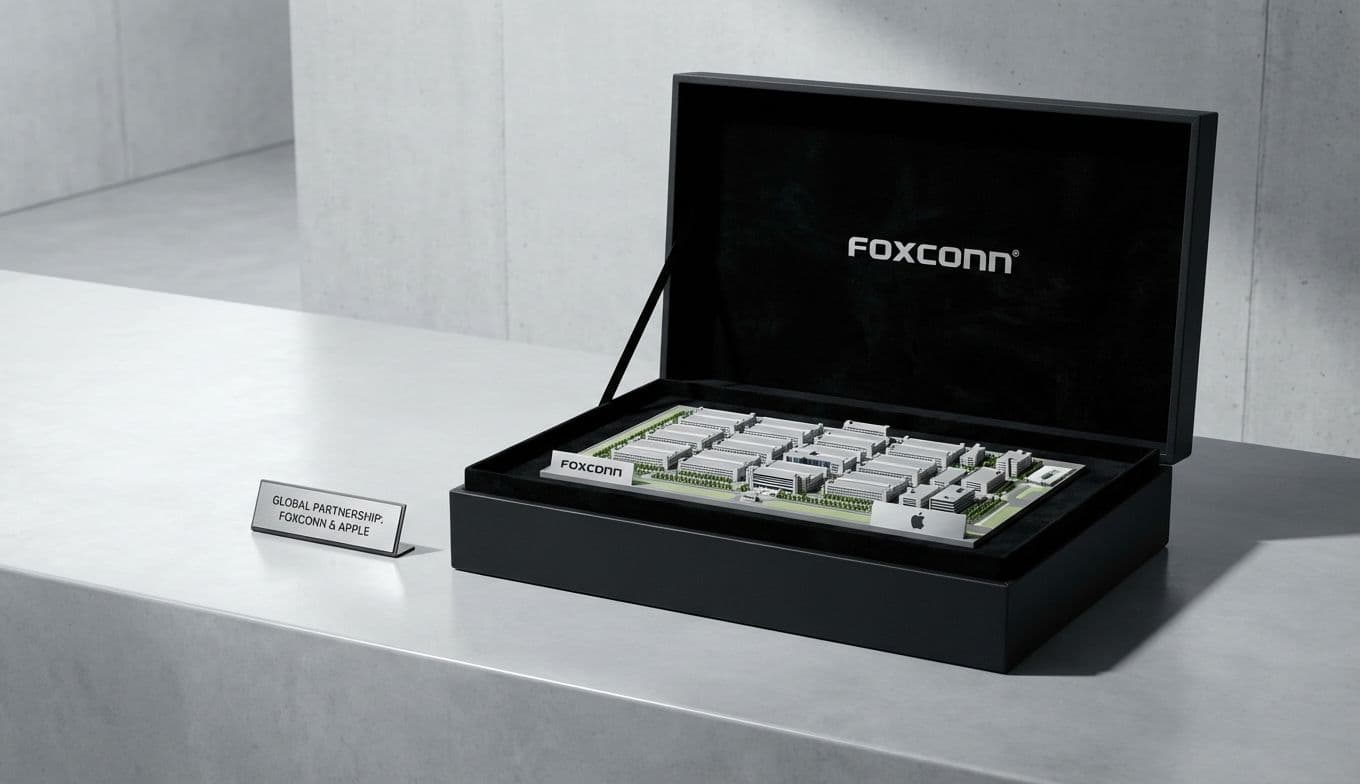
Beyond the Designed in California Sticker: The Apple-Foxconn Reality
Flip over any iPhone and you will see the famous tagline: Designed by Apple in California. Assembled in China. For years, that second sentence was treated as a minor logistical detail, a footnote to the genius of Silicon Valley. But the reality is that without the unprecedented industrial muscle of Foxconn, Apple as we know it would not exist.
In his 2025 book, Apple in China: The Capture of the Worlds Greatest Company, Patrick McGee pulls back the curtain on this relationship. It is not just a story of a client and a contractor; it is a narrative of how two companies fused together to create the most efficient manufacturing engine in human history. For those of us buying, gifting, or using these devices, understanding this partnership is essential. It changes how we view the quality of what we hold and the ethics of what we support.
The Architecture of an Industrial Empire
When Terry Gou founded Foxconn, it was a modest supplier of plastic knobs for televisions. Its transformation into a tech behemoth was no accident of history. Gou meticulously cultivated Apple, realizing early on that Steve Jobs and Tim Cook did not just want a factory—they wanted an extension of their own ambition.
Foxconn did not just build assembly lines; they built cities. At its peak, the Longhua facility in Shenzhen housed hundreds of thousands of workers, complete with its own fire department, grocery stores, and hospitals. This scale allowed Apple to do the impossible: move from a prototype to millions of finished units in a matter of weeks. As McGee’s reporting illustrates, Gou’s relentless pursuit of Apple’s business fundamentally altered Foxconn’s trajectory, turning it from a parts supplier into the indispensable backbone of the global tech economy.
Why the Quality Feels Different: The CNC Factor
We often credit Apple’s design team for the premium feel of a MacBook or an iPhone, but the physical reality of that quality comes down to manufacturing feats that Foxconn pioneered at Apple’s request.
Take, for example, the concept of the unibody enclosure. In the late 2000s, Apple decided it wanted to carve its laptops out of single blocks of aluminum rather than bolting plastic pieces together. This required thousands of CNC (Computer Numerical Control) milling machines. At the time, there were not enough machines in the world to meet Apple’s vision.
