Anker Thus Chip: The Future of Local AI in Headphones
Discover how Anker's new Thus AI chip brings local processing to your headphones for better privacy and speed. Should you buy now or wait? Read our guide!

By Team Gimmie
Updated August 27, 2026
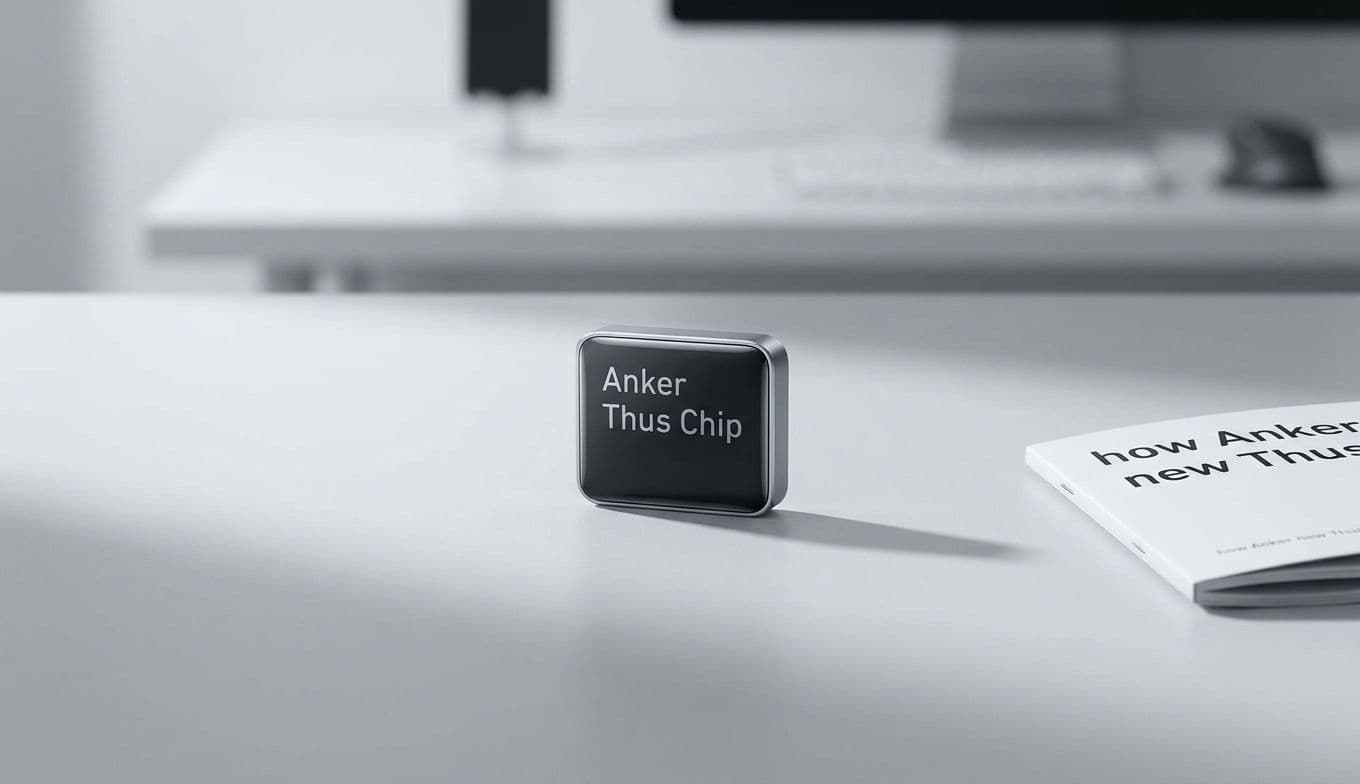
ANKER IS BUILDING ITS OWN AI SILICON: HERE IS WHY YOUR NEXT PAIR OF HEADPHONES MIGHT ACTUALLY BE SMARTER
If you feel a sense of overwhelming fatigue every time a brand slaps the letters AI onto a new product, you are not alone. We have reached a point where even toothbrushes and coffee mugs are claiming to be AI-powered, usually as a thin veil for basic automation. So, when Anker—the company we all trust for the power banks living in our backpacks—announced it was developing its own custom AI chip, I initially met the news with a heavy dose of skepticism.
But after digging into the specifics of their new Thus chip, I am starting to think this might be one of the few instances where the hype matches the utility. Anker isn't trying to build a chatbot for your charger; they are trying to solve the fundamental efficiency problems that plague small, portable electronics. By moving the processing power from the cloud directly onto the device, Anker is making a play to change how we use our everyday gadgets.
THE THUS CHIP: WHY LOCAL BRAINS BEAT CLOUD CLOUT
To understand why this matters, you have to look at how most modern gadgets work. Right now, when you give a voice command to a smart device or ask your earbuds to filter out a sudden loud noise, that data often has to travel from your device to a server hundreds of miles away, get processed, and then travel all the way back. This is why there is often a lag between your command and the action.
Anker’s CEO, Steven Yang, pointed out that traditional chips are like a kitchen where the ingredients are stored in a warehouse across town. Every time you want to cook, you have to drive back and forth. The Thus chip uses something called neural-net compute-in-memory architecture. Essentially, it puts the pantry inside the kitchen. By integrating memory and processing, the chip can perform complex calculations almost instantly without draining the battery.
For those of us who live in our headphones, this is the holy grail. It means noise cancellation that can adapt to a siren or a sudden gust of wind in milliseconds, rather than seconds. It means voice assistants that actually feel conversational because they aren't waiting for a server to tell them what you said.