
Anker Nebula P1 Review: The Best Portable Projector for Sound?
Read our Anker Nebula P1 review to see why this portable projector's detachable speakers and Google TV make it perfect for van life. Discover pros and cons!

By Team Gimmie
Updated August 27, 2026
The Sound-First Revolution: Why the Anker Nebula P1 Redefines Portable Cinema
We have a chronic problem in the world of portable projectors: they look great in lifestyle photos but sound like a bumblebee in a tin can. For years, the trade-off has been simple. If you want a device that fits in your backpack, you have to accept audio that makes blockbuster movies sound like AM radio.
The Anker Nebula P1 is here to break that cycle, though it demands a significant sacrifice in exchange. This isn't just another black box with a lens; it is a specialized audio-visual tool that prioritizes the "audio" half of that equation more than any competitor I have tested. If you are tired of squinting with your ears while watching a 100-inch screen, the P1 might be the specific solution you have been hunting for.
The Quick Verdict
Pros:
- Industry-leading audio with true stereo separation.
- Detachable magnetic speakers provide a genuine soundstage.
- Google TV integration is seamless and fast.
- Solid build quality that feels premium.
Cons:
- No internal battery; requires a constant power source.
- Moderate brightness (best suited for dark rooms).
- Bulkier than true "pocket" projectors.
- High price point at $799.
The Secret Sauce: Detachable Audio
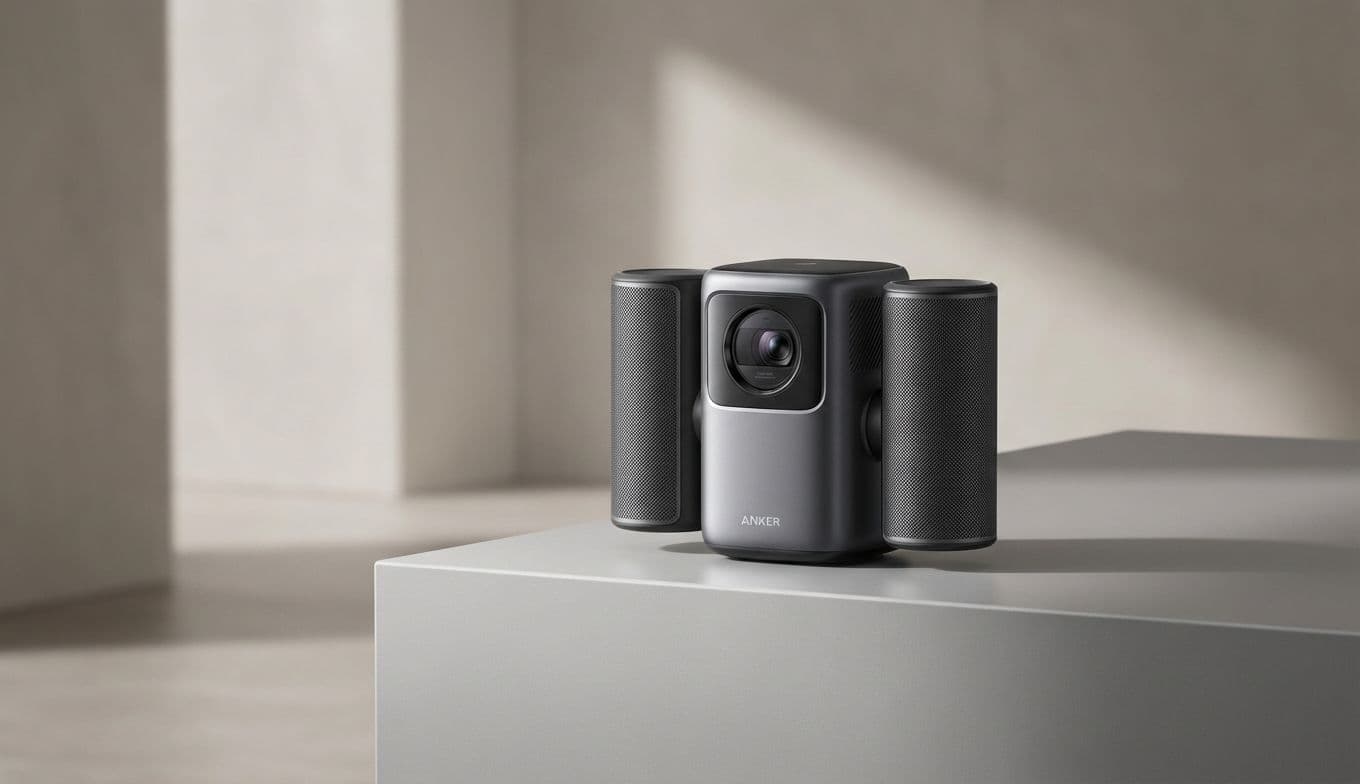
The standout feature of the Nebula P1—and the reason it justifies its existence—is the pair of detachable speakers. Most portable projectors, like the TCL PlayCube or Anker’s own Capsule series, cram a single driver into the chassis. No matter how much processing you apply, that sound is coming from a single point in space. It is mono, narrow, and flat.
The P1 changes the game with a clever magnetic docking system. The speakers sit flush against the sides of the projector for transport, but you can pull them away to create a physical soundstage. They remain tethered by integrated cables that offer enough slack to place the speakers about three to five feet apart.
When you sit in the center of that audio triangle, the experience is transformative. You actually hear a car drive from the left side of the screen to the right. Dialogue feels grounded. For anyone who has spent time in a van or a small camper, where space is tight but atmosphere is everything, this separation creates an immersion that a single-unit speaker simply cannot match. It is the difference between watching a movie and feeling like you are inside of it.
