Android Quick Share to iPhone: Supported Devices & How It Works

Team Gimmie

Team Gimmie

2/6/2026

Android Quick Share to iPhone: Supported Devices & How It Works

The Great Digital Divide is Finally Closing

We have all been there. You are at a wedding, a birthday party, or just a backyard hangout, and someone captures the perfect group shot. You ask them to send it over, but then comes the inevitable question: iPhone or Android? If the answer doesn't match, the excitement usually dies right there. You either settle for a grainy, compressed text message that looks like it was captured on a 2005 webcam, or you spend ten minutes trying to navigate a cloud storage link that requires a login.

For years, the wall between Apple’s AirDrop and Android’s various sharing methods has been the single biggest headache for mobile users. It’s a classic case of walled gardens making life harder for everyone. But things are changing. Google is finally taking the initiative to bridge this gap, and it is a move that is going to make life significantly easier for gift-givers and tech-sharers alike.

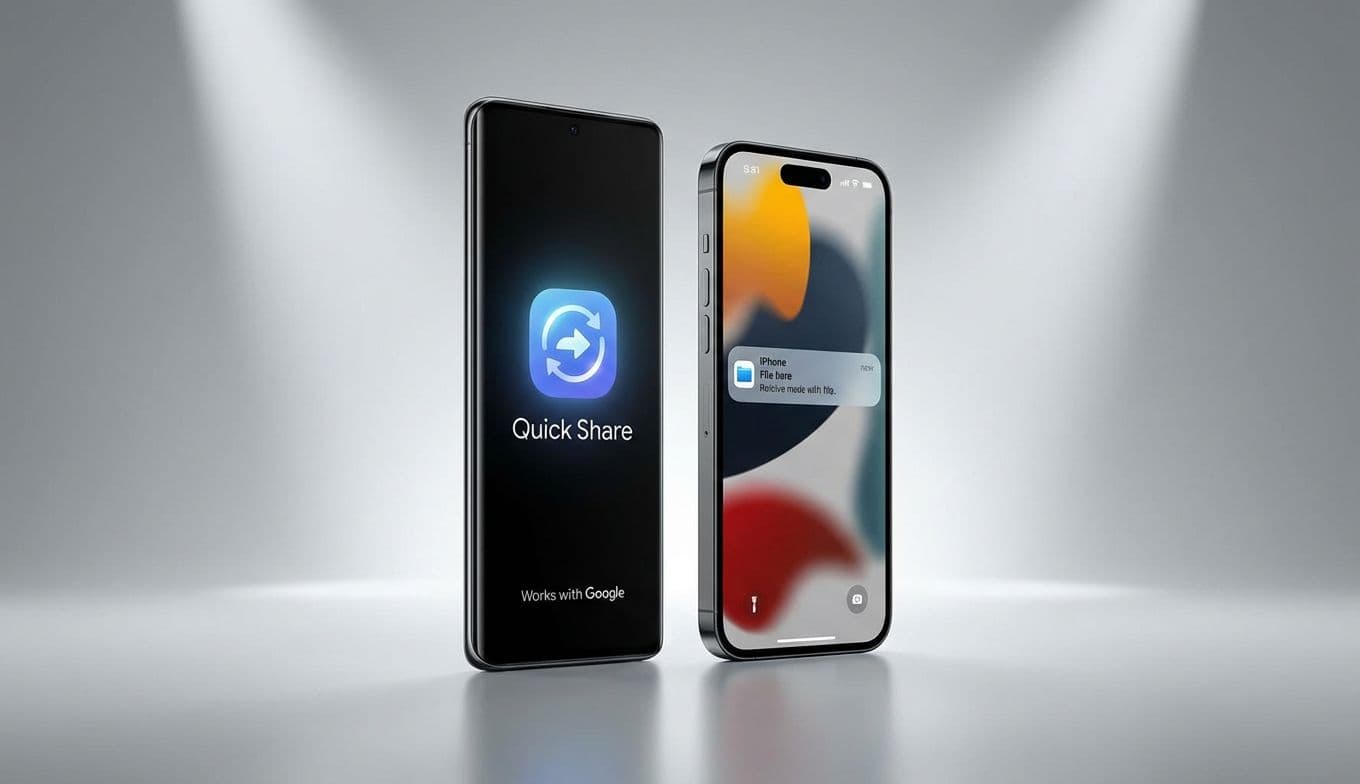
Following a successful test run with the Pixel 10 series last year, Google is now expanding its Quick Share functionality to support direct transfers to Apple devices across a much wider range of Android hardware. This is not just a minor software tweak; it is a fundamental shift in how our devices talk to each other.

The Expansion Beyond the Pixel

During a recent briefing, Eric Kay, Google’s Vice President of Engineering for Android, confirmed that the company is aggressively moving to bring this cross-platform compatibility to the broader Android ecosystem. While the Pixel 10 was the proving ground, Google is now working closely with its major partners to ensure this feature lands on the devices people actually carry.

What does this mean for you? It means that if you are carrying a flagship from Samsung, Motorola, or OnePlus, you are likely next in line. Samsung, in particular, has a history of deep integration with Google’s software updates, so owners of the Galaxy S25 or the latest Z Fold models should keep a close eye on their settings menu. Motorola, which has been making a major comeback with its Edge and Razr series, is also expected to be an early adopter of this enhanced Quick Share.

The goal here is universal ease of use. Google has spent significant resources to ensure that Quick Share can initiate sessions with iPhones, iPads, and even MacBooks. It is about making the "sharing" button on your phone actually do what it says, regardless of what brand of phone your friend is holding.

Solving the Grainy Video Nightmare

If you have ever tried to send a high-definition video of a baby’s first steps or a concert clip from an Android phone to an iPhone via standard messaging, you know the pain. Because Apple’s iMessage and standard SMS/MMS protocols do not play well together, the video is often compressed into a blurry, pixelated mess.

This has been a massive point of friction for families. Grandparents with iPhones often feel like they are missing out on clear memories because their kids are on Android, and vice versa. By enabling Quick Share to communicate with Apple’s ecosystem, Google is effectively bypassing the carrier limitations that ruin media quality.

When you use this new expanded Quick Share, the devices create a direct, high-speed wireless connection—similar to how AirDrop works—to move the raw file. This means the 4K video you recorded stays 4K. No more "blurry video" excuses, and no more needing to upload everything to a third-party app just to show a friend a thirty-second clip.

A Bridge Built by Google, Not a Partnership

It is important to understand the nature of this technology to set realistic expectations. This is not a "joint venture" between Apple and Google. Apple is not necessarily opening its doors to let Android in; rather, Google has engineered a bridge.

Google’s engineers have worked to make Quick Share speak the language that Apple devices understand. This is a Google-led initiative designed to solve a consumer problem, even if the other side of the wall isn't actively helping. Because of this, it is possible that future iOS updates could temporarily break compatibility, requiring Google to release a fix.

This is the reality of cross-platform tech. However, by using a compatible protocol, Google is making a bet that users want convenience more than brand loyalty. It is a win for the consumer, even if it adds a bit of technical complexity behind the scenes for the developers.

Why This Changes the Gifting Game

For those of us who act as the "tech support" for our families, this update is a godsend. Think about the last time you helped someone set up a new phone as a gift. If they were switching from an iPhone to a new Samsung Galaxy, the process of moving their photos and videos was probably the most stressful part.

With expanded Quick Share, the transition becomes much less intimidating. You can gift a new Android device without the recipient fearing they will be cut off from their "Blue Bubble" friends when it comes to sharing photos at the next family gathering. It removes the "ecosystem lock" that often prevents people from trying new, innovative hardware.

For parents gifting a first phone to a teenager, this also lowers the social stakes. The "green bubble" stigma is real, but if that teenager can still AirDrop-share photos with their friends at school, the social friction of having a different brand of phone virtually disappears.

PRO-TIP: HOW TO CHECK FOR THE UPDATE

If you want to see if your device is ready for the new cross-platform sharing features, you don't have to wait for a giant system notification. You can check manually through your Google settings.

  1. Open your phone Settings.
  2. Scroll down and tap on Google.
  3. Look for a section called Devices and sharing.
  4. Tap on Quick Share.
  5. Ensure your Who can share with you settings are turned on.

Keep an eye out for any new mentions of "External Devices" or "Apple Compatibility" in this menu over the coming months as the rollout continues to brands like Samsung and Motorola.

A Significant Stride Forward

We are finally moving toward a world where the hardware in your pocket doesn't dictate who you can share a memory with. Google’s expansion of Quick Share is a pragmatic, user-first move that acknowledges a simple truth: most of us live in "mixed" households and friend groups.

While we wait for the full rollout across every Android manufacturer, the trend is clear. The walls are not coming down entirely, but Google has at least built a very convenient gate. Whether you are a tech enthusiast or just someone who wants their holiday photos to look sharp on their sister's iPhone, this is an evolution worth celebrating. This is one of those rare tech updates that doesn't just add a flashy feature, but actually solves a problem we face every single day.

#cross-platform file sharing#Samsung to iPhone photo transfer#Quick Share vs AirDrop#send 4k video Android to iOS#Google Quick Share update