Aliro Smart Lock Standard: The Future of Universal Digital Keys
Discover the Aliro smart lock standard: the universal digital key solution from Apple, Google, and Samsung. Learn how it differs from Matter and if you should buy now or wait.

By Team Gimmie
Updated September 2, 2026
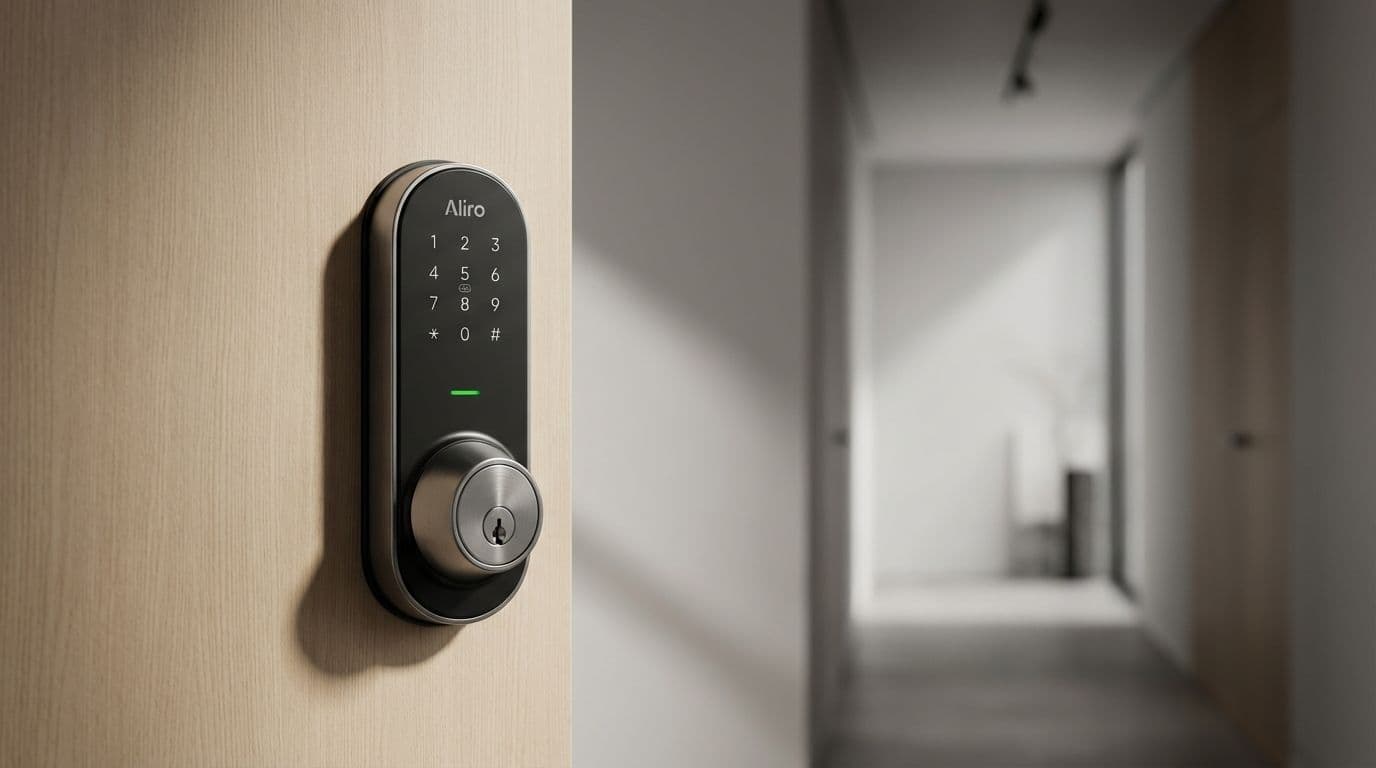
THE END OF THE KEYCHAIN STRUGGLE
We have been living in a half-finished future for a long time. For over a decade, smart lock manufacturers have promised us a world where physical keys are a clunky relic of the past, right up there with floppy disks and landlines. But if you have ever actually owned a smart lock, you know the reality is often more "fumble" than "future." You have to open a specific app, wait for it to connect via Bluetooth, or realize that your partners iPhone works perfectly with the door while your Android phone requires a three-step authentication dance just to let you inside.
The industry has finally realized that for smart locks to actually be smart, they need to stop acting like jealous gatekeepers of their own ecosystems. Enter Aliro. This is a new communication standard backed by the biggest names in tech—Apple, Google, and Samsung—designed to make the "digital key" experience universal. It is the open, cross-platform solution we have been waiting for, and it is about to change how you think about home security.
ALIRO VS MATTER: SOLVING THE SMART HOME IDENTITY CRISIS
Before we dive into which locks you should buy, we need to clear up some common confusion. You have likely heard of Matter, the big smart home standard that lets your Alexa talk to your Google-compatible light bulbs. While Matter is the language that allows devices to talk to one another over a network, Aliro is specifically about the "handshake" between your mobile device and your lock.
Think of it this way: Matter is the plumbing that lets you say, "Hey Siri, lock the front door," while you are sitting on the couch. Aliro, on the other hand, is the digital credential that lives in your phone’s wallet. It allows you to walk up to your door and tap your phone—or even just have your phone in your pocket—to unlock the deadbolt. It uses technologies like Near Field Communication (NFC) and Ultra-Wideband (UWB) to ensure that the lock knows it is actually you standing there, not just someone with a signal booster.
The brilliance of Aliro is that it breaks down the walls between Apple Home Key and Google Wallet. Until now, if you wanted the "tap-to-unlock" experience, you usually had to pick a side. Aliro ensures that regardless of whether you are carrying a Pixel or an iPhone, the door opens just as easily for everyone in the house.